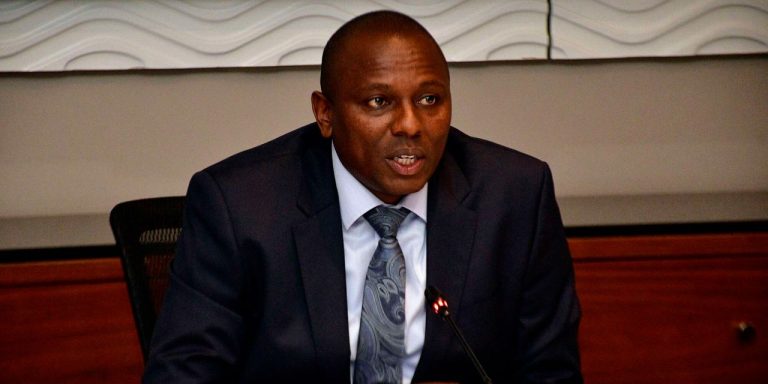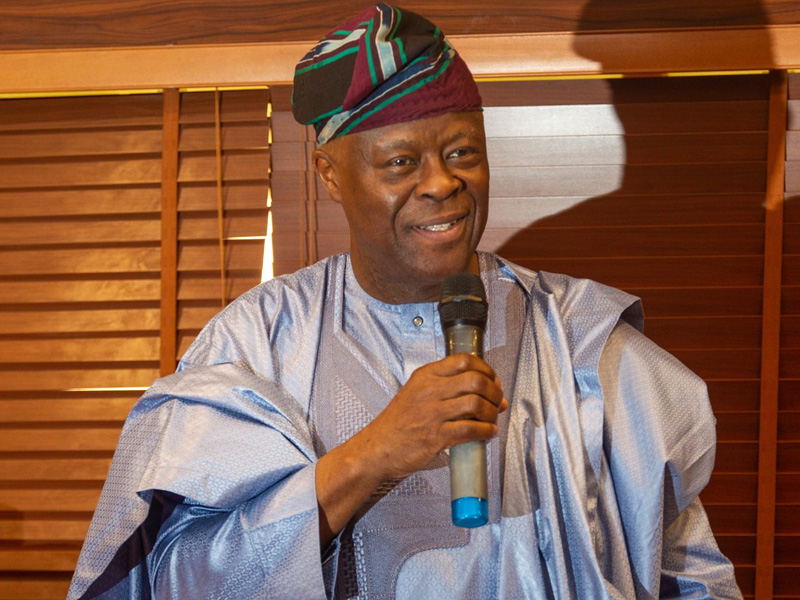
Nigeria’s Minister of Finance and Coordinating Minister of the Economy, Wale Edun, on Tuesday warned against policy reversals such as a return to broad-based subsidies, even as global economic pressures intensify.
Edun, who spoke in his capacity as the Chair of the Intergovernmental Group of 24 (G24), said during a G24 media briefing, at the ongoing IMF/World Bank spring meetings in Washington DC, said emerging economies must resist the temptation to unwind recent reform gains, stressing that fiscal responses should remain targeted and temporary rather than distortive.
He also pointed out that central banks face a delicate balancing act in navigating inflation risks without undermining fragile recoveries across developing economies.
Edun said: “For the oil-producing countries, the Ecuador and Nigeria, you may say, there is the transmission of higher oil prices into higher revenues. All of that is meaningful for the governments at this time, which is totally different from oil-importing countries, who clearly face escalated costs.
“But I must say that it’s also not a one-way street, in the sense that even an oil-producing country does have transmission of the higher costs, which feeds through from gas prices to fertilizer to food prices and so forth. So it is on both sides that this current energy crisis is affecting countries.
“I think that the idea is to be able to have the resilience to weather the current shocks, and that means the buffers that have been built have to be used. But I think that it is a question of using targeted and temporary relief, particularly for the poor and the most vulnerable, to help them through the cost-of-living spike, as opposed to rolling back the transformations which economies have taken.
“As you know, in the case of Nigeria, that moved very rapidly under the President who came in in 2023 to remove subsidies on petroleum products, and to also remove subsidies that were related to the foreign exchange markets. And so those gains, which, if we look at them, were moving at pace and have now been negatively affected by an external shock, which had nothing to do with Nigeria or developing countries as a whole.
“Having made so much progress, it is important that we don’t have a return to generalised subsidies, a sort of relapse into policies that have not proven successful in the past.”
Commenting on monetary policy in the G24 countries, he said: “Central banks and monetary policy at this time, the overriding message is that there’s a critical balancing role here, where if interest rates are raised too early and too high in an effort to curtail or see potentially rising inflation, that too can do damage to the transformation which are taking place in economies, whereas, on the other hand, if interest rates are not moved on time, that too can do damage in terms of allowing too lax monetary policy or too lax expansion of the economy at the wrong time.”
He noted that the transmission of global shocks differs across economies, particularly between oil exporters and import-dependent countries, but stressed that even oil-producing nations are not insulated from inflationary spillovers.
Speaking to the G24 countries’ financing conditions, Edun warned that rising debt service obligations and shrinking external inflows were tightening fiscal space across developing economies.
He added: “We are in a period where developing countries, emerging and developing economies, are facing a net outflow. When you look at debt service and diminished net official development assistance (ODA), and even foreign direct investment (FDI), the debt service in 2024 of developing countries at about $163 billion outweighed overseas development assistance of about $47 billion, plus even foreign direct investment. When you add those inflows, the outflow from debt servicing because of elevated interest costs outweighs what came in.
“I think that whilst looking to see what can be done by the developed world, multilateral development institutions should also step up at this time with support, liquid support, as well as thought leadership to help countries navigate this period.
“The most important lesson is that there has to be a reliance on domestic resource mobilisation within these countries, the public sector, as in Nigeria, comprehensive tax regimes that not only improve resource mobilisation but at the same time reduce the cost to the lowest earners, both individually and as governments. It is this type of self-help, self-reliance and domestic resource mobilisation, including the private sector, that countries need to look to, both through this shock and going forward, as the sustainable basis for transformation of economies that need to grow and take their people out of poverty.”
He called on multilateral institutions to strengthen concessional financing and provide additional liquidity support, while urging greater reliance on domestic resource mobilisation.
“The elevated borrowing costs and the debt servicing burden that developing countries are paying is weighing heavily on their ability to transform their economies and to achieve sustainable development,” he added.
Also speaking, Director of the G24 Secretariat, Iyabo Masha, said despite reforms by multilateral institutions, financing gaps remain significant, particularly on debt costs and access to affordable funding.
She added: “The multilateral organisations have come up with a wide range of policies on what they can do differently. The World Bank is supporting some of the development initiatives on energy and the IMF is trying to review its programs and policies to make them more suitable to the needs of developing countries. But even with that, the gap remains, and so there’s still much more they can do, especially on the debt side, on how they bring down the cost of borrowing.
“For example, on this table, we have G24 member countries that are on the top end of those that pay the highest interest to the IMF, notwithstanding the reduction in surcharge rates. So that’s one area in which the IMF can support developing countries, and there are also a wide range of discussions going on with the World Bank on ways in which they can further support developing countries.”
Eromosele Abiodun and Nume Ekeghe