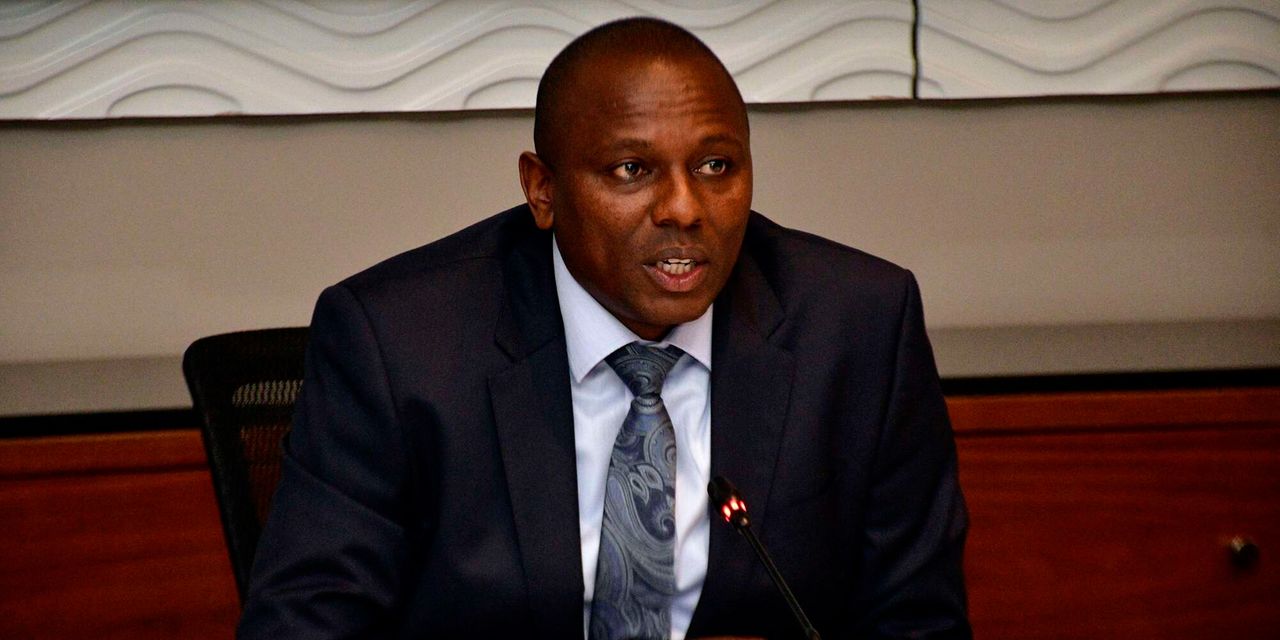
National Dialogue Committee Co-chairperson Kimani Ichungwa briefs media during the ongoing bipartisan talks at the Hilton Garden Inn on November 22, 2023 where they announced that they will conclude that talks and hand over the final report on Saturday November 25. Picture by Francis Nderitu
National Assembly Majority Leader Kimani Ichung’wah says the 2024 nationwide Finance Bill protests forced the government to adopt more inclusive and transparent processes, particularly in budget-making.
Speaking during an appearance on NTV’s Fixing the Nation, Ichung’wah described the Gen Z-led demonstrations as a “learning point” for both Parliament and the Executive, saying they exposed gaps in public participation.
He admitted that the unrest was largely driven by a lack of meaningful public involvement in key government processes, including the development of the Finance Bill and the national budget.
“What happened in 2024 was a learning point for both Parliament and the Executive. Over the past year, we have adopted more open, transparent and participatory approaches in our undertakings,” he said.
“You can see we are now conducting extensive public participation before passing any laws. The budget process has also seen increased engagement with Kenyans.”
Mr Ichung’wah noted that concerns over limited transparency and public involvement were central to the protests, which pushed the government to rethink its approach to governance.
“To prevent a repeat of the unrest, Parliament and the National Treasury have, over the past year, undertaken extensive public engagement efforts,” he said, adding that Treasury Cabinet Secretary John Mbadi has personally led some of the forums.
He also pointed to recent legislative processes, including the Cybercrime law, saying Parliament has stepped up efforts to counter misinformation by directly engaging citizens and explaining proposed laws.
The protests, triggered by the passage of the controversial Finance Bill in June 2024, escalated into deadly nationwide demonstrations, largely driven by Gen Z activists. Protesters called for sweeping political reforms, including the resignation of President William Ruto.
Although the demonstrations eventually subsided, the Gen Z movement remains a significant force in Kenya’s political landscape ahead of the 2027 General Election.
The unrest also led to a major Cabinet reshuffle by President Ruto.
At the same time, Ichung’wah called for a decisive crackdown on political violence ahead of the next election.
“We are seeing a rise in political goons in the country. I urge the Inspector General of Police and the Interior Ministry to act firmly and eliminate this threat before it causes further chaos,” he said.
The Kikuyu MP also called for investigations into former Deputy President Rigathi Gachagua, whom he accused of orchestrating recent violence in Kikuyu Constituency.
“The violence witnessed in my constituency was organised and deliberate. It was not random chaos,” he said.
Ichung’wah claimed that networks behind previous political unrest had been reactivated, alleging that “outsiders and criminals” were mobilised to disrupt peace, including during recent incidents along the Southern Bypass.
However, Gachagua dismissed the allegations and accused the government of using excessive force to suppress dissent and frustrate his political activities.
“The use of police, live ammunition and teargas is the highest form of political goonism. We cannot be intimidated,” Gachagua said.
He denied any role in the violence and instead blamed political opponents for sponsoring the chaos.
Tensions flared in Kikuyu town over the weekend, with police using teargas to disperse crowds following disruptions that included blocked roads, bonfires and heavy traffic along the Southern Bypass.
Despite the unrest, Gachagua proceeded with several rallies in the area, maintaining his influence in the Mt Kenya region.