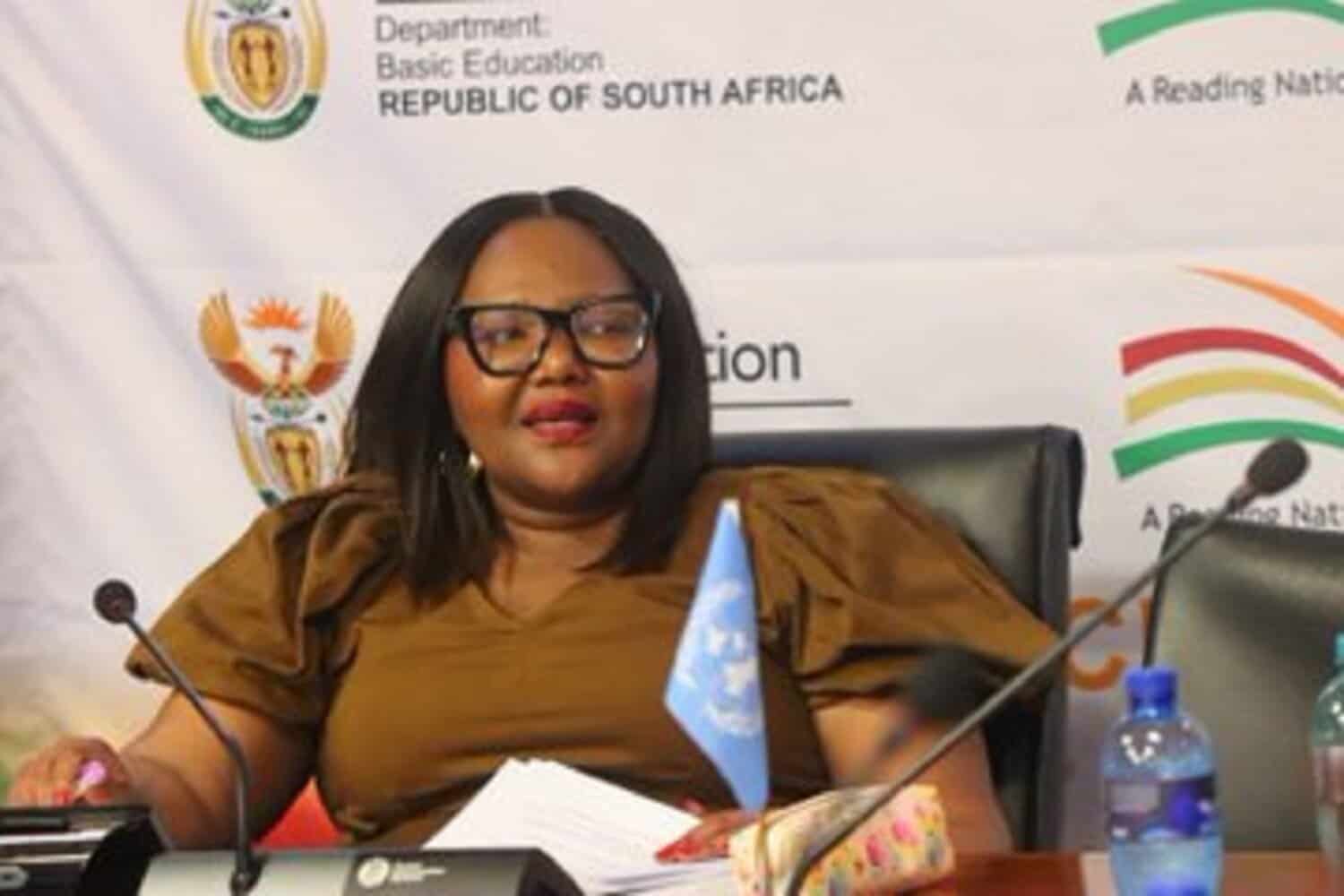
South Africa’s draft school history curriculum must not exclude key events or perspectives on political grounds, Basic Education Minister Siviwe Gwarube says, as the clock ticks down on public submissions.
Gwarube’s intervention comes amid intensifying debate over the proposed Curriculum and Assessment Policy Statements (Caps) for Grades 4 to 12, with the department of basic education (DBE) urging stakeholders to comment before the Sunday, 19 April deadline.
‘No ideological agenda’
The minister stressed that the draft document currently under public scrutiny is not final and is intended to be shaped by broad public input.
“Our history curriculum should not exclude key events or perspectives on political grounds, nor should it impose any particular ideology on learners,” said Gwarube.
“I am committed to ensuring that the curriculum equips learners to think critically about our past, so that they may form their own opinions.”
She added that inclusivity in the consultation process would directly influence the quality of the final curriculum.
“The more inclusive this process is, the more inclusive our history curriculum will be. I, therefore, encourage as many people as possible to indicate where they believe the draft should be strengthened, corrected, expanded or refined.”
Years-long curriculum overhaul
The review of the history curriculum has been underway since 2019, when former minister Angie Motshekga appointed a task team to redesign the subject.
That process included nationwide consultations across all nine provinces in 2023 and 2024, with inputs incorporated into the draft presented to the minister in January 2025.
The document has since passed through multiple layers of scrutiny, including the parliamentary portfolio committee on basic education, internal DBE structures, the heads of education departments committee (HEDOM), the council of education ministers and quality assurance body Umalusi.
It was published for public comment under Government Notice No. 7 285 on 20 March.
Focus on critical thinking
According to the DBE, the proposed curriculum aims to shift history teaching towards inquiry-based learning, with a stronger focus on evidence, interpretation and critical engagement.
“The curriculum is intended to develop disciplinary knowledge and skills in history across Grades 4 to 12,” the department said.
It includes both ancient and modern histories and incorporates diverse sources such as archaeology and oral history.
The DBE said the inclusion of oral history is intended “to broaden the evidentiary base and recover perspectives that were previously marginalised”, while maintaining that written records, including colonial and apartheid archives, remain essential when read critically.
Misinformation warning
Gwarube also cautioned against misleading claims circulating about the draft curriculum, saying some criticisms are not supported by the document itself.
She urged stakeholders to engage directly with the text and make substantive submissions.
“As South Africans we understand how complex our history is, and how important the study of it is for reconciliation and nation-building,” she said.
“Robust and responsible engagement is essential to ensure that the outcome of this process has a positive impact on our learners and our country.”
Deadline for public input
The DBE has called on teachers, pupils, academics, civil society and the broader public to submit detailed, evidence-based comments before the deadline.
Submissions must reference specific sections of the Caps documents and can be sent via post or e-mail to the department.
With only days left, the DBE said the final shape of South Africa’s history curriculum will depend on the depth and quality of public participation.