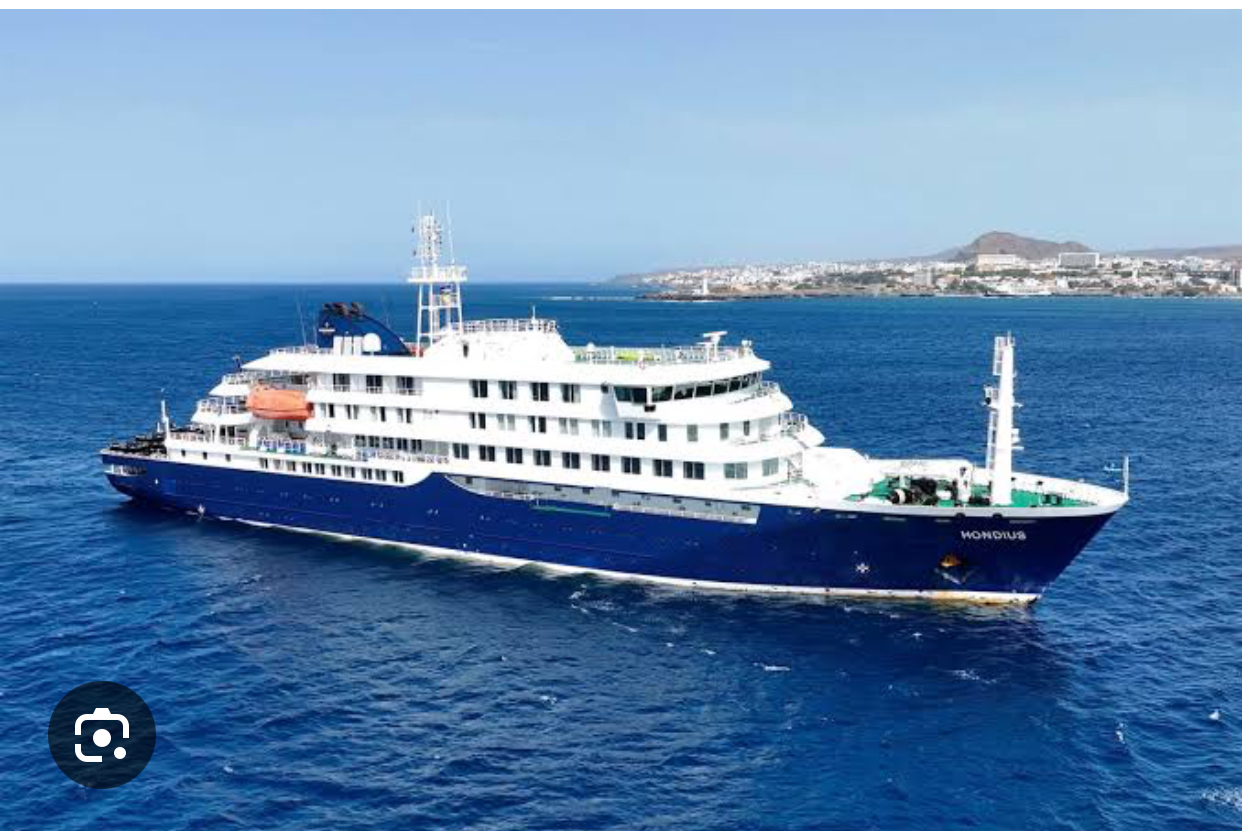
Reports of new individuals developing symptoms after possible contact with passengers linked to a hantavirus outbreak on a cruise ship are being closely monitored by the World Health Organisation (WHO).
Director-General, Tedros Ghebreyesus, made this known on Friday during an online media briefing on the outbreak connected to the Dutch-flagged cruise vessel MV Hondius.
He said the United Kingdom notified WHO under the International Health Regulations about a cluster of severe respiratory illness among passengers travelling from Argentina to Cabo Verde.
According to him, eight cases have been recorded so far, including three deaths, while five cases have been laboratory-confirmed as hantavirus infection and three others remain under investigation.
Ghebreyesus explained that hantaviruses are carried by rodents and spread to humans through contact with infected animals or their urine, droppings or saliva, sometimes causing severe illness, adding that the Andes virus is the only strain known to spread between humans through close and prolonged contact.
“The current cases appear consistent with this pattern”, he said, noting that human-to-human transmission has previously occurred mainly among household contacts, intimate partners, and healthcare workers.
He stated that the index case was a man who developed symptoms on April 6 and died aboard the vessel on April 11, before hantavirus was initially suspected.
According to him, the man’s wife later disembarked in Saint Helena while symptomatic, deteriorated during a flight to Johannesburg, and died the following day after post-mortem confirmation of hantavirus infection.
Ghebreyesus further said another passenger died on May 2, while several infected individuals have since been treated in South Africa, the Netherlands, Germany, and Switzerland following coordinated international medical evacuations.
“As of the briefing, none of the remaining passengers or crew aboard the ship was symptomatic”, he said, adding that WHO still considers the overall public health risk to be low.
He explained that WHO is working with multiple governments under the International Health Regulations framework to ensure treatment for affected individuals and to prevent further spread.
Ghebreyesus said Spain has agreed to receive the vessel, which is now heading toward the Canary Islands under strict health monitoring and containment measures.
According to him, WHO has issued guidance on onboard infection control, including cabin isolation, disinfection procedures, and immediate separation of symptomatic passengers to reduce transmission risks.
He added that WHO has arranged the shipment of 2,500 diagnostic kits from Argentina to five countries and will continue supporting global response efforts.