President tells Africa CEO Forum that Nigeria is removing barriers to investment, expanding local production and ending raw material exports without value addition…..
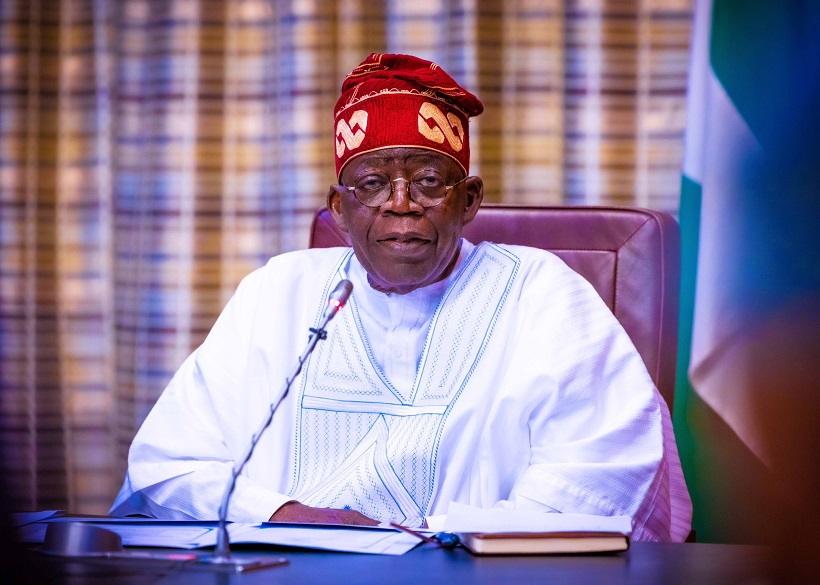
President Bola Ahmed Tinubu has revealed that Nigeria is on track to attract nearly $20 billion in foreign direct investment (FDI) in 2026, citing sweeping economic reforms, improved transparency and efforts to eliminate long-standing business bottlenecks.
Tinubu made the disclosure on Thursday while speaking at the Africa CEO Forum in Kigali, Rwanda, where African leaders and top business executives gathered to discuss economic growth, regional integration and investment opportunities across the continent.
During a presidential panel moderated by renowned journalist Zainab Badawi, the Nigerian leader said his administration’s reforms were already repositioning the country as a major destination for global capital.
“Removing all the bottlenecks gives you the necessary incentives for direct foreign investment into the country,” Tinubu said.
“This year alone, I can beat my chest that Nigeria is attracting close to $20 billion in foreign direct investments.”
The President used the platform to advocate stronger economic independence for African nations, insisting the continent must stop exporting raw materials while importing finished products at significantly higher costs.
According to him, Nigeria is determined to ensure its mineral resources contribute directly to local industrial growth and manufacturing.
“No one can take metal out of Nigeria without adding value,” he stated.
“You can excavate the dust, all the minerals, and go, but no. I can produce batteries for cars with my minerals.”
Tinubu also challenged African countries to leverage their natural resources as financial assets capable of driving local investment and industrial expansion instead of depending heavily on foreign economies.
Speaking on Nigeria’s refining capacity, the President pointed to the success of the Dangote Petroleum Refinery, describing it as proof that strategic collaboration between government and the private sector can transform critical sectors of the economy.
He explained that the Federal Government provided support that enabled the refinery to thrive, including crude supply arrangements and regulatory backing.
“Nigeria could not survive with over 200 million people in peace without a refinery,” he said.
“A risk-taker like Dangote must be encouraged by the government.”
Tinubu noted that the refinery has now become a net exporter of petroleum products, including petrol and aviation fuel.
The President also defended the Federal Government’s decision to supply crude oil to local refineries in naira, saying the move reduces pressure on foreign exchange and shields local businesses from exchange rate volatility.
“My formula is simple: the denominated currency in Nigeria is the naira,” he explained.
He further criticised international credit rating agencies, arguing that many of them fail to accurately reflect the economic potential and growth opportunities within African economies.
Referencing Rwanda’s growth performance, Tinubu questioned whether global financial institutions were paying enough attention to the continent’s progress.
On tax reforms, the President said his administration was simplifying tax processes to improve compliance and make payments more accessible to ordinary Nigerians.
“Tax reform must be written in English, understandable and not Japanese in English,” he said.
“You can pay your taxes from your telephone.”
Tinubu also highlighted ongoing investments in agriculture, infrastructure and technology, including the establishment of thousands of mechanised farming zones and the rollout of more than 90,000 kilometres of fibre optic cable nationwide.
According to him, digital infrastructure will play a crucial role in connecting farmers, traders and students while accelerating the adoption of artificial intelligence, e-commerce and modern communication systems across Africa.
The Nigerian leader further stressed the need for African countries to deepen regional collaboration through the African Continental Free Trade Area (AfCFTA), warning that the agreement must move beyond policy discussions to real implementation.
“Africa needs to put its money where its mouth is,” he said.
“The African Continental Free Trade Area should not be left on the drawing board.”
The Africa CEO Forum, which concludes on Friday in Kigali, remains one of the continent’s biggest platforms for dialogue between political leaders and the private sector on Africa’s economic future.