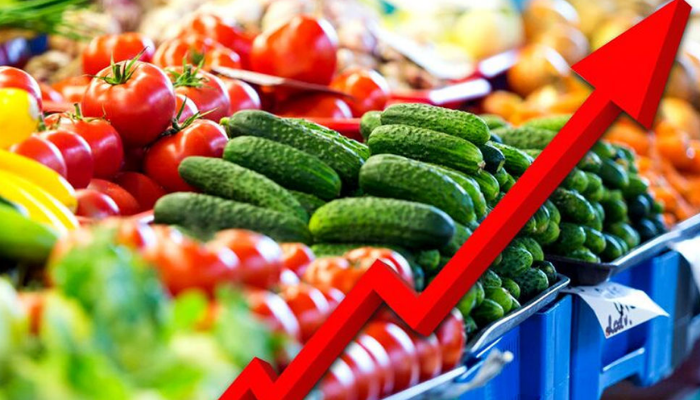
NBS report shows fresh increase in headline inflation, while Enugu, Kwara and Adamawa record the highest food inflation rates nationwide……
Nigeria’s inflation rate rose again in April 2026, as millions of households continued to grapple with rising food prices and the increasing cost of living across the country.
Fresh data released by the National Bureau of Statistics on Friday showed that the country’s headline inflation climbed to 15.69 per cent in April, up from the 15.38 per cent recorded in March 2026.
Despite the increase, the latest figure is significantly lower than the 26.82 per cent inflation rate recorded in April 2025, pointing to a gradual slowdown in the pace of price growth over the past year.
According to the Consumer Price Index (CPI) report published by the NBS, the April inflation figure represents a 0.31 percentage point increase when compared to the previous month.
The statistics agency also revealed that inflation slowed on a month-on-month basis. Headline inflation stood at 2.13 per cent in April, lower than the 4.18 per cent recorded in March.
The development suggests that although prices are still rising nationwide, the speed at which goods and services became more expensive eased slightly during the month under review.
Food prices, however, remained a major pressure point for consumers.
The NBS said food inflation stood at 16.06 per cent year-on-year in April 2026, compared to 24.68 per cent recorded in the corresponding period of 2025.
On a monthly basis, food inflation dropped marginally to 3.63 per cent from the 4.17 per cent posted in March.
The bureau linked the persistent increase in food prices to rising costs of staple commodities including millet, yam flour, fresh ginger, beef, garri, fresh pepper, cassava tuber, beans, Irish potatoes, tomatoes, wheat grain, soybeans, guinea corn and plantain.
The report further highlighted wide disparities across states, with some parts of the country experiencing far steeper food inflation than others.
Year-on-year food inflation was highest in Enugu at 32.67 per cent, followed by Kwara at 30.77 per cent and Adamawa at 30.14 per cent.
On the other hand, Borno recorded the slowest rise in food inflation at 1.67 per cent, while Jigawa and Taraba posted 6.17 per cent and 7.19 per cent respectively.
For month-on-month food inflation, Niger State topped the chart at 8.53 per cent, followed by Bauchi at 6.78 per cent and Kogi at 6.72 per cent.
Kebbi recorded the slowest monthly increase at 0.23 per cent, while Katsina and Bayelsa followed with 0.47 per cent and 1.29 per cent respectively.
The latest inflation report comes amid continued concerns over food affordability, weakening consumer purchasing power and the broader economic impact of rising living costs on Nigerian households and businesses.