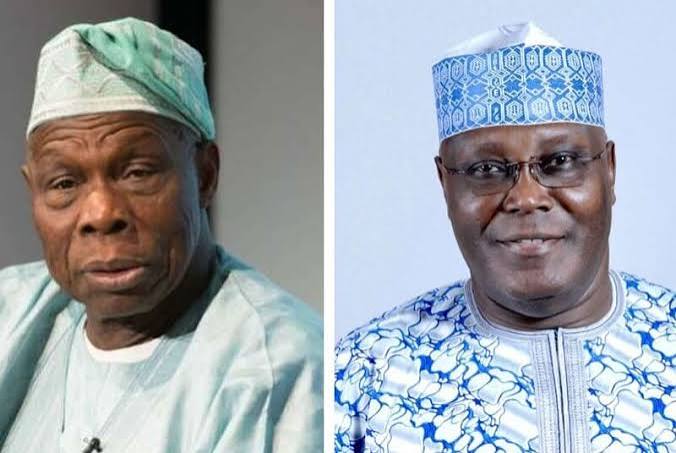
Years after the controversy over a possible third term for former President Olusegun Obasanjo, the political disagreement has resurfaced as Atiku Abubakar defends his actions and says history has already judged the matter.
The former Vice President, who is now the presidential candidate of the African Democratic Congress, reacted to recent comments by Obasanjo, insisting that his opposition to the proposed tenure extension was based on protecting Nigeria’s constitutional democracy.
In a statement issued through his Senior Special Assistant on Public Communication, Phrank Shaibu, Atiku said he received Obasanjo’s remarks with disappointment, arguing that they reflected personal grievances rather than an objective account of past events.
Atiku maintained that his refusal to support the third-term agenda remains one of the defining moments of his political career, saying he chose to defend the Constitution over personal loyalty.
“No individual, regardless of his status or accomplishments, is bigger than the Federal Republic of Nigeria. The Constitution is supreme, and I chose Nigeria over personal loyalty”, Atiku said.
He argued that the opposition to the third-term proposal was not a personal battle but a collective effort to preserve democratic values, adding that Nigerians and democracy ultimately prevailed.
Atiku also referenced comments attributed to the Director-General of the World Trade Organisation, Ngozi Okonjo-Iweala, who he said acknowledged the achievements of the economic team during the Obasanjo administration, where he served as vice president.
He said such recognition reflected the contributions of the administration’s economic managers, despite attempts to diminish their role in Nigeria’s history.
The former vice president also revisited his relationship with Obasanjo before the latter became president in 1999, claiming he supported him during his imprisonment and played a role in helping rebuild his political career after his release.
Atiku said he had no regrets about his past support for Obasanjo, describing it as an act of conviction rather than an expectation of repayment.
“When God gives you the opportunity to lift another human being, you do so without expecting repayment. Acts of kindness are matters of conscience, not commercial transactions”, he said.
He maintained that the events surrounding the third-term controversy would remain part of Nigeria’s democratic history and that future generations would judge the actions of those involved.