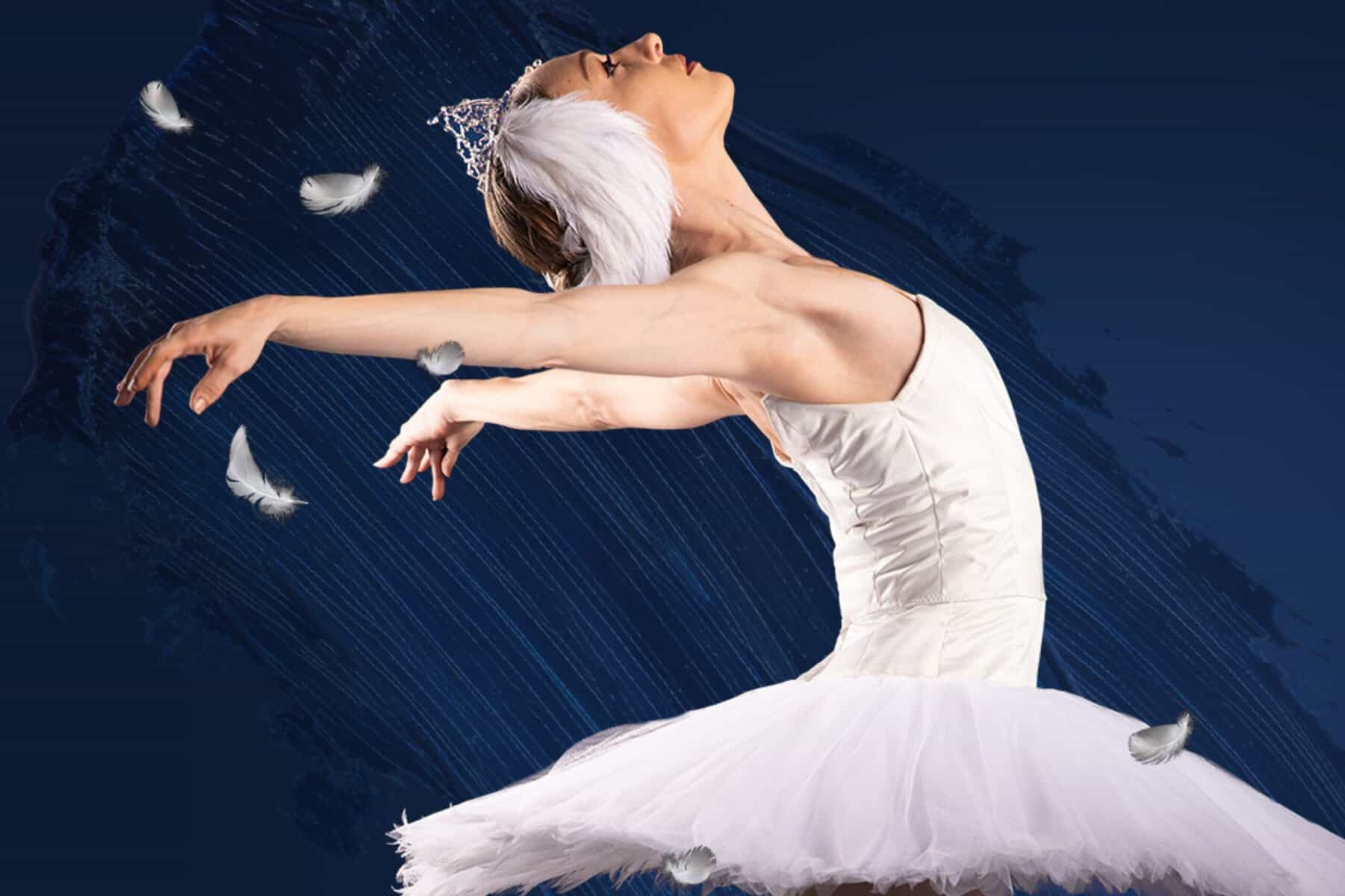
Ballet is not just about tutus, dance and movement.
When you stop staring and start to look, the classic Swan Lake can be somewhat of an unsettling piece.
Themes of manipulation, pressure, identity, and a single, devastating mistake that unravels everything creates a story that feels less like a relic of classical ballet and more like a relevant caution of how easily perception can be distorted by by a controlling figure pulling strings in the background or by someone so convincing in their deception that you don’t even think to question it.
There’s a fine line between truth and illusion, and Debbie Turner, Founder and Artistic Director of Cape Ballet Africa, agreed that Swan Lake is a layered narrative about trust, control, and the fragile line between truth and illusion.
A limited season starting 7 August at Montecasino’s Pieter Toerien Theatre is now open for bookings via Webtickets.
If the character Odile existed today, what form would her deception take?
She would be significantly more than a catfish, and closer to a human deepfake-a careful and calculated strategy designed to trick a particular person is evident.
Her father, Baron von Rothbart, who holds the lowest rank in nobility, desires to upgrade his status, and so has designs on his daughter, Odile, as a possible match for Prince Siegfried- she is complicit in his plans.
It is not only that she lies, but that she imitates Odette so successfully that Siegfried doesn’t even question it.
Are there modern parallels to Siegfried being pressured to choose a bride?
Prince Siegfried being under pressure to choose a bride may be seen to have certain parallels with today’s societies, but just in a different way.
In the historical setting of Swan Lake, it was about royal expectations and the need for the dynasty to be secured.
Today, there appears to be a form of social pressure-people expecting you to “settle down” by a certain age.
Dating apps give one so many options that it becomes hard to choose at all. Prince Siegfried has all the possible brides presented to him that are of desired bloodlines or would represent a political alliance that strengthens his kingdom – a plethora of choices, none of which feel quite right.
Does the idea of a broken vow of true love still hold relevance today?
The “vow of true love” ideal might seem a bit old-fashioned, but it still matters today.
What is interesting is that Prince Siegfried is tricked, but he still ends up breaking his promise. Today, people might argue about whether it really counts if he was manipulated.
But at the end of the day, trust is pivotal in any relationship, and once it’s broken, even by accident, it can be really hard to regain, if at all.
Can Odette’s dual existence be seen as a metaphor for modern identity?
Odette, living as both a swan and a human, presents a tight parallel with how people live online today.
Many people present a polished, perfect version of themselves on social media, in tandem with their far more complicated real life.
Odette’s swan form could represent that “public” version of herself, controlled and shaped by outside forces, while her human side is who she really is. That dichotomy feels very modern, representing a private as opposed to a public life.
Where would the darkness lie in a modern thriller version of ‘Swan Lake’?
If Swan Lake were turned into a Netflix-style thriller, the element of dark seduction and manipulation birthed by Von Rothbart, put into provocative action by Odile, with her father as a backdrop to the scene, places extreme emotional pressure on Prince Siegfried.
The pinnacle of emotion and ultimate collapse of Prince Siegfried, in response to the pressure brought to bear on him by his mother and courtiers to marry, results in his complete surrender to Odile.
He gestures, swearing his intense love for Odile, and the resulting response from the father-daughter duo represents the darkest moment of the ballet.
Von Rothbart’s supreme pleasure of victory in this moment is the epitome of wickedness with an optimal outcome.
Odile is cunning, devious and wily, while Prince Siegfried, intoxicated by the magnetism of Odile, who he truly believes to be Odette, succumbs to the collective deadly potion of Von Rothbart and Odile.
In a modern version, Von Rothbart may represent patriarchal control, hostile surveillance, or even extreme predatory psychological manipulation.
How would you reinterpret the Black Swan vs White Swan dynamic now?
Today, society tends to see characters as more complex.
The Black Swan (Odile) vs White Swan (Odette) juxtaposition would probably be seen less about good vs evil for modern audiences, but rather two sides of the same person; like innocence vs degenerate, vulnerability vs power, pure vs tarnished, confidence vs diffidence.
The tension wouldn’t just be about choosing one, but about the coexistence of character traits in one human.
Is ‘Swan Lake’ ultimately a love story, psychological drama, or cautionary tale?
Swan Lake can be seen as a love story, a psychological drama, or even a warning about being fooled by appearances. Different people will focus on different things. Older audiences might see it more as a tragic romance, while modern viewers might be more interested in the toxic manipulation and identity aspects. It is all about who is watching, and the diversity in those responses is what provokes robust conversation and debate.