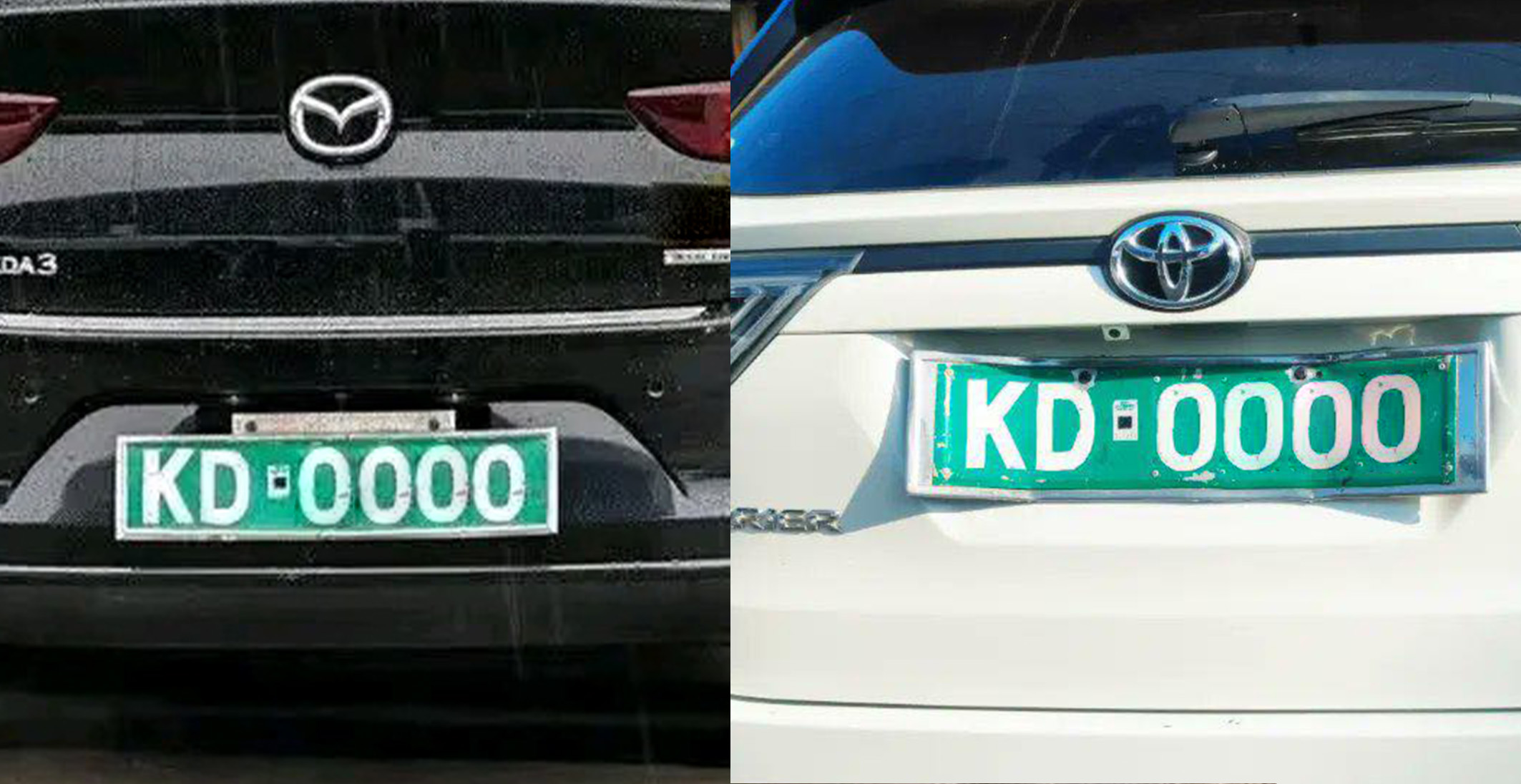
Kenya’s transport regulator has clarified new controls on the use of dealer registration plates commonly known as KD plates, in a move aimed at curbing misuse and enforcing road safety laws.
The National Transport and Safety Authority (NTSA) said the measures are anchored in Section 24 of the Traffic Act (Cap 403), which governs the use of a dealer’s general licence.
According to NTSA Director General Nashon Kondiwa , motor vehicle dealers must pay prescribed annual fees, including Sh9,600 for new vehicle dealers and Sh4,200 for second-hand dealers. New KD plates will cost Sh18,500, while renewals are set at Sh6,300.
“The Authority, in undertaking its mandate, has implemented Section 24 of the Traffic Act that provides for the use of a dealer’s general licence,” he said.
He stressed that KD plates are not a substitute for standard number plates, even during delays in plate issuance.
Instead, their use is restricted to specific purposes outlined in law, such as vehicle testing or transfer by licensed dealers.
“A KD plate is not a substitute for a standard motor vehicle registration plate. Its use is strictly governed by the law,” Mr Kondiwa said, adding that the legislation clearly defines both permitted uses and prohibitions.
Concerns have been raised by some dealers that the stricter enforcement could disrupt the movement of vehicles. However, NTSA dismissed fears of a potential crisis, maintaining that sufficient KD plates are available.
“The Authority has adequate number of KD plates and dealers can apply for them via their accounts,” he said, urging stakeholders to clarify any anticipated challenges.
On insurance requirements, NTSA reiterated that all vehicles driven on public roads must have at least third-party insurance cover, as required under the Insurance (Motor Vehicle Third Party Risks) Act.
“The minimum legal requirement for all motor vehicles on public roads is Third Party Insurance,” he added. “No vehicle can be used or permitted to be used on a road without a valid policy covering third-party risks.”
The regulator also warned motorists against using improvised number plates, such as printed papers or cardboard, while waiting for official plates.
There is no provision for the use of printed papers, cardboard, or makeshift displays in the Traffic Act,” NTSA said, advising motorists to promptly collect their number plates once notified.
The move is part of broader efforts to streamline vehicle registration processes and ensure compliance with road safety regulations across the country.