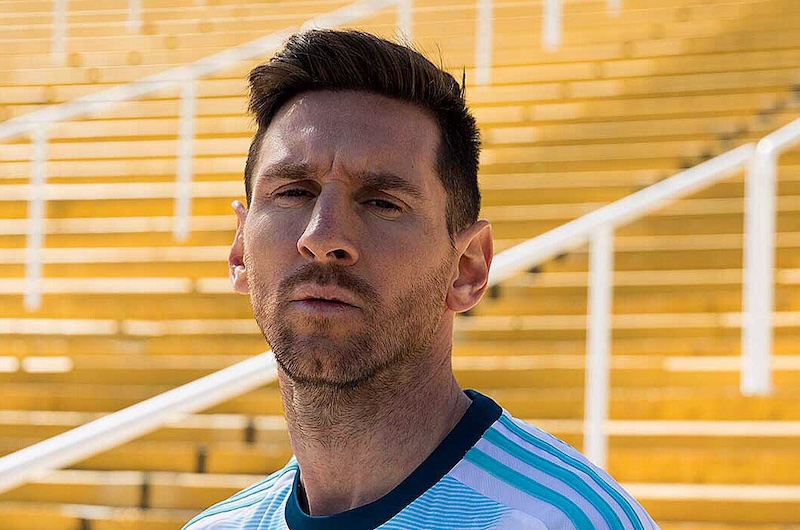
The biggest football (or is it soccer?) extravaganza came to an end on Monday morning, East African time, after a month of drama, relentlessness, pure ecstasy, and even tears in host countries Mexico, Canada, and the USA.
By the end of the tournament, Spain had triumphed over Lionel Messi’s Argentina, who were the defending champions. Messi, one of the greatest players of all time and considered in the same bracket by many as Brazilian legend Pelé and Argentinian god Diego Maradona (both deceased), was participating in his third final following those in 2014 and 2022.
Unlike in 2022, he left empty-handed after Spain exhibited their famous tiki- taka football once again for 120 minutes that ended with their 1-0 triumph. Messi left the pitch in tears. At 39, it is most likely the last time he will ever participate in the World Cup.
By the time the next tournament takes place in 2030, he will be 43 years old and really too old to compete. Even in this tournament, he was defying odds. Most outfield players retire before their 40s.
Cristiano Ronaldo of Portugal did in this World Cup at 41 years old, but the results were disappointing. Many pundits and fans blamed him for his country’s lack of bite. The majority of footballers have relatively short careers spanning about 10 years of playing at the highest levels.
By the time they are 30 years old, their legs are gone. Many top clubs start only giving players aged 30 and above short contracts of about a year. At 35 years old, they barely play for top clubs and in top leagues.
They have to migrate from Europe to leagues that aren’t so competitive, like Major League Soccer (MLS) in the USA or the Saudi Pro League in Saudi Arabia. Some return to their small boyhood clubs that play in lower divisions.
Messi himself left Europe long ago to settle at Inter Miami in the USA, where the competition is not steep and older players start their retirement programs. However, it is remarkable that Messi has been able to take Argentina to the final of the World Cup almost single-handedly, largely participating as a playmaker and on-field advisor to his young compatriots who still have legs to run.
He ended up scoring eight goals and assisting four times. Only French hotshot Kylian Mbappe, at 27 years old, scored more (10). There is a lot to learn from Messi.
How has he managed to keep himself competitive and playing top football at the age when his contemporaries are long retired and only participating in the game in other roles as coaches, managers, pundits, and club owners?
If you have watched Messi over the last 20 years, you have realized that he adjusted his game. During this World Cup, he rarely tracked back or ran at full strength at defenders like he used to do. He knew he wouldn’t be able to do that.
He scanned the pitch constantly, searching for spaces, and whenever he got the ball, he knew where to position himself or place a defence-splitting pass. He became more involved in dead-ball situations.
That way he would be able to dictate play. Because of his ability to conserve energy and occupy pockets of space, Messi was able to play in all eight games Argentina participated in, with three of those lasting 120 minutes.
Argentina were an ordinary team this World Cup that relied heavily on the genius of their charismatic talisman to reach the final and come within even a few minutes of taking Spain to penalties, where anyone could have won.
Learning from Messi means conditioning ourselves to perform better in our professions by adapting to the specific demands of our work and making demands of our work and taking the necessary adjustments. We can learn to manage pain.
We can wake up and be hopeful, and we can overcome adversity and be able to achieve great things. When Argentina lost the 2014 World Cup final to Germany and the 2016 Copa America to Chile, Messi quit the national team.
However, he was convinced to return and lead Argentina to victory in the Copa America in 2021, followed by the World Cup in 2022 and another Copa America in 2024. He is human, so he doubted himself at one stage but was able to return and cement his status among the greatest of all time.
We learn from him that we can fall, but as long as we can start again, positive things can still happen. Messi may not have won the 2026 World Cup, but his long career offers lessons in resilience, hard work, and vigilance.
djjuuko@gmail.com
The writer is a communication and visibility consultant.