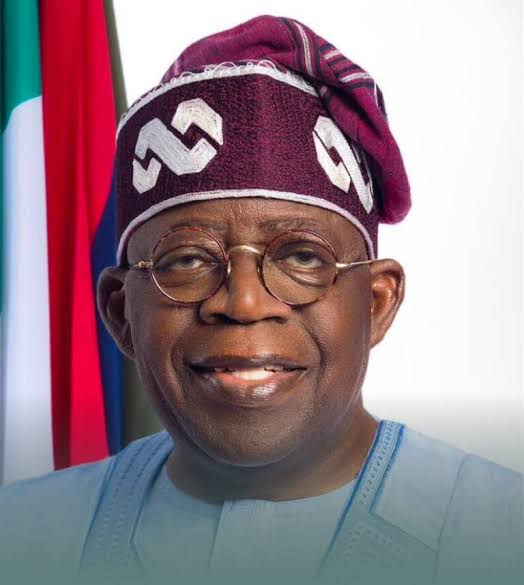
President Bola Tinubu on Wednesday flagged off the construction of the 700-kilometre Akwanga–Jos–Bauchi–Gombe–Biu–Maiduguri Superhighway, describing it as the fourth Legacy Project under his administration’s Renewed Hope Agenda, while approving the immediate release of N111 billion for the commencement of the project.
The approval was announced by the Minister of Works, David Umahi, during the groundbreaking ceremony for Section One, Phase One of the project, a 125-kilometre stretch linking Akwanga and Jos through Nasarawa, Kaduna and Plateau states.
Represented at the event by the National Chairman of the All Progressives Congress (APC), Prof. Nentawe Yilwatda, Tinubu said the superhighway would serve as a critical transport corridor connecting communities across the North-Central and North-East geopolitical zones, improving road safety, enhancing security and stimulating economic activities.
He said the 700-kilometre highway, comprising the Akwanga–Jos, Jos–Bauchi, Bauchi–Gombe, Gombe–Biu and Biu–Maiduguri sections, was designed to connect people, markets and opportunities rather than merely linking cities.
“These are not just names of routes. They are communities. They are markets. They are villages. They are state capitals. They are security passages and gateways into one of Nigeria’s most important regions,” the President said.
Tinubu disclosed that work had already commenced on the Gombe–Maiduguri section of the highway and assured Nigerians that the remaining sections would soon be procured and awarded.
He also highlighted progress on other flagship road projects under his administration, including the Lagos–Calabar Coastal Highway, the Sokoto–Badagry Superhighway and the Trans-Sahara Trade Route.
According to him, Section One of the Lagos–Calabar Coastal Highway in Lagos has been substantially completed, while Section Two in Ogun State has reached about 60 per cent completion. Sections 3A and 3B in Akwa Ibom and Cross River states are at 20 per cent completion, while Sections 4A and 4B in Akwa Ibom have attained five per cent completion.
On the Sokoto–Badagry Superhighway, Tinubu said Section One in Sokoto had reached 40 per cent completion, while Section Two in Kebbi State stood at 60 per cent.
He expressed confidence that all the legacy road projects would be completed, saying they would drive economic transformation and national integration.
The President also disclosed that the North-Central geopolitical zone currently has the highest number of ongoing federal road projects, with 35 major projects, including five completed and 30 ongoing, alongside 61 emergency intervention projects.
Tinubu directed governors of states along the project corridor to establish setback plans for future road expansion and urged contractors to engage youths from host communities through job creation and skills acquisition programmes.
Earlier, Umahi announced that Tinubu had approved the immediate release of N111 billion to the contractor handling the project to facilitate mobilisation to site.
“To the glory of God, you will not stop this project. Let me announce that the President has approved the immediate release of N111 billion to this contractor for take-off,” the minister said, adding that the payment would be made within the week following the President’s approval.
Umahi described the Akwanga–Maiduguri Superhighway as a strategic infrastructure project that would strengthen national connectivity and support economic growth by reducing travel time and improving the movement of goods and people.
He said the project formed part of Tinubu’s four Legacy Projects, which he noted were designed to connect all six geopolitical zones through an integrated highway network.
According to the minister, only 30 per cent of the project’s funding would come directly from the Federal Government, while the remaining 70 per cent would be sourced through foreign financing arrangements.
He invited capable contractors with access to international financing to partner with the government on other sections of the project yet to be awarded.
Umahi also reaffirmed the Ministry of Works’ preference for reinforced concrete pavement technology over asphalt for federal highways, arguing that concrete roads offer greater durability and lower maintenance costs.
He urged contractors to support community development by training local youths, transferring technical skills and creating employment opportunities in communities along the highway corridor.
The Akwanga–Maiduguri Superhighway is the fourth of Tinubu’s Legacy Projects, following the Lagos–Calabar Coastal Highway, the Calabar–Abuja Superhighway and the Sokoto–Badagry Superhighway.