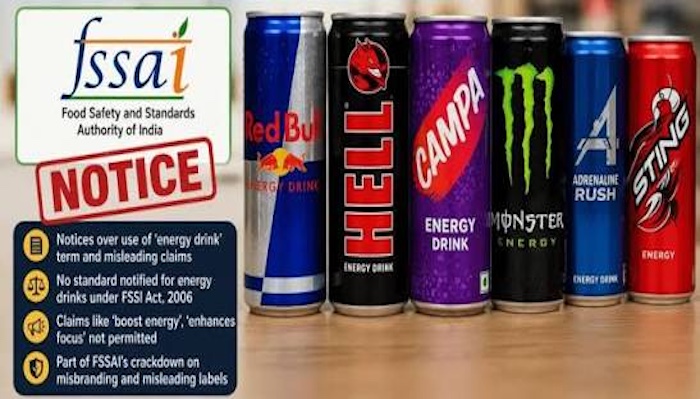
India has ordered manufacturers of high-caffeine beverages marketed as “energy drinks” to stop using the description, escalating regulatory scrutiny of a fast-growing market projected to be worth $1.6 billion by 2028.
The Food Safety and Standards Authority of India (FSSAI) issued notices earlier this month stating that there are no recognised Indian standards for products labelled as “energy drinks” and warning that claims suggesting such beverages “vitalise body and mind” or “aid in general weakness” are misleading.
While the regulator disclosed the notices publicly, confidential documents and sources familiar with the matter revealed that the directive went further, instructing major manufacturers, including Pepsi, Red Bull, Monster Beverage, Reliance Consumer Products and Hell Energy, to remove the term “energy drink” or any similar descriptor from product labels.
The move has sparked resistance from the beverage industry, which argues that removing the category label could undermine brands built around instant-energy marketing and hurt sales.
According to two sources familiar with the discussions, FSSAI Chief Executive Rajit Punhani rejected industry arguments during a closed-door meeting with senior executives on Friday, telling companies they were free to challenge the directive in court if they disagreed with it.
Neither the FSSAI nor Punhani responded to requests for comment. Pepsi declined to comment, while Red Bull, Monster Beverage, Reliance and Hell Energy did not respond to Reuters’ enquiries.
However, an Indian government source said the industry ultimately agreed to comply with the labelling requirement after the meeting, with the regulator granting companies 90 days to implement the changes.
The crackdown comes amid growing international concerns over the health effects of beverages containing high levels of caffeine, sugar and taurine. England is set to ban the sale of high-caffeine energy drinks to children under 16 from April next year, while some regions in Pakistan already require such products to be labelled as “stimulant drinks.”
The Indian Beverage Association, which represents major beverage companies, said it remained committed to complying with regulations and engaging constructively with authorities on science-based policymaking.
In a confidential letter dated July 6, however, the association urged the FSSAI to adopt a more consultative approach, warning that public disclosure of preliminary notices could damage company reputations, disrupt operations and confuse consumers.
It called for “regular stakeholder consultations before implementing significant interpretational changes,” arguing that a “predictable, consultative and transparent” regulatory framework would reduce litigation and facilitate smoother compliance.
India’s energy drinks market has expanded rapidly since Pepsi introduced its low-cost Sting brand in 2017. Sold in 20-rupee ($0.21) bottles, the product gained popularity among teenagers and consumers in rural areas, helping it become the country’s market leader, according to market research firm Euromonitor.
Retail sales of such beverages are forecast to reach $1.6 billion by 2028, growing at an average annual rate of 12.6%, outpacing growth in both the United States and China. Euromonitor estimates that sales volumes nearly doubled each year between 2018 and 2023.
Among regular consumers is 24-year-old bike mechanic Sunny Rajvansi from Uttar Pradesh, who said he frequently drinks Pepsi’s Sting and Reliance’s Campa Energy.
“Every time when we feel hungry or go out for a smoke, I buy one drink. It fills my stomach and it gives me strength to work,” Rajvansi said, adding, “I feel I am addicted to them.”
Enforcement has already begun at the state level. Authorities in Rajasthan have seized thousands of bottles of Sting, Campa Energy and Red Bull as part of an ongoing compliance drive.
On July 8, the state government also instructed major e-commerce platforms, including Amazon, Flipkart, Blinkit and Swiggy Instamart, to ensure that no beverages were advertised or promoted as “energy drinks”, according to an official letter.
Boluwatife Enome