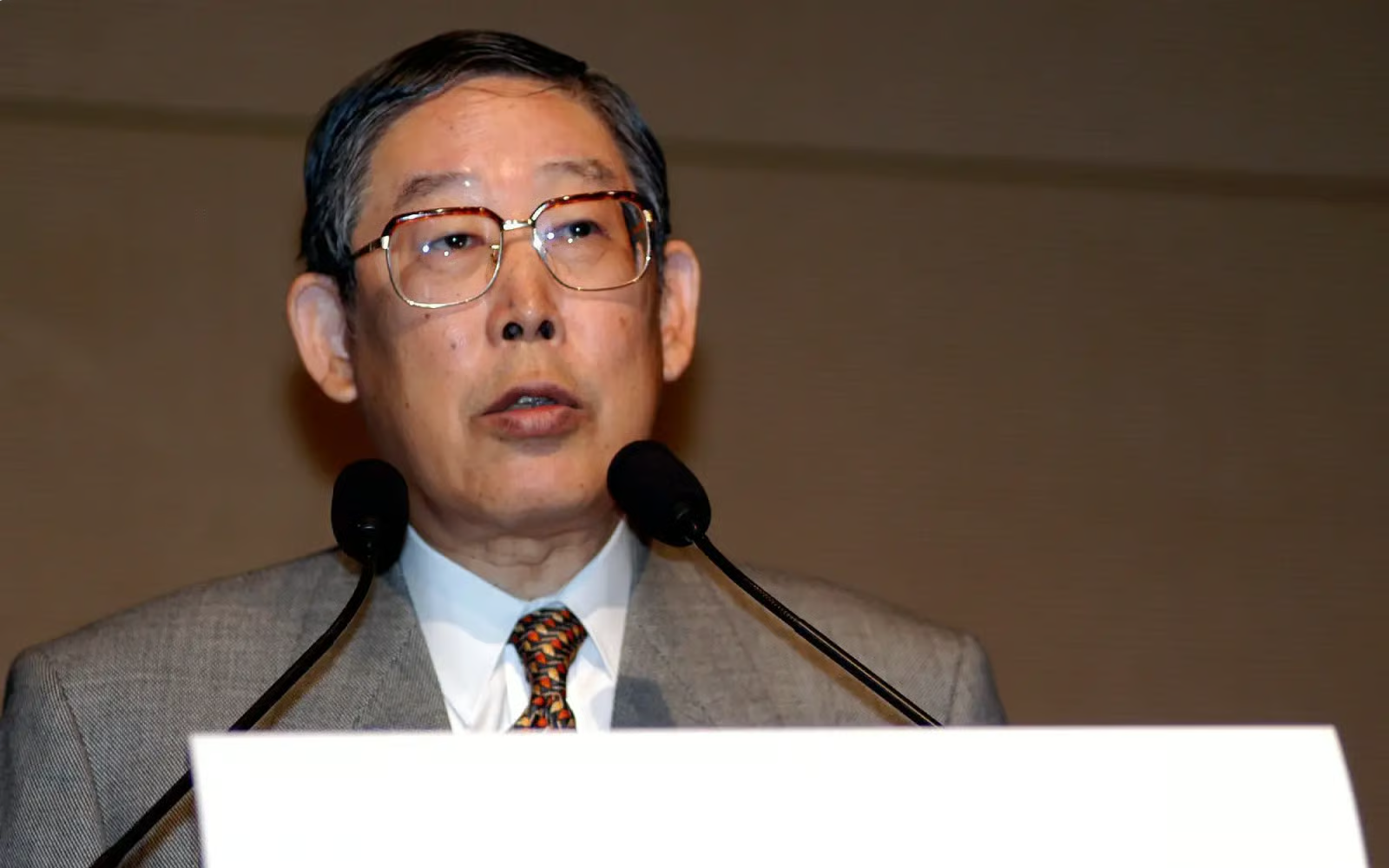
Former Toyota president and chairman Hiroshi Okuda, the executive widely credited with helping transform the Japanese automaker into a global powerhouse and championing the pioneering Prius hybrid, has died at the age of 93.
Toyota confirmed Okuda’s death on Wednesday but did not immediately disclose the cause or other details surrounding his passing.
Okuda took charge of Toyota in 1995 at a pivotal moment for the company, becoming the first executive from outside the founding Toyoda family to lead the automaker in several decades.
His tenure marked a period of aggressive expansion and innovation as Toyota sought to strengthen its position in an increasingly competitive global automobile industry.
Champion of the Prius
One of Okuda’s most enduring legacies was his support for the development and mass production of the Prius, which became a landmark in the history of hybrid vehicles.
Introduced in Japan in 1997, the Prius was the world’s first mass-produced petrol-electric hybrid vehicle and helped establish Toyota as an early leader in fuel-efficient automotive technology.
At a time when fully electric vehicles were still considered a niche technology with uncertain commercial prospects, the Prius offered consumers an alternative that combined a conventional petrol engine with electric propulsion.
The model subsequently became one of the most recognisable hybrid vehicles worldwide and helped shape the broader shift towards lower-emission automobiles.
Okuda also backed products such as the RAV4, helping Toyota broaden its appeal in international markets.
Driving Toyota’s Global Expansion
During Okuda’s leadership, Toyota accelerated its international expansion, opening and expanding manufacturing operations outside Japan as the company pursued a larger share of the global automotive market.
His tenure helped lay the foundation for Toyota’s eventual rise to the position of the world’s largest automaker by vehicle sales, surpassing General Motors.
Beyond Toyota, Okuda became an influential figure in Japanese business and public policy.
He later served as chairman of Keidanren, Japan’s largest business federation, and was regarded as an important adviser to successive Japanese governments on economic and industrial matters.
A Reputation for Boldness
Okuda was known for an outspoken and unconventional leadership style that contrasted with Toyota’s traditionally cautious corporate culture.
A black belt in karate, he was also recognised for his willingness to take risks and challenge established practices.
His career included an unusual episode in the Philippines in the early 1970s, when he reportedly travelled through a jungle to meet left-wing guerrillas while overseeing Toyota’s operations in the country.
The encounter reflected the approach that would later characterise his leadership at Toyota: engaging directly with difficult situations while pursuing opportunities beyond the company’s traditional boundaries.
Okuda’s influence extended beyond the products Toyota produced. He pushed the company towards a more aggressive global strategy, encouraged technological innovation and helped position the automaker for the major transformation that followed in the international car industry.
His death marks the passing of one of the most influential figures in Toyota’s modern history, remembered particularly for helping steer the company towards global dominance while laying the groundwork for its early leadership in hybrid technology.