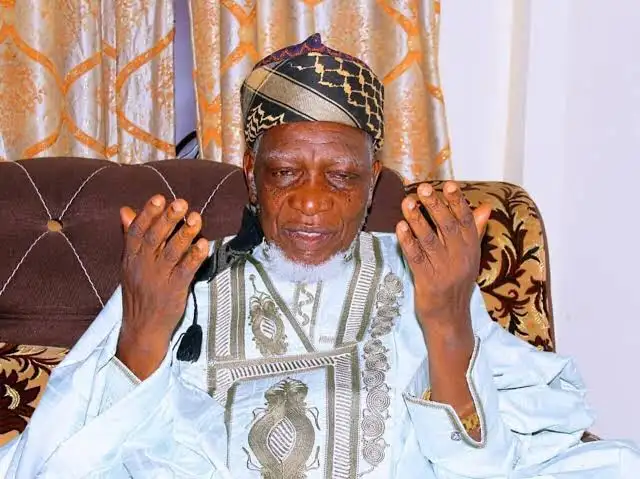
Fresh controversy has erupted over Nigeria’s 2027 presidential race following comments by Islamic cleric Sani Jingir advocating for another Muslim-Muslim presidential ticket.
Jingir made the remarks during a mass wedding organised by the Kano State Government for 1,500 couples, where he urged Muslim voters to use their numerical strength to influence the outcome of the next presidential election.
His position has since generated criticism and renewed debate over religion, political representation and the delicate balance between Nigeria’s Muslim and Christian populations.
The controversy comes after the Muslim-Muslim ticket adopted by President Bola Tinubu and Vice-President Kashim Shettima in the 2023 presidential election broke with the informal political practice of balancing presidential tickets between the two major religious groups.
The arrangement has historical precedent, notably in the 1993 presidential election when the Social Democratic Party candidate, Moshood Abiola, chose fellow Muslim Babagana Kingibe as his running mate.
Cleric Defends Position
Jingir has refused to withdraw his position despite the backlash, maintaining that his advocacy is rooted in his religious convictions rather than support for any particular politician.
In a subsequent interview with the BBC Hausa service, the cleric reportedly maintained that he would continue to support the idea of Muslims voting for a Muslim presidential ticket in 2027.
He also sought to distance his position from both Tinubu and former President Muhammadu Buhari, arguing that his stance should be viewed primarily through the lens of his religious beliefs.
Jingir said he regarded political participation as an important religious responsibility and considered the pulpit a legitimate platform for educating his followers on matters he considers relevant to their faith and society.
He also indicated that he expected criticism but remained unwilling to retreat from his position.
Debate Over Religion and Politics
The cleric’s comments have reignited one of Nigeria’s most sensitive political debates: whether religious identity should play a determining role in the selection of presidential candidates and voting decisions.
Supporters of religious balancing argue that Nigeria’s deep religious diversity makes inclusive political arrangements essential for national cohesion. Critics of the arrangement, however, contend that competence, integrity and policy should take precedence over religious identity.
Jingir has rejected suggestions that his comments amount to incitement, maintaining that he was merely encouraging Muslims to vote in accordance with their convictions.
He has also argued that his call is not an instruction for Muslims to support a particular candidate, but rather an appeal for them to consider candidates who share their faith and meet his standards of righteousness and good governance.
Political Implications Ahead of 2027
The renewed debate comes as political parties and potential presidential contenders begin positioning themselves ahead of the 2027 general election.
Nigeria’s political landscape remains deeply influenced by regional, ethnic and religious considerations, making the question of presidential tickets particularly sensitive.
The 2023 election demonstrated the political risks and opportunities associated with religious identity after the ruling All Progressives Congress (APC) fielded the first Muslim-Muslim presidential ticket to win a presidential election since the return to democratic rule in 1999.
While the arrangement did not prevent Tinubu from winning the election, it generated intense opposition from several Christian groups and political actors during the campaign.
Jingir’s latest intervention has therefore reopened a debate that is likely to become increasingly prominent as political parties prepare for 2027.
At the heart of the controversy is a broader question about Nigeria’s political future: whether voters should prioritise religious representation or judge candidates primarily on competence, character, policies and their ability to govern a religiously and culturally diverse country.
With the next presidential election still ahead, the reaction to Jingir’s comments suggests that religion will remain a significant and potentially contentious factor in Nigeria’s political conversation.