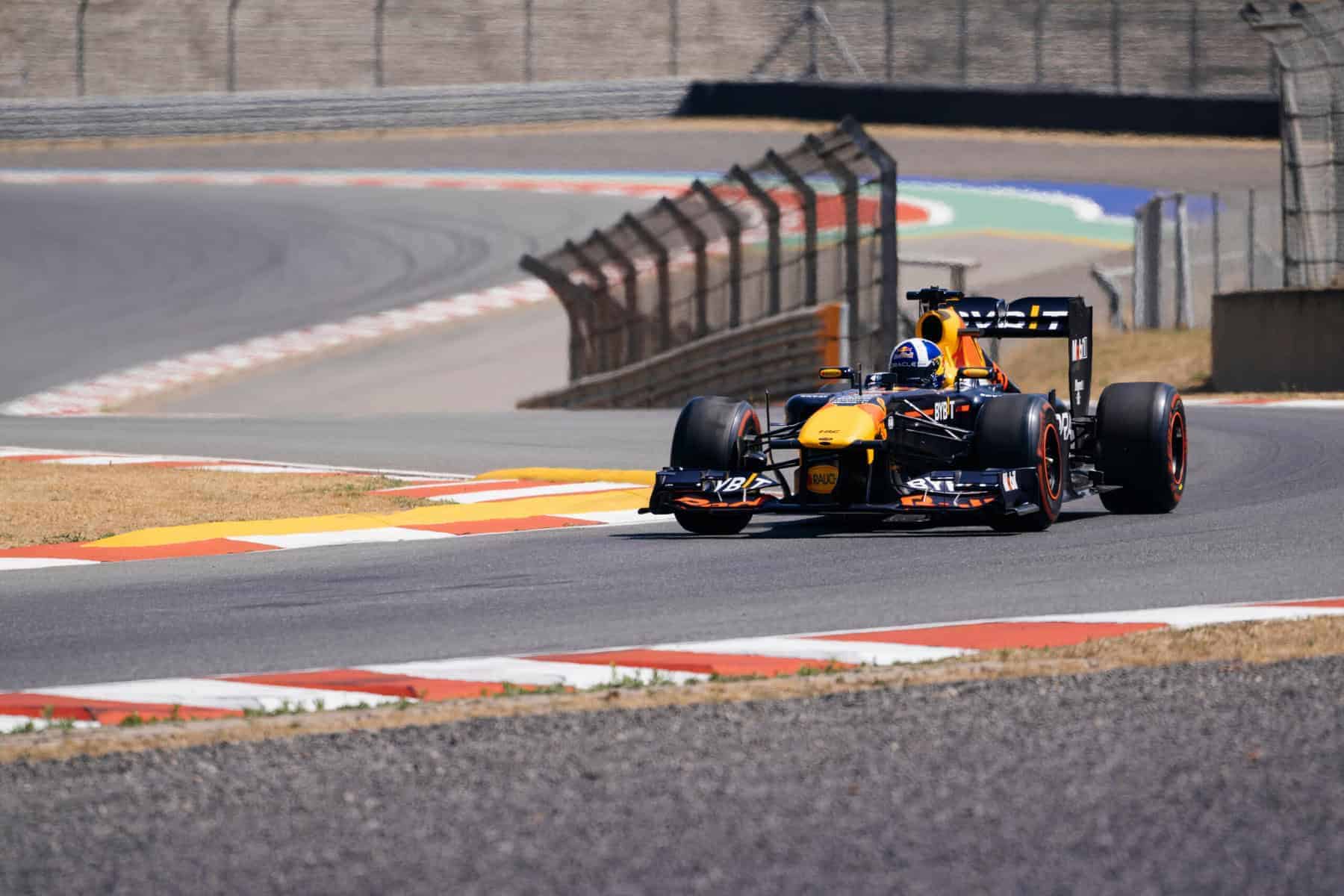
The debate over Formula 1’s return to Africa has shifted from possibility to practicality, with South Africa now facing the decisive question of whether it can move fast enough – and with sufficient alignment – to seize an opportunity whose sporting, economic and developmental value is becoming increasingly undeniable.
After much anticipation, South African F1 fans were left disappointed earlier this year after it was announced that the country would not host a Grand Prix in 2027 because it had underestimated the requirements for staging an F1 race.
Ramaphosa at F1
Last week, Sport, Arts and Culture Minister Gayton McKenzie said during a media briefing that President Cyril Ramaphosa agreed to join him at an F1 Grand Prix later this year.
“This is a working visit, not a social one. Its purpose is to support South Africa’s ambition to bring Formula One back to the African continent for the first time since our country became a democracy.”
However, while momentum has accelerated over the past year with Kyalami’s proposed upgrade path to FIA Grade 1 status, the standard required to host Formula 1 was approved in June 2025. South Africa’s bid to bring F1 back to African soil is no longer a nostalgic sporting ambition; it is a commercially credible opportunity backed by hard numbers.
Motorsport
For Wesleigh Orr, founder and head coach of WORR Motorsport, the significance of this moment goes far beyond the symbolism of motorsport.
“South Africa has already proven that it can host events of enormous scale and complexity under international scrutiny. The Formula 1 conversation should now be less about whether we are capable, and more about how the right public and private stakeholders align to make it happen.”
World Cup
South Africa’s ability to deliver major sporting events is already well established. The 2010 FIFA World Cup remains one of the clearest examples.
According to South African Tourism, 309,554 foreign tourists travelled to South Africa specifically for the tournament, generating over R3 billion in direct tourist spend.
Those are not abstract legacy figures. They are proof that premium global sport can translate into measurable returns for the country’s tourism and hospitality sectors.
LIV Golf
Orr said more recent examples reinforce that point.
“South African Tourism said the inaugural LIV Golf event at Steyn City generated economic impact of more than R800 million, underlining the scale of value a high-profile international sporting property can create in a short period of time through tourism, accommodation, hospitality, transport and associated local spending.
“Major international sport is not just about spectatorship,” Orr says. “It is a tourism driver, a destination marketing platform, a catalyst for jobs, and a powerful signal to investors. South Africa has already demonstrated that it can capture value from world-class events. Formula 1 would take that to another level.”
Grand Prix circuit
While circuit readiness is often raised as the central obstacle, that debate has evolved materially. With FIA approval of Kyalami’s Grade 1 upgrade plans already secured, the discussion is now increasingly about execution, timelines and stakeholder alignment rather than theoretical feasibility.
Orr added that in practical terms, South Africa now has a defined pathway, not merely an aspiration.
But beyond the infrastructure case and the economic upside, Orr believes there is another reason this matters deeply: what Formula 1’s return could mean for young South Africans and young Africans pursuing Formula-level racing.
“At present, many of the continent’s most promising drivers are forced to look abroad early if they want to pursue serious single-seater development.
“The reality is that elite motorsport opportunities are still concentrated outside Africa, making the pathway feel physically, financially and psychologically distant for many young drivers and their families,” Orr said.
F1 in SA
Africa has not hosted a Formula 1 Grand Prix since 1993, when Kyalami last appeared on the championship calendar, and it remains the only inhabited continent still absent from the Formula 1 calendar today.
“When Formula 1 only happens elsewhere, it can start to feel like the top of the sport belongs somewhere else,” said Orr. “The moment it returns to Africa, it becomes more real. It becomes visible, tangible and believable for young drivers who need to see that this level of racing is not reserved for other parts of the world.”
Opportunity
For Orr, the real long-term opportunity is not only hosting one of the world’s most prestigious sporting events, but to help ensure that Africa is more fully represented in the sport’s future, from drivers and engineers to technical teams, operations, hospitality and commercial partnerships.
“It is not only about bringing a race to South Africa,” he said. “It is about building an industry, creating opportunity, and helping more young Africans believe that Formula-level racing is something they can pursue from a place of real proximity, not only from afar.”
SA’s F1 case
According to Orr, as momentum continues to build, South Africa’s Formula 1 case is becoming clearer.
“The event-hosting track record exists. The circuit pathway is more defined than it has been in years. The global appetite for a race in Africa is growing. And the developmental case for what such a race could unlock for the next generation of African talent is becoming increasingly compelling.
“The question is no longer whether the opportunity is meaningful,” Orr concludes. “The question is whether we are prepared to execute. Because this is bigger than one race. It is about economic value, global visibility, and changing Formula racing in Africa from a distant dream into a more tangible future,” Orr said.
F1 fever
F1 fever in South Africa hit the headlines when Sport, Arts and Culture Minister Gayton McKenzie met with Formula 1 CEO Stefano Domenicali at the Azerbaijan Formula 1 event in September 2024.
At the time, McKenzie said South Africa was “one step closer to bringing F1 to the country, while at the same event, he also had an extremely good meeting with President Mohammed Ben Sulayem of the FIA”, where they discussed support for South Africa’s F1 bid.
2027 was always expected to be the date of the South African F1 Grand Prix, with McKenzie making several announcements about the sport coming to the country that year.