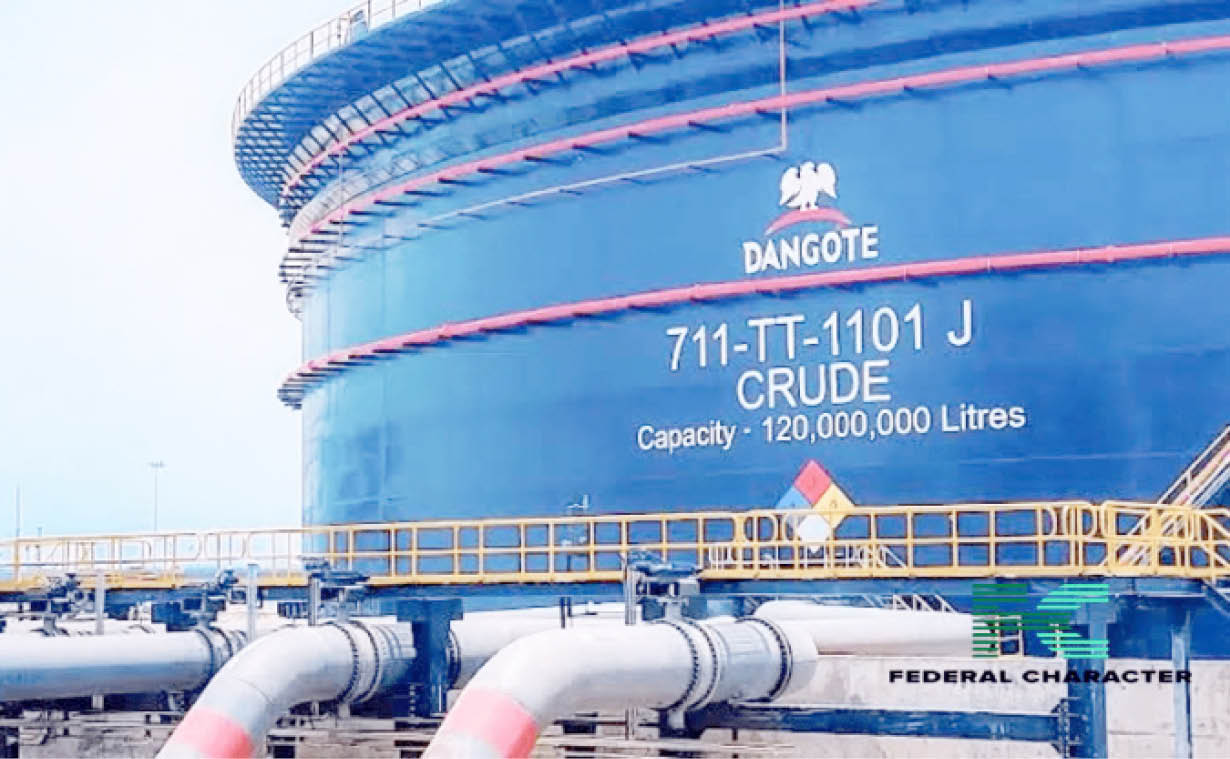
Africa’s largest refinery secures its first Middle Eastern crude cargoes as domestic supply challenges force a broader sourcing strategy…..
The Dangote Petroleum Refinery has, for the first time, purchased crude oil from the United Arab Emirates, marking a significant shift in its sourcing strategy as it seeks to overcome persistent shortages in domestic crude supply.
The acquisition of two cargoes from the UAE represents the refinery’s first crude imports from the Middle East since commencing operations, according to a report by S&P Global Commodity Insights.
Until now, the 700,000-barrels-per-day refinery had relied largely on Nigerian crude, alongside supplies from other African producers and the United States. The latest purchases indicate a deliberate move to diversify its feedstock as demand for crude continues to rise.
The report noted that the purchases became possible following the resumption of oil exports from the Middle East after the United States and Iran reached an interim peace agreement, easing concerns over shipping through the Strait of Hormuz.
Although the refinery was designed primarily to process Nigeria’s light sweet crude, it has increasingly expanded the range of crude grades it can refine as production scales up.
Dangote Refinery has benefited from an arrangement with the Nigerian National Petroleum Company (NNPC), which provides between 13 and 15 cargoes of Nigerian crude monthly under a naira-for-crude agreement. The deal was introduced to reduce the refinery’s dependence on foreign exchange for crude purchases.
However, recurring shortages of locally available crude and operational disruptions at export terminals have reportedly affected the consistency of those supplies.
Earlier this year, the refinery’s Chief Executive Officer, David Bird, disclosed that supply constraints had forced the company to explore alternative crude sources outside Nigeria to maintain stable operations.
The refinery’s appetite for crude is also expected to grow significantly in the coming years. Dangote plans to double its refining capacity to 1.4 million barrels per day by the end of 2028, a milestone that would enable the facility to process roughly 80 per cent of Nigeria’s current daily crude oil production.
As part of that long-term strategy, Bird revealed that the refinery intends to increase the proportion of heavier crude grades in its processing mix.
“We definitely want to heavy up the barrel,” Bird said during an industry event in April.
He added that once the expansion is completed, the refinery could process Middle Eastern crude across its refining trains, with heavier grades accounting for as much as 30 per cent of the feedstock blend.
According to S&P Global Commodity Insights, the refinery is steadily broadening the range of crude grades it processes as it positions itself to operate as a fully merchant refinery serving both domestic and international markets.
Data cited in the report shows that Nigerian crude accounted for about 70 per cent of the refinery’s crude imports in 2025, while supplies from the United States made up approximately 24 per cent. The addition of UAE cargoes further strengthens the refinery’s efforts to diversify its supply chain and reduce reliance on any single source.