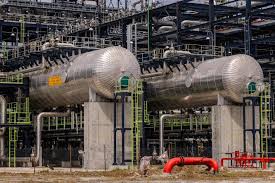
Dangote Refinery Ramps Up Capacity to 700,000 Barrels Per Day
Dangote Petroleum Refinery & Petrochemicals has increased its crude oil processing capacity to 700,000 barrels per day (bpd) following a successful performance test conducted by process licensors, marking a key milestone in its expansion drive. The new output surpasses the refinery’s nameplate capacity of 650,000 bpd, underscoring improved efficiency and strengthening its position as the …
Dangote Petroleum Refinery & Petrochemicals has increased its crude oil processing capacity to 700,000 barrels per day (bpd) following a successful performance test conducted by process licensors, marking a key milestone in its expansion drive.
The new output surpasses the refinery’s nameplate capacity of 650,000 bpd, underscoring improved efficiency and strengthening its position as the world’s largest single-train refinery.
Vice President, Oil and Gas at Dangote Industries Limited, Devakumar Edwin, said the increase is part of a broader plan to more than double capacity to 1.4 million bpd within the next 30 months.
He said the expansion will boost Nigeria’s energy self-sufficiency, reduce reliance on imported petroleum products, and position the country as a major regional export hub.
Owned by industrialist Aliko Dangote, the refinery began production in 2024 and has steadily expanded output of petrol, diesel, aviation fuel, and other refined products for both domestic and international markets.
It currently exports to several African countries and destinations in Europe, including the United Kingdom, France, Spain, Italy, and the Netherlands, while also supplying jet fuel to Saudi Arabia and gasoline to the United States.
The refinery recently emerged as the world’s largest exporter of jet fuel in April, according to S&P Global Commodities. It has also helped stabilise fuel supply, reduce import dependence, and ease pressure on Nigeria’s foreign exchange reserves, while supporting industrial growth.
Looking ahead, Dangote has outlined plans to make the facility the world’s largest refinery by 2028, with expanded output expected to boost jobs, trade, and downstream industries.