Cape Town is investing heavily to minimise the damage of natural disasters, following repeated storms in the province in the last two months.
The City of Cape Town’s Water and Sanitation Directorate this week noted efforts to reduce flood risks and improve water quality by investing more than R85 million in 12 critical pre-winter readiness interventions across the metro.
Intense maintenance operations
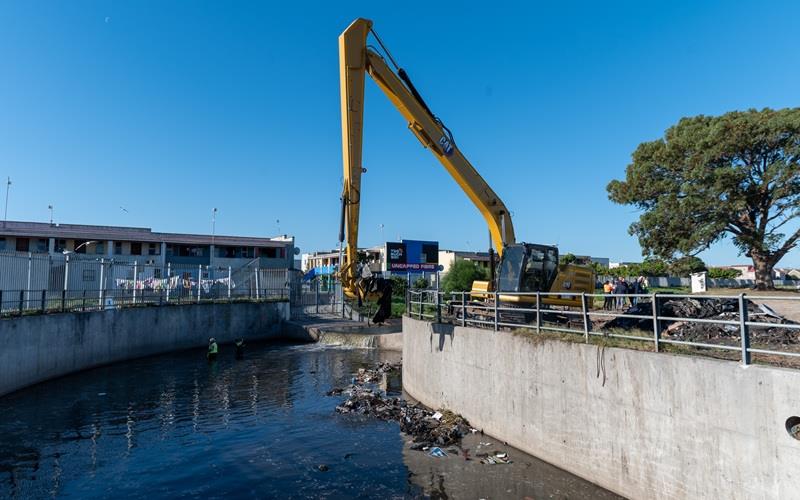
Intensive maintenance operations begin ahead of the rainy season, using various methods, including the removal of vegetation (such as invasive aquatic plants), silt, and litter using helping hands, along with dredging operations using excavators and bulldozers to remove accumulated sediment deposits and restore channel capacity.
The City’s Mayoral Committee Member for Water and Sanitation, Councillor Zahid Badroodien, said that illegal dumping into canals and rivers has severe consequences for communities.
“Waste blocks stormwater infrastructure, increases flood risks for nearby homes and streets, and pollutes waterways and oceans downstream.”
“Residents are urged to make use of refuse collection services and disposal facilities to help keep waterways clear and functional during winter,” Badroodien said.
Erosion prevention
According to Badroodien, erosion protection works are currently underway at the Maitland Cemetery Canal. This intervention is critical to prevent the stormwater channel from eroding and safeguarding the surrounding infrastructure, including graves nearby.
Dredging works are in progress from Sandown to Link Road, and from Berkshire to Waterville in Bloubergstrand.
The process of dredging includes the removal of sludge and overgrown vegetation to improve flow capacity and reduce flood crises, while rehabilitation of a lined concrete channel extends the lifespan of infrastructure.
Removal of vegetation
The removal of alien vegetation, the cutting, cleaning, and clearing of litter and sludge has taken place from the Eastern parts of Sandown to Parklands Main Road.
Reed and litter removal is being undertaken along the Little Lotus Canal in Fisherman’s Walk, in Grassy Park.
Badroodien said that this preventative maintenance helps keep the waterway clear and reduces the risk of flooding during the rainy season.
River mattresses installed
Along the Brommersvlei River in Constansia, gabions and reno river mattresses were installed to control erosion during severe weather conditions.
These measures prevent further erosion, reduce the risk of structural collapse along adjacent boundaries, and ensure effective hydraulic performance of the river system.
Repair and reinstatement works were conducted on a collapsed concrete canal wall along the Sand River in Industry Way.
According to Badroodien, these repairs were necessary to prevent further structural failure, protect the adjacent roadway and guardrails, and ensure safe and effective stormwater flow.
Infrastructure construction
Meanwhile, construction work on the spillway at Lisbon Pond in Durbanville is underway to ensure the pond can safely and effectively discharge water during periods of heavy rainfall.
Cleaning operations are also being conducted along the canal in Kuils River/Stikland, from Botterlary Road to the railway line along the R300.
The work includes cutting long grass, removing debris, and clearing alien vegetation to improve flow and ensure optimal functioning of the river inlets and the canal system.
Completed projects
Construction and repair work have already been completed along the Hibiscus Canal on the Mosselbank River Tributary in Wellington Road. Wellway Park was recently completed.
Along with the dredging of accumulated sediment and sludge has been completed along Victoria Street through to Victoria Link Road. Badroodien stated that this work increases channel capacity, protects infrastructure, and has already contributed to reducing flood impacts in Helderzicht and Victoria Park.
While the hand cleaning and mechanical dredging of canals and rivers is underway along the Macassar corridor, from Mandela Road to Mountain Rose in Firgrove. Similar cleaning and dredging operations have also been conducted
Improving systems
These interventions ensure the system functions as designed and help prevent flooding caused by blockages from vegetation and debris.
Badroodien concluded that these efforts are continuous to address the illegal dumping in canals and counter the flooding impacts caused by the infilling of ponds and encroachments by informal structures to improve the overall stormwater flow.