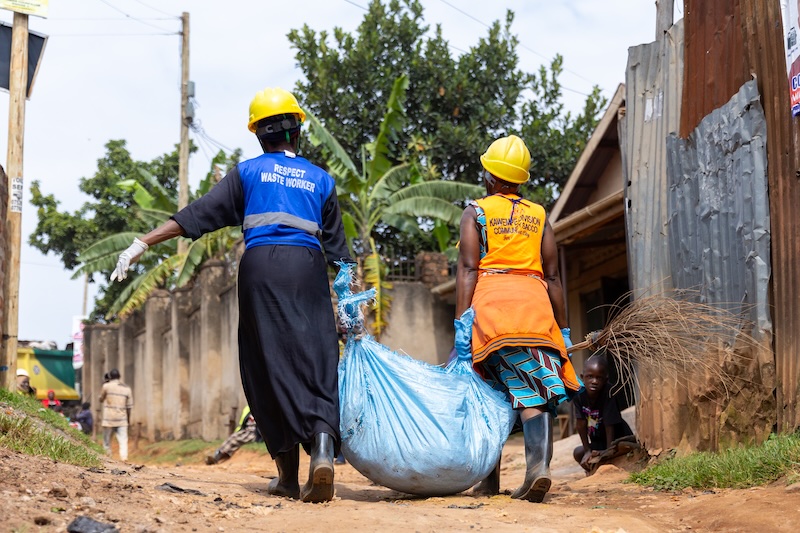
In Kawempe, the air doesn’t always feel like something you notice, until it begins to weigh on your chest.
Along the dusty roads that cut through the division, boda bodas weave between pedestrians, kicking up fine layers of dirt that hang in the air long after they pass. In nearby homes, charcoal fires burn steadily, sending thin trails of smoke into already crowded spaces.
For many residents, this is simply part of daily life. But health officials say the cost is far higher than it appears. Kawempe has emerged as the most polluted division in Kampala, driven by a mix of dense population, informal settlements, and limited green cover.
According to Dr Alex Ndyabakira, focal person for air quality management at Kampala Capital City Authority, the problem is deeply rooted in how people live and work.
“People in the slums use charcoal, firewood and do informal businesses on the streets, which causes pollution. Very few trees also don’t protect dust,” he said in an interview.
The division’s physical layout only makes matters worse. Many of its roads remain unpaved, turning into sources of constant dust, especially during dry seasons. At the same time, factories operate within residential areas, adding another layer of pollution to an already strained environment.
“Most of the roads in Kawempe are dusty, and factories are settled in residential areas which causes air pollution too, unlike other divisions in Kampala,” Ndyabakira explained.
Then there is the issue of numbers. Kawempe is one of the most densely populated parts of the city. More people means more movement, more cooking, more energy use, much of it still dependent on firewood and charcoal.
“Kawempe has high population density meaning it’s a small area with many people. The more people you have, the more air pollution because of many people in the area using firewood, charcoal, dust and motorcycles,” he said.

The effects are not abstract. Air pollution, Ndyabakira warned, is directly linked to illness and death. A study conducted in Kampala between 2018 and 2021 found that around 7,000 deaths were attributed to air pollution over that period. That translates to roughly 20 percent of annual deaths in the city.
“According to this study, we found out that 20 percent of the deaths in Kampala annually are attributed to air pollution,” he said.
In hospitals, the pattern is already visible. Cough-related illnesses and allergies often linked to poor air quality, are among the most common reasons for medical visits. Globally, the picture is just as stark.
The World Health Organisation estimates that more than 70,000 children die each year due to air pollution. In urban areas, the risks are compounded by vehicle emissions and industrial activity.
Research by the Eastern Africa GEO Health Hub at Makerere University School of Public Health points to multiple sources of pollution in Kampala: road dust, vehicles, burning tyres, industries, and the widespread use of charcoal and firewood. Yet even as the evidence grows, changing behaviour remains a challenge.
“Most people use firewood and charcoal, saying that the food cooked by firewood or charcoal tastes better yet it’s not true,” Ndyabakira said.
“We did a survey and gave people food which was cooked by firewood and electricity, but it tasted similar.”
The deeper issue, he added, is not just preference but access, many households rely on these fuels because they are affordable and readily available. The health consequences, however, are becoming harder to ignore.
Air pollution worsens both infectious diseases and non- communicable conditions such as high blood pressure, diabetes, asthma and allergies. In some cases, exposure can turn a mild illness into a severe one.
“The infection that would have been in a mild form can become severe after experiencing air pollution and you die,” Ndyabakira said.
Certain groups are particularly vulnerable. According to the World Health Organisation, high levels of dust and polluted air pose serious risks to pregnant women, the elderly, children, and people with existing heart or lung conditions.
“Due to air pollution, people with heart, asthma and lung diseases end up suffocating or get attacks and die faster,” he added.
Long-term exposure carries even greater risks. Studies have linked pollution from vehicles and industries to cancer, cardiovascular disease, and chronic respiratory conditions such as asthma and chronic obstructive pulmonary disease.
For city authorities, the challenge is finding solutions that are both practical and sustainable. Dr Sarah Zalwango, Acting Director for Public Health and Environment at KCCA, says reducing reliance on charcoal and firewood is a critical first step.
She is urging residents to adopt cleaner alternatives where possible, including gas and electricity, and to improve ventilation in cooking spaces. Other measures, she said, include regular vehicle servicing, recycling plastics, and avoiding the burning of rubbish and polythene.