Imagine what it must have been like moving from Europe to the African bush. Well, author and conservationist Françoise Malby-Anthony did exactly that three decades ago.
Malby-Anthony fell in love with Africa when she arrived from France at KwaZulu-Natal’s Thula Thula Wildlife Reserve and it was all new to her then. “I didn’t know anything, so it was a complete new world for me,” she said and added that between then and now, she has never stopped discovering.
Dining with Elephants, her new book, puts her life in South Africa between the covers, telling the stories and anecdotes through a combination of, stories from the bush and reflections on life shared with animals and the local community around the reserve. The book follows previous international bestsellers and came after years spent building not only a wildlife sanctuary, but a home filled with unpredictable visitors ranging from elephants to monkeys and baboons among many others
Elephants, monkeys and baboons
“The whole notion of recipes started when Thula Thula only had seven wooden huts and we didn’t have much to offer guests,” she said. “So I decided we needed good food and a proper dining experience to attract visitors.” Malby-Anthony introduced long lazy lunches and elaborate dinners at the reserve, turning food into part of the Thula Thula experience. “We could not afford professional chefs at the time, so we trained young women from the local community,” she said. “People loved it because it became part of the atmosphere and experience of staying at Thula Thula.”
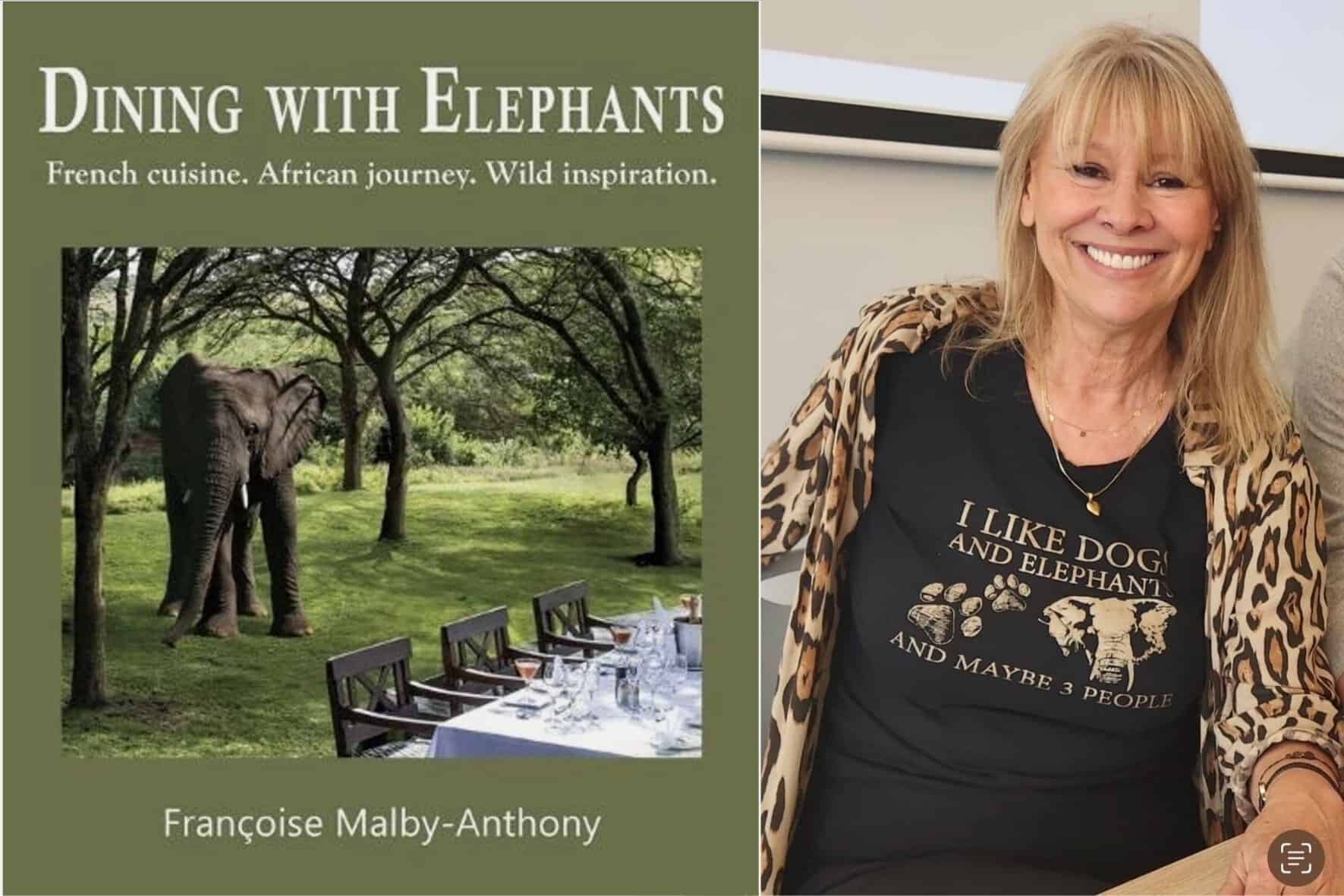
The recipes range from simple to not-so simple and combine South African ingredients to create a lateral take on fine dining and primarily French cuisine. It’s inspiring and paging through the book, reading the anecdotes and looking at the various recipes can make anyone want to first head into the kitchen and try them out and, later, visit Malby-Anthony and partake in the lazy meals, drink in the experiences at the reserve.
Life at Thula Thula regularly found its way into the kitchen and dining areas, she said. Elephants raided vegetable gardens while baboons and monkeys often ignored the boundaries between wilderness and domestic life. “The elephants always knew exactly when the fruit and vegetables were perfectly ripe,” she said. One encounter still makes her laugh years later. “They left only the cheese and the lemon,” she said after elephants raided supplies at the reserve. “Elephants don’t like chillies though, so at least they were spared.”
The elephants spared the chillies
Many of the stories told in the book, she said, also carry a message about humans and wildlife learning to coexist as development continues to push deeper into natural spaces. “We are the ones who built over their homes,” she said. “Now we have to learn how to live together with wildlife because they were there first.”
Her deepest connection remains with the elephants she has spent nearly three decades living in close proximity to. Among them was Frankie, a matriarch named after Malby-Anthony because of her formidable personality. “Everybody was scared of Frankie because she had such a strong character,” she said. “But she had incredible discipline in the herd and she was a true leader.”
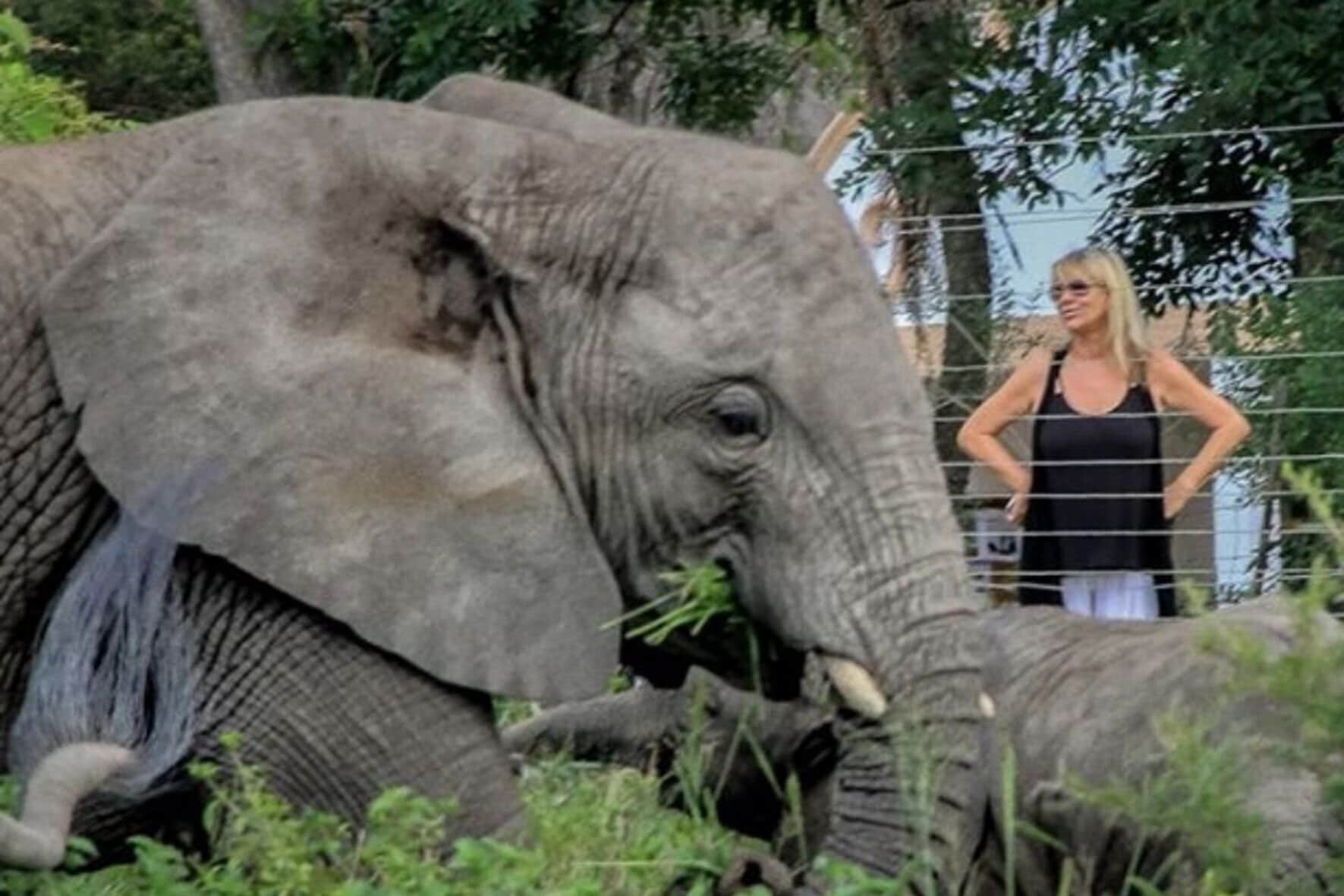
Frankie frequently ignored fences and once led the herd directly into Malby-Anthony’s private garden. “She ate all my flowers,” she recalled. “When I think back now, I think she was trying to tell me something.” The elephant died roughly a year later from liver cancer, an experience Malby-Anthony still contemplates when thinking about the emotional intelligence of elephants. “Over the years I’ve seen their compassion and their ability to care for one another,” she said. “For me, elephants are a model of how to live and set an example for humans.”
Elephants set an example for humans
Another elephant, Mandela, still visits the house decades after first arriving there as a calf. “Twenty-seven years later he still comes to the house and I know he recognises me,” she said. “You build relationships with them over many years.”
While elephants dominate much of the book, Malby-Anthony said Dining with Elephants was also written as a celebration of the people who helped build Thula Thula into an internationally recognised reserve. “I’ve seen their transformation over the years,” she said. “We all worked towards the same goals and share the same passion for wildlife. Despite all the challenges, we built something together while protecting the reserve and its wildlife.”