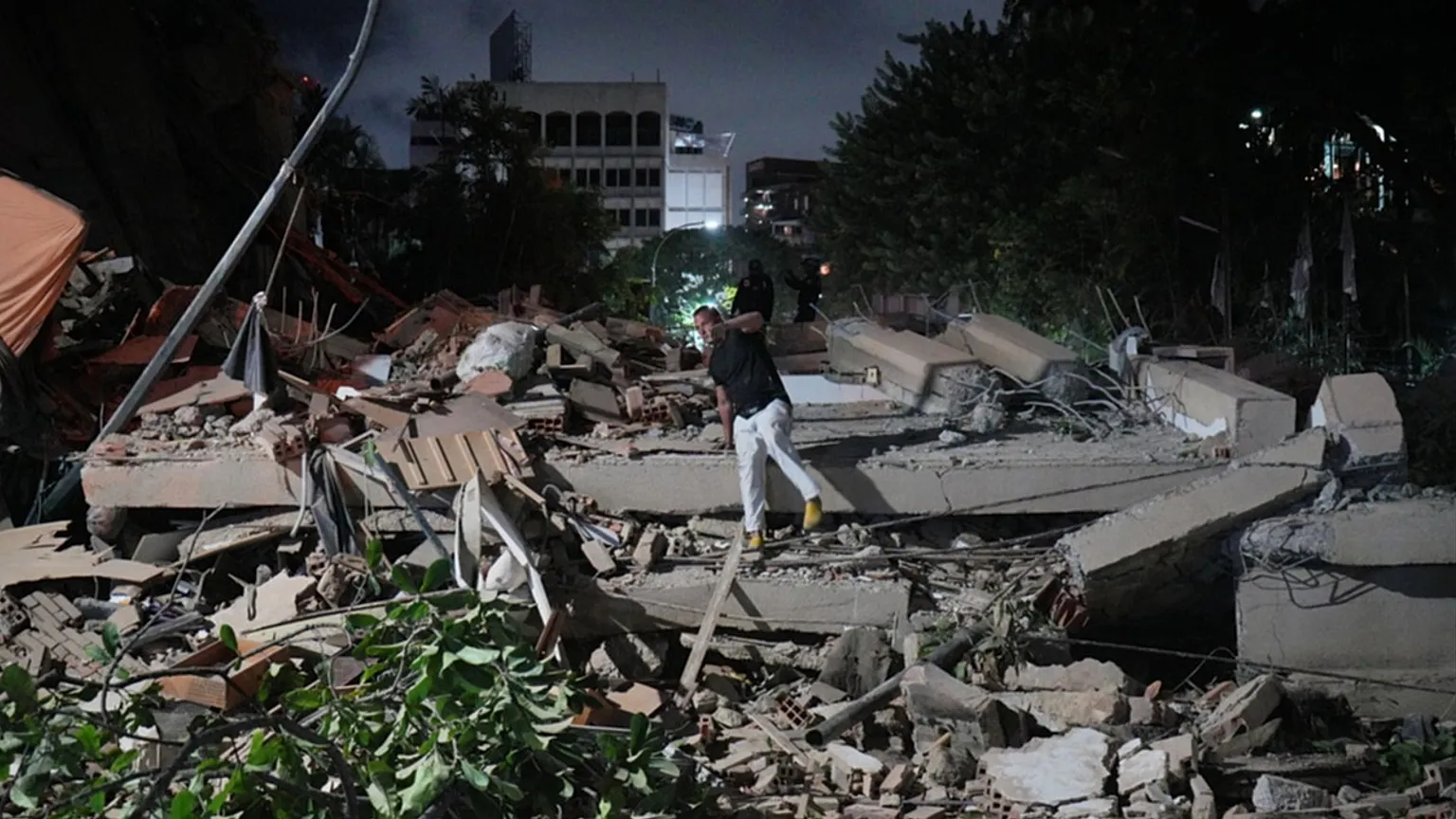
Venezuela has declared a state of emergency after two powerful earthquakes struck within minutes of each other on Wednesday evening, causing widespread destruction, damaging critical infrastructure and forcing thousands of residents into the streets.
The twin earthquakes, measuring 7.2 and 7.5 in magnitude, were among the strongest to hit the South American nation in more than a century. The tremors were felt across much of Venezuela and as far away as northern Brazil and parts of Colombia.
Acting President Delcy Rodríguez said the earthquakes caused significant damage in several states, though authorities were still assessing the full extent of the destruction and had yet to provide official figures on casualties or the number of affected buildings.
“We urge our population to remain calm,” Rodríguez said in a national address. “We urge unity.”
The earthquakes severely damaged the country’s main aviation gateway, Simón Bolívar International Airport, forcing authorities to suspend operations. Schools were also closed, while some educational facilities were converted into temporary shelters and donation centres for displaced residents.
In Falcon State, Governor Víctor Clark reported that at least 32 people had been hospitalised and that rescue teams were working to free 15 people believed trapped beneath collapsed structures several hours after the disaster.
According to the United States Geological Survey, the first earthquake struck shortly after 6 p.m. local time with its epicentre near the coastal town of Morón, west of Caracas. A second, more powerful quake followed less than a minute later, intensifying the devastation.
Across Caracas, residents fled swaying buildings as walls collapsed, power supplies failed and communication networks were disrupted. Debris littered roads while damaged electricity poles and fallen structures complicated emergency response efforts.
“It started off gently and then gradually grew, and in the end, we all had to leave our houses, go outside and gather together,” said Caracas resident Hector Ricci.
The government suspended metro services and natural gas operations in parts of the capital as a precaution against further incidents.
Interior Minister Diosdado Cabello said emergency responders had been deployed to the worst-hit areas, particularly in the Altamira district of Caracas, where several buildings reportedly collapsed.
“We understand that some people may be desperate, but we are acting according to protocols to activate aid and rescue efforts to help those who need it most,” he said.
Authorities also warned residents to remain alert for aftershocks, which could trigger additional structural failures in already weakened buildings.
The disaster prompted an outpouring of international support. Governments including the United States, Ecuador, Chile and El Salvador offered assistance and expressed solidarity with the Venezuelan people.
Opposition leader María Corina Machado called for unity in the aftermath of the tragedy.
“May strength, serenity, and solidarity prevail among us in the face of this difficult time,” she said.
The earthquakes also disrupted activities beyond Venezuela’s borders. Buildings were evacuated in several Brazilian cities, while tremors were felt across parts of Colombia. Tsunami alerts issued shortly after the earthquakes were later withdrawn.
Scientists noted that while Venezuela lies near several fault systems, earthquakes of this magnitude are relatively rare in the country compared with nations along the Pacific Ring of Fire, where seismic activity is more frequent.
Rescue operations and damage assessments are expected to continue as authorities work to determine the full human and economic impact of the disaster.
Erizia Rubyjeana