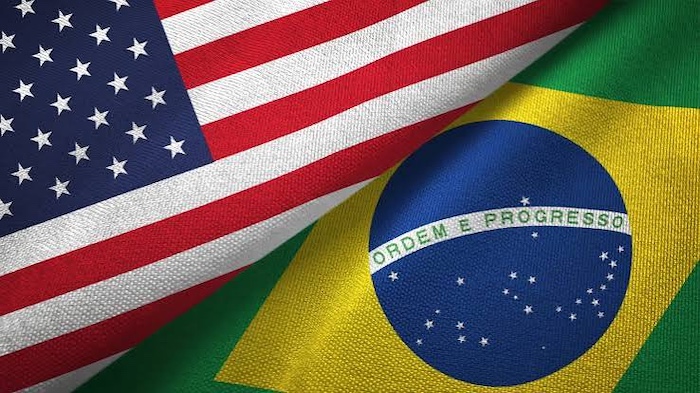
The United States has announced a 25% tariff on most imports from Brazil beginning July 22, marking the first major action under the Trump administration’s new tariff strategy that could eventually target dozens of countries.
The tariff, announced Wednesday by the Office of the United States Trade Representative (USTR), follows a Section 301 investigation into alleged unfair trade practices by Brazil and comes after the U.S. Supreme Court dismantled a key element of President Donald Trump’s earlier tariff framework.
Under the new approach, the USTR has opened nearly 80 trade investigations, with potential tariffs being considered on countries and blocs including China, the European Union, India, Japan, South Korea and Mexico.
The new duty follows a June proposal by the Trump administration to impose a punitive 25% tariff on Brazilian goods over concerns ranging from digital trade policies to illegal deforestation.
US Trade Representative Jamieson Greer said negotiations had failed to produce sufficient progress.
“Extensive negotiations with Brazil over the past year have not resolved these issues, but we remain open to continuing negotiations with Brazil to bring about long-needed changes to the problems identified in this investigation,”
Brazilian President Luiz Inácio Lula da Silva condemned the decision, saying it lacked justification and vowing an immediate response under Brazil’s Reciprocity Law.
“Brazil would immediately begin proceedings to invoke instruments provided for under the ‘Reciprocity Law’ and revisit the matter within the framework of the WTO dispute settlement mechanism.”
The dispute quickly escalated into a war of words between Brasília and Washington.
U.S. Secretary of State Marco Rubio accused Lula of failing to negotiate seriously.
“Lula and his government have not negotiated with the US in good faith.”
“For the past year, Lula has put his own ego ahead of making a deal for the welfare of the Brazilian people, and these tariffs are the price for that.”
The tariff will affect thousands of Brazilian products, including sugar, agricultural machinery, clothing, electrical equipment, paper and steel.
However, the US exempted several major exports, including beef, coffee, rare earth minerals, energy products, aircraft and aircraft parts.
Additional exemptions announced Wednesday include organic honey, pig iron and unflavoured instant coffee.
The USTR investigation, opened last July, also targeted Brazil’s instant payment platform Pix, which US officials argue disadvantages credit card companies.
Brazil has strongly rejected all the allegations.
The trade pressure may intensify further. Brazil is also included in a separate Section 301 investigation focused on alleged forced-labour links in global supply chains.
That probe, due to conclude on July 24, is expected to recommend an additional 12.5% tariff, potentially raising the total tariff burden on affected Brazilian products to 37.5%.
The latest move signals a broader shift in US trade policy, with Washington increasingly relying on Section 301 investigations to justify new tariffs after legal challenges weakened earlier Trump-era tariff programmes.
Erizia Rubyjeana