The United States is considering delaying or rejecting French President Emmanuel Macron’s nominee for ambassador to Washington after France publicly criticised the US human rights record, according to sources familiar with the matter.
Four sources said no final decision has been taken. However, two said comments made by France’s mission to the United Nations in Geneva triggered anger among senior officials in President Donald Trump’s administration. Two other sources said officials were trying to ease tensions between the allies.
A State Department official said: “The United States is very disappointed in the irresponsible and disrespectful rhetoric from the French.”
The official added: “We are responding appropriately to their comments.”
A decision to delay or reject Macron’s nominee would be an unusual diplomatic step and could deepen disagreements between the two countries, which have already clashed over tariffs and the Iran conflict.
Macron has nominated Aurélien Lechevallier, a former Elysee adviser and current chief of staff to French Foreign Minister Jean-Noël Barrot, to become France’s next ambassador to Washington. France had hoped he would take up the post by September.
The dispute followed a post on X by France’s mission to the United Nations in Geneva after the United States joined Russia, North Korea and seven other countries in voting against extending the mandate of UN High Commissioner for Human Rights Volker Turk.
The French mission wrote: “The US used to be a beacon of human rights. Not anymore.”
It added: “The world no longer listens to it.”
One source said the message had been reviewed and approved through official channels before it was published.
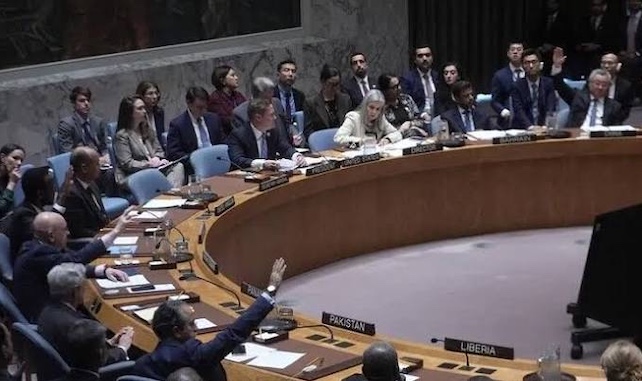
Tensions increased further on Monday when the US delegation walked out during France’s address at a United Nations Security Council meeting on Ukraine, accusing France of “disingenuous grandstanding.”
A French diplomatic official defended the country’s position, saying: “France’s support for the renewal of Turk’s mandate does not preclude close dialogue with the United States.”
The official added: “Differences of opinion regarding a vote do not call into question the quality of our relationship or our ability to work together.”
Relations between Washington and Paris have become more strained during Trump’s second term despite regular contact between Trump and Macron. The two governments have disagreed over tariffs, US criticism of European policies and NATO defence spending.
The report also said US officials were already unhappy with recent public remarks by French Foreign Minister Jean-Noël Barrot, who accused Washington of attempting to influence European politics after the US State Department announced funding for programmes promoting “civilizational self-confidence” in Europe.
The process of appointing a foreign ambassador requires the confidential approval of the receiving government. Diplomatic sources said such nominations are rarely delayed or rejected publicly, with disagreements usually resolved behind closed doors.
The report also noted criticism from Macron’s opponents, who argue that his recent appointments to key state institutions are designed to secure his political legacy before he leaves office in 2027. The Elysee Palace did not immediately comment on those claims.
Faridah Abdulkadiri