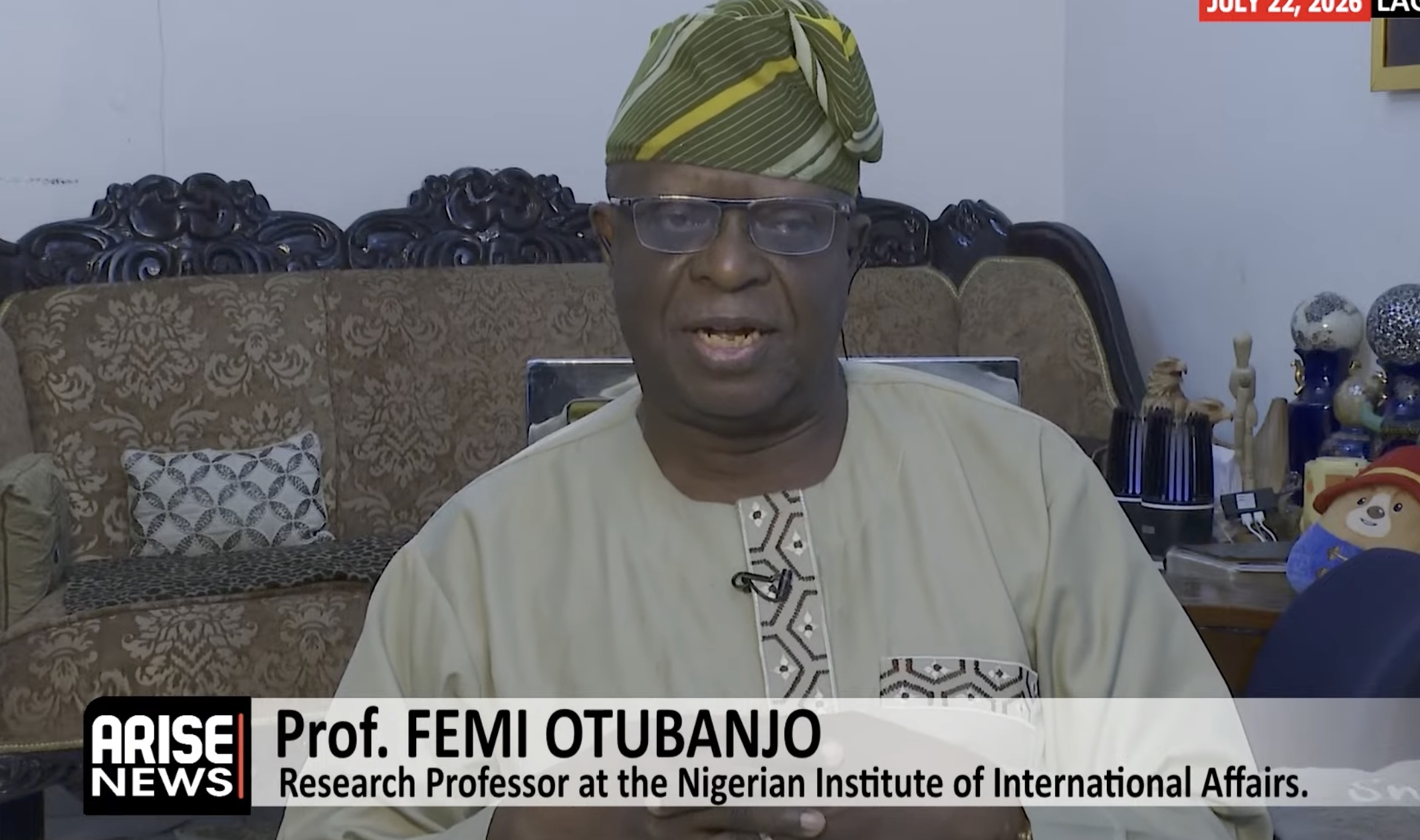
Screenshot
Research Professor at the Nigerian Institute of International Affairs (NIIA), Prof. Femi Otubanjo, has dismissed the reported one-term agreement between the African Democratic Congress (ADC) presidential candidate, Peter Obi, and former Kano State Governor, Senator Rabiu Kwankwaso, arguing that such political arrangements have no constitutional basis and are unlikely to survive the realities of governance.
Speaking in an interview with ARISE NEWS on Wednesday, Otubanjo questioned the rationale behind zoning the presidency strictly between the North and the South, insisting that Nigeria should prioritise competence and constitutional provisions over informal political agreements.
“There’s nothing in the Constitution where it is automatic that power should shift between the North and the South. Why should it be North and South? Why not South-East to the Middle Belt? When are we going to get to a point in this country when we’ll be talking about competence, ability and federal character? Isn’t that what is in the Constitution?”
Reacting to Kwankwaso’s assertion that Obi would honour a pledge to serve only one four-year term if elected in 2027, Otubanjo said the realities of occupying the presidency would make such an agreement difficult to uphold.
“By the time they get there and start seeing all the opportunities, powers and privileges, they will not be talking of one term.”
He argued that a single four-year tenure would be inadequate for any Nigerian president to understand the complexities of governance and implement meaningful reforms.
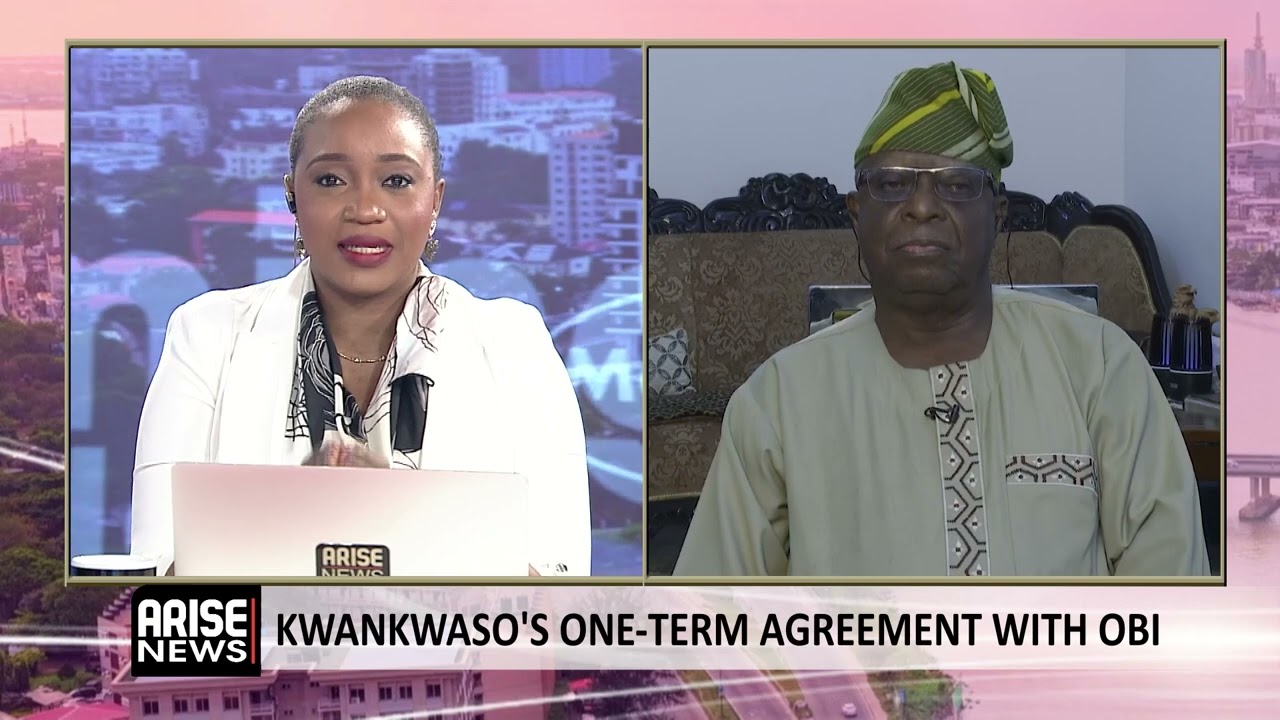
“To be a one-term president is to spend the first two years understanding the system before you can even begin to think of how to implement your vision of Nigeria. By the time you’re supposed to be implementing your vision, you’re thinking of the next election.”
Describing the reported pact as lacking substance, Otubanjo questioned the legal and political basis of the arrangement.
“It’s just pure eyewash to be talking about agreement. Who are you signing the agreement with? Is it with your political party? Is it within the National Assembly? An agreement with whom? What kind of agreement?”
He maintained that constitutional provisions already determine when power would return to the North if President Bola Tinubu secures a second term.
“The North will get the presidency in 2031 whether you sign an agreement or you don’t sign it. What is important is for them to focus on how they can win power and what they can do with it.”
Otubanjo also opposed proposals for a single six-year presidential tenure, arguing that democratic accountability requires voters to determine whether an incumbent deserves a second term.
“The idea of a second term is to enable the public to have a say whether you stay or you are removed. It is not supposed to be automatic.”
He, however, lamented that Nigeria’s democratic experience has fallen short of that ideal.
“Government should be rewarded or punished for doing the right thing or not doing the right thing. We’re not there yet.”
According to him, the real debate ahead of the 2027 elections should centre on policy alternatives rather than power-sharing arrangements.
“We need to see what Kwankwaso and Obi can do better than Tinubu. We’re not seeing the ideas. They’re not articulating them. You’re talking about agreements instead of telling Nigerians how you intend to govern.”
Otubanjo argued that Nigeria’s political class shares similar shortcomings, making policy proposals the key differentiating factor.
“All the politicians in Nigeria are mostly of the same feather. What would separate them would be their policies and ideas.”
He also expressed concern over the quality of Nigeria’s democratic institutions, describing the country’s political foundation as fundamentally weak.
“The substructure of Nigerian politics is horrible. Bad leadership, corruption and electoral rigging—that is the substructure.”
Citing the importance of strong institutions, he warned that meaningful political reforms would remain elusive unless Nigeria addressed the underlying problems affecting governance.
“If the foundation is destroyed, what can the righteous do? Once the foundation is faulty, nothing you put on top will work.”
Otubanjo further criticised what he described as a breakdown in leadership and accountability across the country’s political system.
“We are in a situation where leadership has failed and democracy is failing. That is the reality that we face.”
He argued that electoral reforms and constitutional amendments alone would not resolve Nigeria’s governance challenges unless the country’s political culture changed.
“Whether you spend four years or ten years, if the foundation is bad, nothing will work. Let us look at morality, integrity and leadership. Nigeria is failing.”
Boluwatife Enome