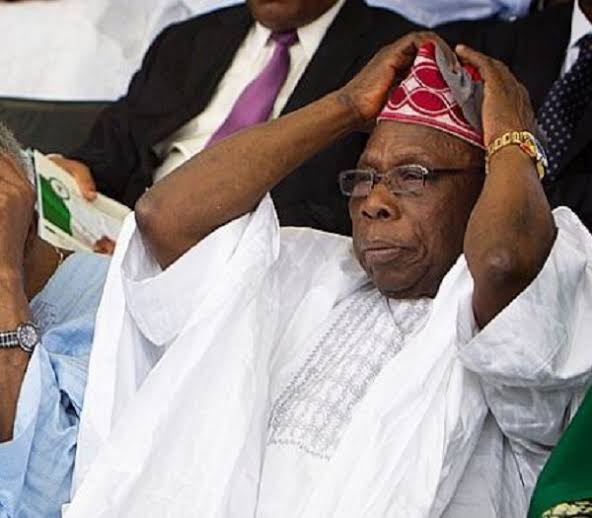
More than two decades after their political alliance produced Nigeria’s first civilian administration of the Fourth Republic, former President Olusegun Obasanjo, has reflected on his relationship with former Vice President Atiku Abubakar, describing the choice of Atiku as his running mate in 1999 as a decision he would have reconsidered.
Obasanjo made the remark during a public conversation with veteran entertainer and activist Charles Oputa, popularly known as Charly Boy, at the presentation of Charly Boy’s foundation and memoir, 999: A Memoir in Tribute to Late Justice Chukwudifu Oputa, in Lagos.
Asked about the biggest mistake he made while serving as president, Obasanjo said some challenges that could have affected his administration were ultimately overcome, but identified his choice of vice president as the decision he most regretted.
“The man I picked as my running mate, my number two. If I had known him as I came to know him later, I would not have picked him”, Obasanjo said.
When asked whether he was referring to Atiku Abubakar, the former president confirmed that he meant his former deputy, adding that hindsight would have influenced his decision.
Obasanjo, however, said his comments were not driven by personal resentment, noting that both leaders acted according to their beliefs during their time in office.
“There’s no bitterness because he did what he believed he should do, and God did what God had to do, which enabled me to achieve what I was able to achieve”, he said.
The remarks have reopened discussions about the political journey of two leaders whose partnership shaped Nigeria’s early democratic years after military rule.
Obasanjo and Atiku won the 1999 presidential election on the platform of the Peoples Democratic Party, becoming the first elected president and vice president of the Fourth Republic.
Atiku served as a key figure in the administration, participating in economic policy decisions and leading efforts connected to privatisation reforms. Their relationship, however, later collapsed during Obasanjo’s second term.
The disagreement became more pronounced after Atiku opposed moves by some political allies of Obasanjo to extend the president’s tenure through constitutional amendment.
The failed third-term bid in 2006 deepened the divide between both men and triggered a political battle that continued into the 2007 election cycle.
The dispute later moved to the courts after Obasanjo declared Atiku’s vice presidential office vacant following his defection from the PDP. The Supreme Court eventually ruled that the president lacked the constitutional authority to remove an elected vice president.
Since then, Obasanjo and Atiku have repeatedly exchanged criticisms over their roles in government and events surrounding their administration.
In his 2014 memoir, My Watch, Obasanjo accused Atiku of actions he considered disloyal, while Atiku rejected the claims and accused his former principal of presenting a distorted account of their political history.
Although the pair briefly reconciled ahead of the 2019 presidential election, their differences later resurfaced.
Obasanjo’s latest comments have once again placed their long-running political relationship in the spotlight.