Long-awaited agreement set for signing as ambitious project targets energy exports to Europe and regional integration……
Nigeria and Morocco are edging closer to a major breakthrough on their long-anticipated transcontinental gas pipeline, with both countries expected to sign a key intergovernmental agreement later this year.
The deal, which will formalise political and regulatory commitments, marks a critical step forward for the $25 billion African Atlantic Gas Pipeline, an ambitious 6,900-kilometre network designed to transport natural gas from Nigeria across West Africa to Morocco and ultimately into Europe.
The project, jointly backed by the Nigerian National Petroleum Company Limited and Morocco’s Office National des Hydrocarbures et des Mines, has been in development for nearly a decade and is now gaining renewed momentum.
According to Amina Benkhadra, Director-General of ONHYM, the upcoming agreement will strengthen coordination among the 13 countries involved in the project.
Once signed, it will pave the way for the establishment of a joint governing authority in Nigeria, bringing together representatives from participating nations to oversee policy alignment and regulatory frameworks.
Phased Development to Accelerate Progress
Rather than waiting for a single, large-scale investment decision, the pipeline will be developed in phases, an approach designed to deliver early economic benefits and reduce delays.
Each segment of the pipeline will function as a standalone system, allowing parts of the project to come online progressively while others are still under development.
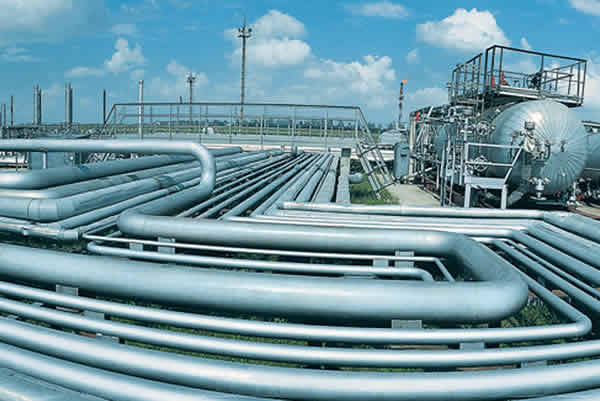
The infrastructure will follow a hybrid offshore and onshore route along the West African coastline, with a projected capacity of up to 30 billion cubic metres of gas annually.
Of this, around half is expected to serve Morocco’s domestic needs, with the remainder earmarked for export to European markets, positioning Morocco as a crucial energy gateway between Africa and Europe.
Project Company to Drive Execution
To ensure smooth implementation, a dedicated project company will be established in Morocco as a joint venture between NNPC and ONHYM.
This entity will be responsible for overseeing construction, financing, and overall execution of the pipeline.
While investor interest remains strong due to the scale and strategic importance of the project, final funding commitments have yet to be secured. Financing is expected to be structured through a mix of equity and debt raised by the project company.
Boost for Regional Growth and Energy Security
Beyond exports, the pipeline is expected to transform the energy landscape across West Africa.
It is projected to:
- Expand electricity generation across participating countries
- Support industrial and mining activities
- Deepen economic integration within the region
Early phases will prioritise linking key energy hubs, including connections between Morocco and gas fields in Mauritania and Senegal, as well as linking Ghana to Côte d’Ivoire. The final stretch will connect Ghana directly to Nigeria’s vast gas reserves.
First gas from initial phases is targeted for 2031.
A High-Stakes Bet on Africa’s Gas Future
Backed by the Economic Community of West African States, the pipeline is one of the most ambitious energy infrastructure projects on the continent, spanning 13 countries along the Atlantic coast.
For Nigeria, which holds some of Africa’s largest proven gas reserves, the project presents an opportunity to unlock new revenue streams, reduce reliance on crude oil, and strengthen its influence in regional energy markets.
At a time when Europe is seeking alternative energy sources amid shifting global dynamics, the pipeline could also position West Africa as a key player in the global gas supply chain.
Momentum Returns After Years of Delays
Despite years of delays linked to funding challenges and cross-border coordination, the planned agreement signals renewed political will to move the project forward.
If successfully delivered, the Nigeria-Morocco gas pipeline could reshape energy trade across West Africa, enhance energy security, and open a new chapter in Africa-Europe energy relations.