Nigeria and Germany have reinforced their long-standing development and economic partnership with new commitments spanning financial cooperation, private sector investment, skills development, energy transition, agriculture, and digital transformation.
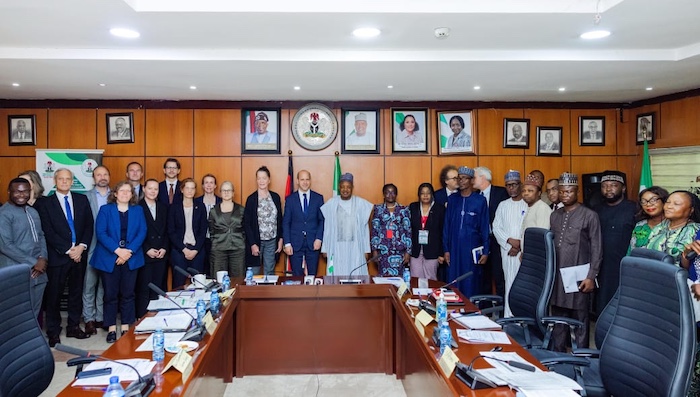
The renewed collaboration was reaffirmed during high-level bilateral engagements and the signing of a Summary of Record in Abuja, where both governments reviewed progress in ongoing programmes and agreed on expanded areas of cooperation aimed at strengthening Nigeria’s reform and development agenda.
Nigeria’s Minister of Budget and Economic Planning, Senator Abubakar Atiku Bagudu, described the partnership as a key milestone in Nigeria–Germany relations, noting that it reflects shared priorities anchored on mutual respect, sustainable development, and inclusive economic growth.
He expressed Nigeria’s appreciation to the Government of Germany, including the Federal Ministry for Economic Cooperation and Development (BMZ), Federal Ministry for Economic Affairs and Energy, KfW Development Bank, GIZ, and other implementing partners, for what he described as constructive and forward-looking negotiations.
A major outcome of the engagements is Germany’s commitment of approximately €65 million in new financial and technical cooperation across agreed priority sectors. In addition, both countries discussed a proposed €300 million export credit guarantee framework, designed to mobilize private investment and expand long-term financing for strategic infrastructure and development projects in Nigeria.
The expanded partnership prioritizes agricultural transformation, climate and energy transition, skills development, health systems strengthening, and inclusive economic growth.
German institutions and private sector actors including Siemens and SAP played a visible role in the engagement, showcasing ongoing projects in Nigeria. Siemens highlighted its involvement in energy sector skills development and power infrastructure-related initiatives, while SAP presented digital solutions aimed at modernizing tax administration and strengthening Nigeria’s digital governance systems.
The German delegation, led by Africa Director at BMZ, Philip Knill, also referenced ambitions to support large-scale skills development programmes, including proposals aimed at training up to one million Nigerians in technical, digital, and vocational competencies to enhance productivity and employment outcomes.
Both sides acknowledged Nigeria’s ongoing economic reforms under the Renewed Hope Agenda, including macroeconomic stabilisation efforts, energy sector reforms, healthcare transformation, and initiatives to improve the investment climate and stimulate private sector-led growth.
Knill expressed confidence in Nigeria’s reform trajectory, describing the country as a key partner in Africa with significant potential for industrial expansion, agricultural modernization, and energy transition.
Nigeria, in turn, reaffirmed its commitment to ensuring that all agreed programmes are nationally owned, properly coordinated, and aligned with long-term development frameworks, including the National Development Plan 2026–2030 and Agenda 2050.
In the energy sector, both sides discussed ongoing efforts to expand generation capacity and improve transmission systems, with Germany expressing readiness to continue supporting Nigeria’s power sector reforms and renewable energy ambitions.
German officials emphasised a “signing today, implementation tomorrow” approach, underscoring the importance of translating agreements into measurable development outcomes.
Michael Olugbode