South African municipalities lose R25 billion per annum in water and electricity that they buy but never sell, according to National Treasury.
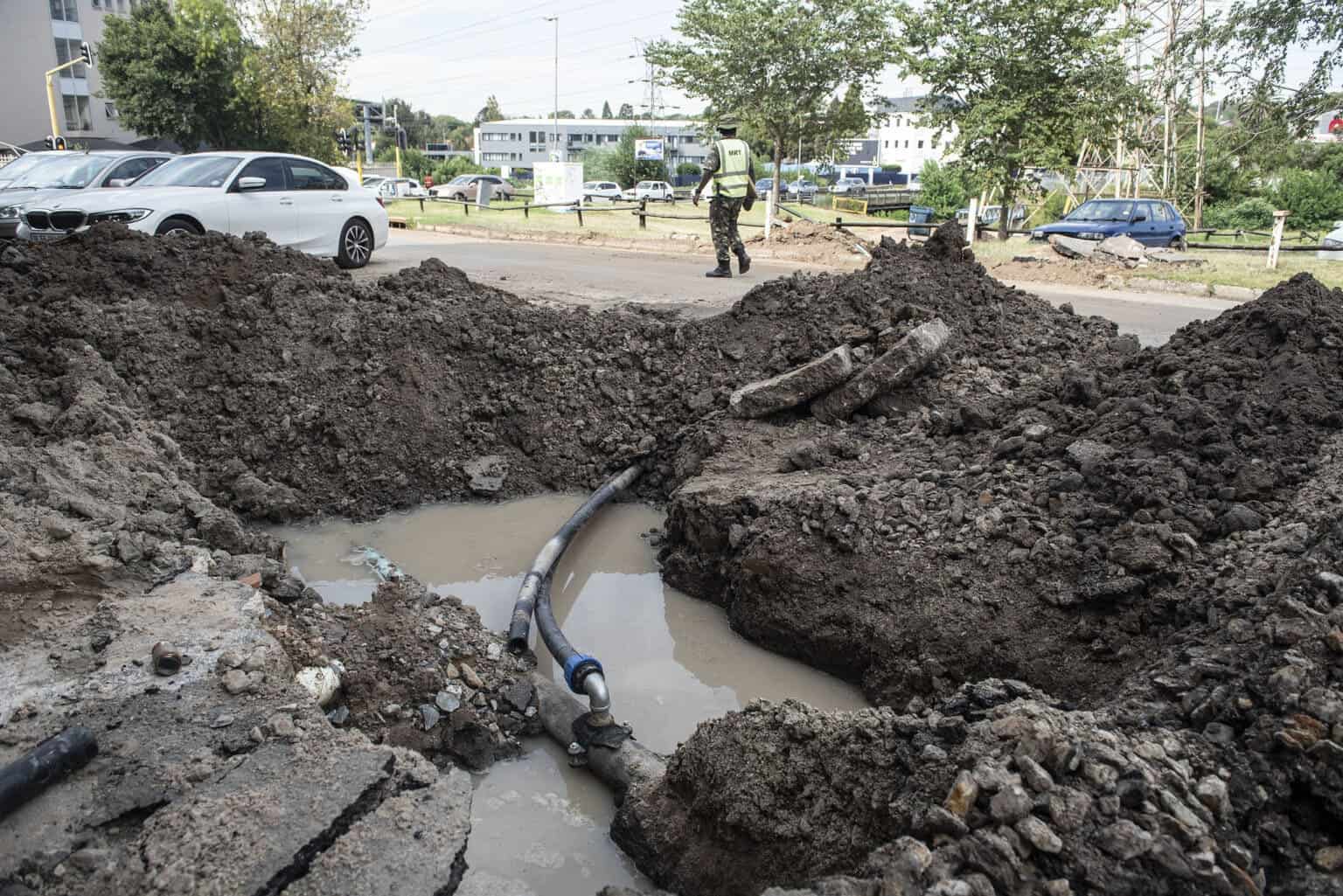
In some cities, up to 40% of all bulk water purchased generates no revenue and the average electricity losses stand at 25%.
This is the result of water leaks, transmission losses, electricity theft, and old meters that should have been replaced and are bypassed by major consumers, according to National Treasury.
The cost is recovered through tariffs paid by customers.
National Treasury disclosed this massive inefficiency during a virtual media engagement with members of the National Press Club on Monday (13 April), which focused on the institution’s role in intergovernmental relations, especially with municipalities.
Reform time for metros
It has allocated R54 billion over six years for its new Metro Trading Services Reform Programme, which is aimed at breaking the vicious cycle of underinvestment in infrastructure.
The underinvestment leads to poor service delivery and deteriorating revenue collection, which once again leaves insufficient funds for the maintenance, repair and improvement of infrastructure.
| Metro Trading Services Reform Programme allocations | ||||
| Metro | Water and sanitation | Electricity | Waste management | Total |
| Johannesburg | 6 062 | 3 031 | 1 010 | 10 103 |
| Cape Town | 5 173 | 2 587 | 862 | 8 622 |
| eThekwini | 5 137 | 2 596 | 856 | 8 589 |
| Ekurhuleni | 4 738 | 2 369 | 790 | 7 897 |
| Tshwane | 4 291 | 2 146 | 715 | 7 152 |
| Nelson Mandela Bay | 2 536 | 1 282 | 427 | 4 245 |
| Buffalo City | 2 293 | 1 147 | 382 | 3 822 |
| Mangaung | 2 142 | 1 071 | 357 | 3 570 |
| Total | 32 400 | 16 200 | 5 400 | 54 000 |
Source: National Treasury
Tranches and targets
Sydney Maesela, lead city advisor at National Treasury, explains that the money will be disbursed in 24 separate allocations over the period as incentive-driven grants, accompanied by capacity support to turn around the electricity, water, sanitation, and waste management services.
In the first year, three metros already felt the impact of underperformance.
Nelson Mandela Bay received nothing because it failed to provide the information required by National Treasury. Ekurhuleni received a third of its potential allocation, while Mangaung received 66%.
Metros can also increase their allocation by overachieving on targets relative to their peers.
Focus on 8 metropolitan councils
The focus for now is on the country’s eight metropolitan councils, which account for around 40% of the population and up to 60% of economic activity, even though they only comprise 2% of the land in South Africa.
Government believes the intervention in metros will have the biggest impact, as several have budgets bigger than some provinces and even some neighbouring countries.
If the performance in the metros improves, it will result in economic benefits for the whole country, Maesela said.
An independent officer will also be deployed to visit the metros and verify their performance. Without such verification, they won’t be able to access the grants. National Treasury has developed and published several documents to provide guidance to the metros.
No quick fix
This is not a quick fix, National Treasury emphasised, but rather a new approach to conditional grant reform.
The hope is to improve infrastructure so that inefficiencies like the R25 billion in annual losses are eliminated, and that the money can be used effectively.
Tariffs must be structured so they generate a surplus for reinvestment in infrastructure, Maesela said.
He said the country has been very successful in increasing access to services, but this is still dependent on the historic capacity, which was never expanded. This must be rectified.
Municipal debt crisis
At the same event, Treasury Deputy Director-General Ogalaletseng Gaarekwe disclosed that National Treasury is currently working through the responses of 13 municipalities at risk of being removed from its Debt Relief programme.
These municipalities have accumulated large amounts of arrear debt owed to Eskom and have also failed to pay their current bills, which is a key condition for participation in the programme.
She said the municipalities were advised to enter into Distribution Agency Agreements (DAAs) with Eskom or face the full might of Eskom’s credit control measures. This may include the attachment of municipal bank accounts.
They had until the end of March to respond, and their submissions are currently being assessed.
Debate over DAAs
Gaarekwe was confident that the task team comprising National Treasury, the South African Local Government Association (Salga), Eskom, the Department of Cooperative Governance and Traditional Affairs, and the Department of Electricity and Energy will reach consensus on standard terms for such agreements.
This comes after National Treasury earlier indicated that the agreement implemented in three municipalities so far appears to be favouring Eskom.
Eskom acting group executive for distribution Agnes Mlambo thereafter indicated to Moneyweb that the utility has no intention of changing the content of the current DAA.
Jan Hattingh, chief director for local government budget analysis at National Treasury, said that of the 71 municipalities that participated in the Debt Relief programme, 24 succeeded in having a third of their Eskom debt written off by complying with the conditions, including paying their current accounts in time and in full for 12 consecutive months.
That contradicts the picture often painted by Eskom that the programme has largely failed.
“If one municipality succeeds, we see it as a success,” he said.
This article was republished from Moneyweb. Read the original here.