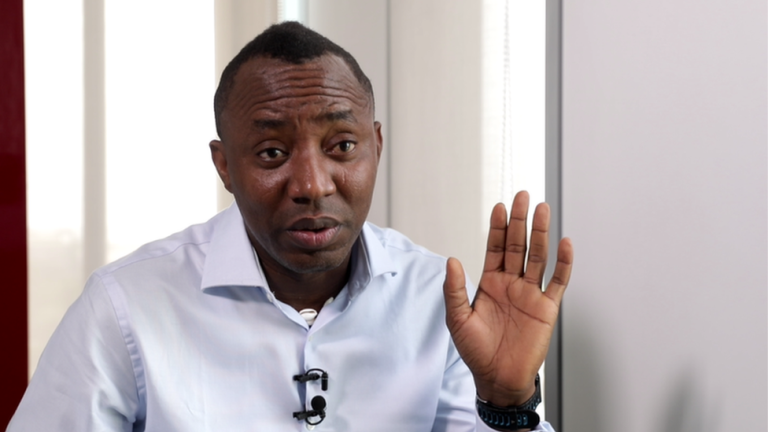
The former secretary general of the South African Students Union, (SAUS), and human rights activist in South Africa, Lwandile Mtsolo, has said the South African government and authorities do not support the killing of undocumented migrants, insisting that the protests are focused on immigration laws and documentation requirements rather than violence against foreigners.
He said this following the June 30 deadline issued by anti-migrant groups demanding that undocumented foreign nationals leave South Africa, amid concerns that the planned protests could trigger violence in parts of the country.
“South Africa is a constitutional democracy, so people have a right in South Africa to march and voice out their concerns.Lwandi Mntolo: Well, South Africa But the South African authorities and the South African police and its defense do not support the killing of illegal foreigners and they evade such killings.
“However, as you know, in South African law, like any other African country or any other country in the world, for you to be in a country illegally is a crime. I think really, that is what the marches have been about, is to ensure that those who are in the country are in the country with permission to be in the country,” he insisted.
He further revealed that several marches had been planned in major South African cities, including Durban, Pietermaritzburg and East London, adding that authorities had deployed police officers and allocated resources to ensure the protests remained peaceful and orderly.
“In South Africa currently, there are a lot of planned marches, especially in the big cities like Durban, Pietermaritzburg, and East London. However, the South African government has spoken about ensuring that there is peace in these marches. They’ve deployed a number of police officers and set aside several million Rands to deal with the issue of ensuring that there is safety in marches. But, of course, there are concerns in other areas in terms of the safety of the illegal foreigners. But we are hoping, because it’s still early in the morning, that there will be no violent attacks against our African brothers,” he said.
While acknowledging South Africans’ awareness of Nigeria’s support for the anti-apartheid struggle and the African National Congress, Mtsolo maintained that the current immigration debate takes place in a different context centred on undocumented migration and legal residency requirements.
“There is consciousness amongst South Africans. It’s been well-documented and it’s been well-told about the contributions that Nigeria has done to South Africa in terms of supporting the African National Congress. But it’s a different context today, because when you are speaking about the African National Congress and the South African revolution to overthrow apartheid, we had a number of people that were living in Nigeria.
“But however, the number was documented, the number was known, and people were given restrictions on what they could do and could not do in South Africa in terms of crime. You have many, many Nigerians who are in South Africa, some employed in Durban, in Johannesburg, who the South African authorities and South African people feel that they ought to have the proper documentation to be in the country. Because it is illegal to be in any other country without your papers,” he stressed.
According to the South African human rights activist, the government has done enough to protect foreign nationals, noting that deaths linked to xenophobic violence have declined significantly since 2008, and that current demonstrations were aimed at pressuring authorities to strengthen immigration enforcement and border management.
“The government has done enough. If you look at the statistics of 2008 and if you look at the statistics of the death rates in 2026, the number has drastically dropped. Which in 2026, there’s a slight difference because it is people marching, putting pressure on the South African government to ensure that Home Affairs is efficient, the South African police are efficient, and an entity called BMA, Border Management Authority in South Africa, is efficient to say that those that are not supposed to be in the country are deported,” he argued.
Emphasising that the protests were directed at alleged violations of immigration and business regulations, Mtsolo said South African authorities had strengthened border management and immigration enforcement in response to public concerns over undocumented migration.
“To open a business in South Africa, you need permission, you need laws, you need to have an investment capital of over 5 million if you are a foreign national. So the marches are targeting those that are doing things illegally in the country. . But if you look at what the South African authorities have done after the marches, they’ve beefed up the security, they’ve beefed up Home Affairs, they’ve beefed up Border Management Authority to ensure that it deals decisively with the illegal immigration in South Africa.
“Which is a cause for concern among South Africans because South Africans feel that there are job opportunities and small and medium businesses that illegal foreign nationals are occupying that space, which is a serious economy, and they believe that they are breaking the law. And according to the South African Constitution, they are breaking the law. So in South Africa, marches are allowed. You are allowed to go to the street and march in South Africa to put pressure on government. It’s allowed. It’s in the Constitution,” he insisted.
Speaking on concerns over the safety of documented foreign nationals, Mtsolo said South African authorities had intensified efforts to verify immigration papers, leading to arrests linked to fraudulent documentation and corruption within the system.
“The South African authorities have been, since the marches began, have been validating and re-checking papers. What we found is that there is a large number of people who have fake documentation. There has been a number of arrests of those that carry fake documentation. There’s also been a number of arrests on corrupt government officials who issue papers illegally or they are accepting bribes and so on and so forth. So we believe that the South African government, its onus is always to, one, ensure the safety of all human lives in the country, and also ensure that its own systems and mechanisms are up to place to ensure that it checks those that are undocumented,” he said.
Addressing concerns over how documented migrants are identified during the protests, Mtsolo said marches were accompanied by police, immigration officials and border authorities tasked with verifying documentation and maintaining order.
“Whenever these marches occur, they are accompanied by South African Police Services, they are accompanied by Home Affairs, they are accompanied by Border Management Authority, who are always present to ensure that they check and verify the documents of those that are there. The situation is different. It’s not like in 2008 where vigilante groups would just attack anyone. The marches are accompanied by police, so there is a level of law and order,” he shared.
On allegations that protesters were acting in concert with state authorities, Mtsolo clearly said police routinely accompanied marches in South Africa to ensure public safety and compliance with the law.
“Yes, of course. Whenever you go to a march in South Africa, the South African police accompany you to ensure safety and to ensure that you do not break the law. Because marching peacefully in South Africa is part of their constitutional right.”
Speaking on corruption within the immigration system, Mtsolo said both bribery and the illegal issuance of documents constituted offences under South African law, adding that authorities were working to tackle corruption within Home Affairs.
“We are dealing with a systemic pandemic of corruption in the country, which the government is tackling. So the South African government is tackling and ensuring that the South African authorities take charge of immigration in South Africa,” he concluded.
Favour Odima.