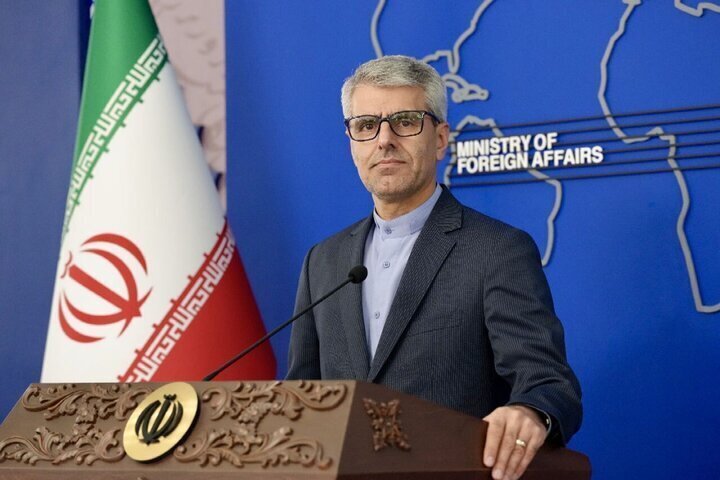
Iran has denied claims by the United States that it agreed to allow international nuclear inspectors back into the country following the first round of negotiations aimed at securing a final agreement to end hostilities between Washington and Tehran.
The disagreement emerged after talks in Switzerland, where US and Iranian negotiators met under the mediation of Qatar and Pakistan to advance efforts toward a comprehensive peace deal.
Speaking after the discussions, US Vice-President JD Vance said conversations regarding the return of inspectors from the International Atomic Energy Agency (IAEA) could begin almost immediately.
However, Iran’s Foreign Ministry rejected that assertion, insisting that Tehran had made “no new commitments” regarding nuclear inspections.
Foreign Ministry spokesman Esmail Baqai told Iran’s state news agency that any future engagement with UN nuclear inspectors would continue to operate under existing procedures approved by Parliament and the country’s Supreme National Security Council.
The dispute surfaced even as both sides described the opening round of negotiations as constructive.
In a joint statement, mediators Qatar and Pakistan announced that the parties had agreed on “a roadmap towards reaching a final deal within 60 days,” while technical discussions would continue in the coming weeks.
Vance described the negotiations as laying a “very good foundation,” saying discussions focused on reopening the Strait of Hormuz and maintaining regional ceasefire arrangements.
A major breakthrough came when the United States temporarily eased sanctions on Iran, allowing Tehran to sell oil in US dollars for the first time in decades.
The 60-day waiver, issued by the US Treasury, authorises the production, sale and transportation of Iranian crude oil and petrochemicals until August 21. The measure also permits direct imports of Iranian oil into the United States and removes several financial and logistical restrictions that had complicated Tehran’s energy exports.
US Treasury Secretary Scott Bessent said the sanctions relief was tied to commitments by Iran to keep the strategically important Strait of Hormuz open and permit the return of IAEA inspectors.
President Donald Trump also suggested that Tehran would eventually agree to extensive inspections, posting on social media that Iran “will agree to have Major Weapons Inspections.”
Iran, however, maintained that no fresh agreement had been reached on the issue.
The IAEA has yet to publicly comment on the conflicting claims.
Iran suspended inspector access to several nuclear sites after facilities were targeted during last year’s conflict involving Israel and the United States. The UN nuclear watchdog later withdrew its remaining inspectors from the country.
The latest talks also addressed regional security concerns, including tensions in Lebanon.
According to the mediators, both countries agreed to establish a communication mechanism designed to prevent misunderstandings and ensure safe commercial navigation through the Strait of Hormuz. A separate “de-confliction cell” involving the United States, Iran and Lebanon was also agreed upon to support efforts to end military operations in Lebanon.
Iranian Foreign Minister Seyed Abbas Araghchi described Lebanon as the first major test of the broader agreement.
Recent days have seen a reduction in fighting between Israeli forces and Hezbollah, with a fragile ceasefire reportedly holding since the weekend.
Erizia Rubyjeana