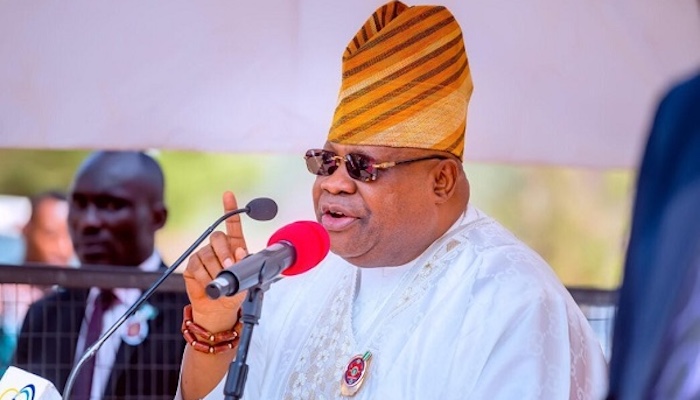
Western Cape Government MECs met on Thursday to discuss mop-up efforts following storms that hit the province, which has been declared a national disaster.
Alan Winde said the devastating storms that hit the province about six weeks ago had caused the worst damage he had seen in more than 30 years in government.
Meanwhile, MEC Deidre Baartman noted that the government will use this year’s infrastructure budget to respond to the damage, resulting in delays to initiatives and programmes that were scheduled to be implemented.
Mass devastation
Winde added that the devastation affected multiple areas across the province, from the West Coast to the Winelands, the Central Karoo, the Garden Route and Cape Town itself.
“We had the start of some very devastating storms in our region, followed by a second front and then a third front.
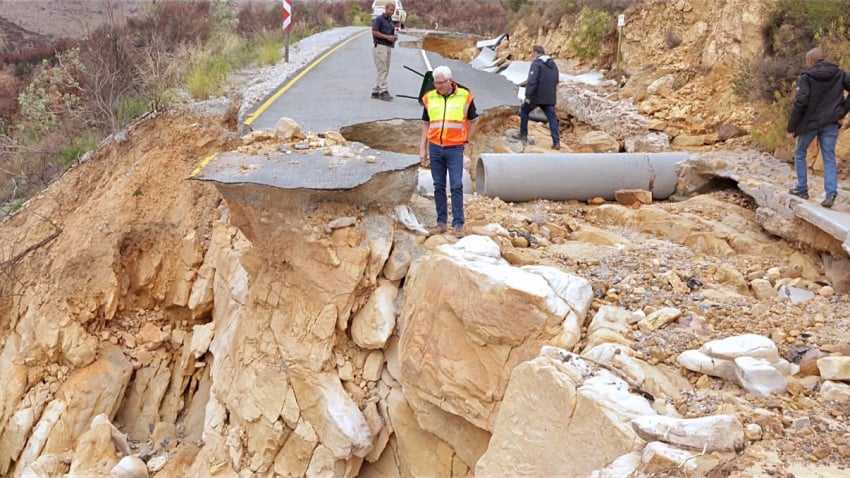
“The devastation itself is about people’s homes who have been lost, it is about bridges, multiple bridges across our province that have been washed away.
“It’s about classes that are no longer there, roads that are no longer there.”
He emphasised the grave impact heavy rains had on the agricultural sector.
“And then, of course, the other devastation that comes with it in the agricultural space, costs are mounting, vineyards no longer exist, orchards no longer exist, infrastructure no longer exists in our river system, pumps washed away, the list just goes on and on,” Winde said.
Electricity outages
He also noted that the long-lasting impact on the energy system, with pylons still lying on the ground, affects multiple regions that are experiencing outages a month and a half later.
“We do meet every morning with Eskom and their team because we are trying to help them, not only with extra teams coming in from other provinces, but also in other ways, Winde added
“So, we would be helping them with the transportation of new poles or machinery that is needed,” he said.
“And still, as we come to you as residents of this province, there are still places that are not connected yet, because of this mass devastation, and of course, many places that are disconnected because of this.”
Last week, Winde announced the costs that would be needed to repair infrastructure.
Financial Impact
MEC Deidre Baartman highlighted the financial aspects of infrastructure repairs, noting that preliminary damage assessments following the storm will cost around R9 billion.
“To make an example to the public, the whole infrastructure budget for this financial year is R10 billion,” she said
“So currently the preliminary assessments is almost the exact same amount of the current financial year’s budget, for the Department of Infrastructure,”
Baartman noted that the government will use this year’s financial budget allocated for infrastructure to respond to damage, resulting in delays to initiatives and programmes that were scheduled to be implemented.
“And this is why we must work with the national government and municipalities, to make sure we are all responding to the disasters,” she added.
She said that planning would also take longer, and she intends to meet with the Cabinet next week to reserve R100 million from unforeseen and unavoidable expenses this financial year to respond to some infrastructure repairs.
National Disaster
Meanwhile, Anton Bredell highlighted that both storms that took place between 5 and 8 May and between 10 and 13 May have been classified as national disasters.
He said that less damage occurred in areas that implemented the Winter Readiness Programme and emphasised the initiative’s importance and success.
“It’s always important to relook and see how we can do better moving forward,” he added.
The head of the Emergency Disaster Management Centre in the Western Cape, Collin Deiner, noted that 111 of 539 schools in the province were damaged. Deiner said that over 400 roads have been disrupted or closed during heavy rains.
Meanwhile, four hospitals were affected, including Mitchells Plain Hospital, which was left without electricity during storms.
Impact
Around 22 890 houses have been partially damaged, with reports from the agriculture sector noting livestock losses worth R5 billion.
A total of 231 029 people have been affected by storms that hit the Western Cape. Meanwhile, 651 rescue operations were conducted. 11 people unfortunately died, eight were injured and one person remains missing.
“Unfortunately, we initially had 11 people that were killed in these two incidents, one person that was missing has been found,”
“And the newest information we have is that person has also passed away, we have identified the person, making it 12 people,” Diener concluded.