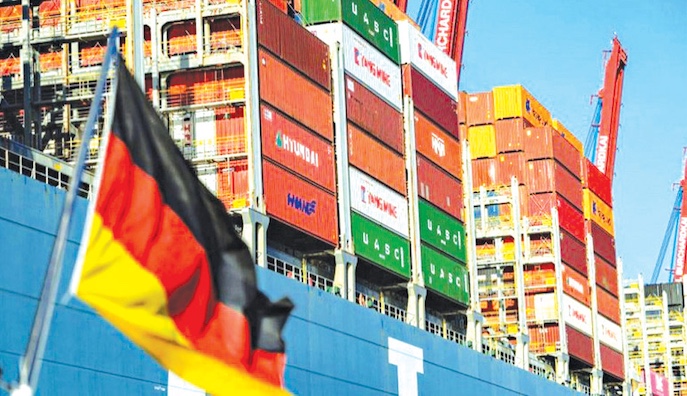
According to Germany’s federal statistics office, exports increased by 0.5% in March compared with the previous month, defying analysts’ expectations of a 1.7% decline. Shipments to other EU countries climbed 3.4%, helping to offset weaker demand from key overseas markets.
However, industrial output fell during the same period, contrary to forecasts for a 0.5% increase. The statistics office attributed the decline to lower energy production as well as reduced activity in machinery and equipment manufacturing.
Analysts said the mixed data reflected both resilience and growing risks for Europe’s largest economy.
VP Bank chief economist Thomas Gitzel said strong incoming orders could support industrial production and exports in the months ahead, although he cautioned that the outlook depended heavily on the duration of the Iran conflict.
Commerzbank analyst Joerg Kraemer warned that sentiment indicators point to a contraction in industrial output during the second quarter, citing high energy prices and supply bottlenecks linked to the blockade of the Strait of Hormuz.
Exports to the United States fell sharply by 7.9% month on month in March, highlighting weakening transatlantic trade demand. Despite the decline, the US remained the largest destination for German goods, receiving exports worth 11.2 billion euros during the month.
Imports climbed by 5.1% in March, far exceeding expectations for a 0.8% rise. Most imports came from China, with goods worth 15.6 billion euros, representing a 4.9% increase from the previous month.
As a result, Germany’s trade surplus shrank more than anticipated, falling to 14.3 billion euros from 19.6 billion euros in February.
Goodness Anunobi