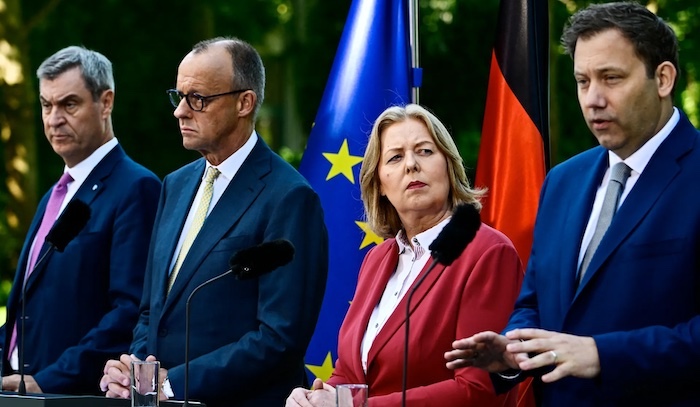
Germany’s ruling coalition has unveiled a wide-ranging package of economic reforms, including tax relief for lower-income earners, pension reforms and measures to expand affordable housing, as Chancellor Friedrich Merz’s government seeks to revive growth and strengthen Europe’s largest economy.
The reform package, presented on Thursday, is aimed at accelerating the country’s economic recovery while addressing persistent challenges that have slowed growth in recent years. The coalition has also come under increasing political pressure, with recent opinion polls placing the far-right Alternative for Germany (AfD) ahead of the governing alliance.
Speaking at the announcement, Merz said the government is committed to restoring Germany’s economic strength and putting the country back on a path of sustained growth, investment and competitiveness.
Beyond tax cuts and housing initiatives, the reforms include measures to reduce bureaucracy, tackle welfare fraud and abolish the use of telephone-issued sick notes for employees. The government also plans to reduce staffing levels across federal ministries by about eight percent through expanded digitalisation and administrative reforms.
To help fund the tax relief package, the coalition intends to raise the top income tax rate from 45 percent to 47 percent for individuals earning €280,000 or more annually, increasing the contribution of the country’s highest earners.
Economists have broadly welcomed the proposals, describing them as one of Germany’s most significant reform programmes in decades. Marion Muehlberger of Deutsche Bank Research said the coalition had demonstrated its ability to agree on major structural reforms and deliver them before the end of the year, adding that the measures could strengthen confidence and support stronger economic growth.
The government says the reforms are designed to improve Germany’s competitiveness, support businesses and make the economy more resilient as companies face growing international competition and persistent global uncertainty.
Germany’s economy has struggled to regain momentum since the COVID-19 pandemic, with stronger competition from China and elevated energy costs , initially driven by the war in Ukraine and more recently intensified by tensions involving Iran , placing increasing pressure on the country’s export-driven economy.
Reflecting those challenges, the government earlier this year lowered its economic growth forecast for 2026 to 0.5 percent and trimmed its 2027 projection to 0.9 percent from a previous estimate of 1.3 percent. It also revised its inflation outlook upward as higher energy prices continue to weigh on businesses and consumers, underscoring the urgency behind the coalition’s reform agenda.
Goodness Anunobi