Screenshot
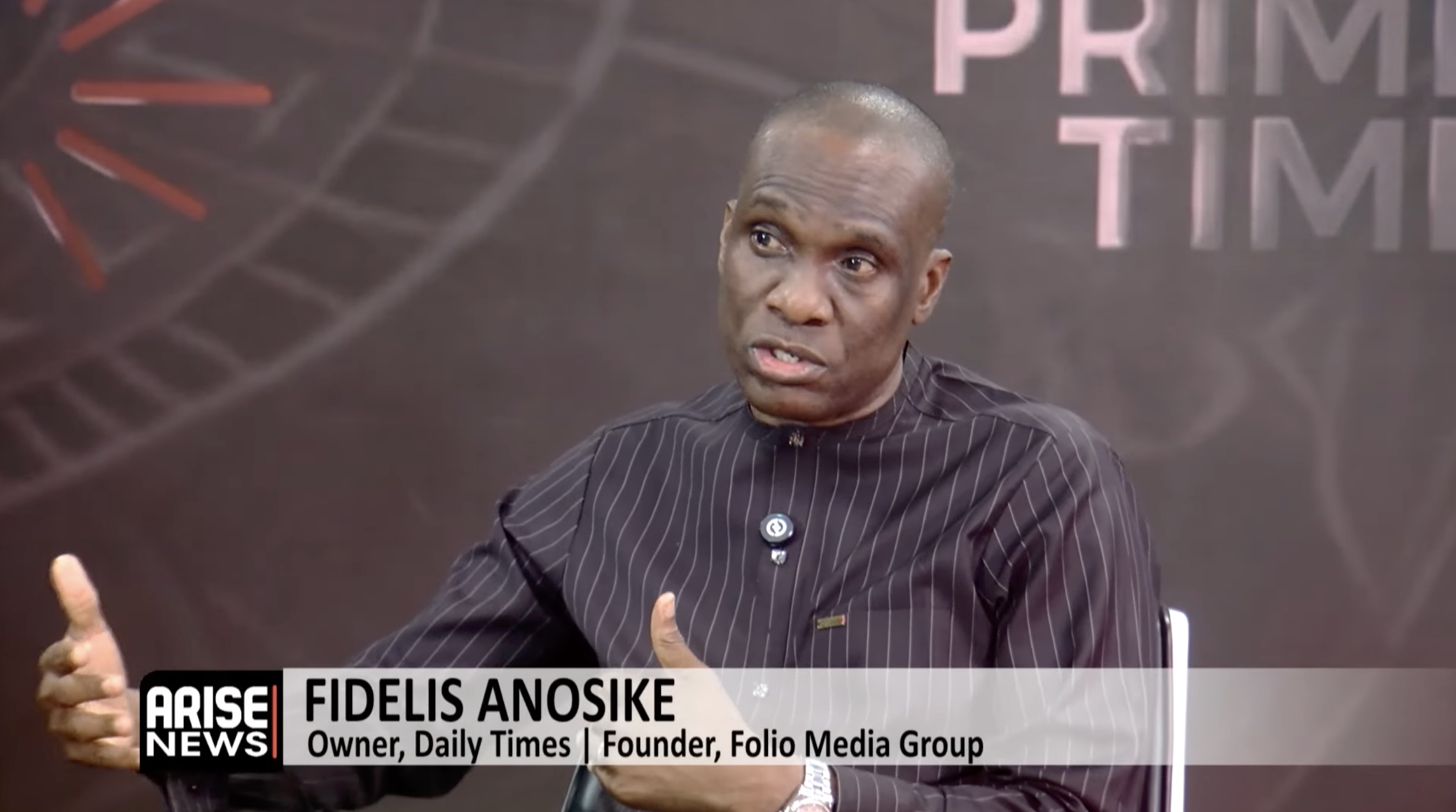
The owner of the Daily Times and Founder of Folio Media Group, Fidelis Anosike, has said that the nationalisation of the newspaper marked the beginning of its decline. Speaking in an interview with ARISE NEWS, he reflected on the institution’s 100-year journey, its rise as a powerful force in shaping public opinion and Nigeria’s path to self-rule, and how political intervention altered its trajectory over time.
“The Daily Times is Nigeria. If you understand why the Daily Times was created—it was actually created to be able to bring about self-rule for Nigerians.
“It lost its position because it became too powerful. So, when the military struck, they realized that for you to be able to control the hearts and minds of people, the Daily Times was the dominant force. So, they had to take it over. They had to nationalize it. So, it was nationalized, and then that was the beginning of the decline,” he shared.
Adding, he explained that Folio Communications acquired the newspaper through a formal privatisation process managed by the Bureau of Public Enterprises after a successful bid worth 1.25 billion naira.
“It was a three-year process. Folio Communications Limited won the bid and paid 1.25 billion Naira for buying the Daily Times. And the government gave it, handed over the Daily Times to us,” he said.
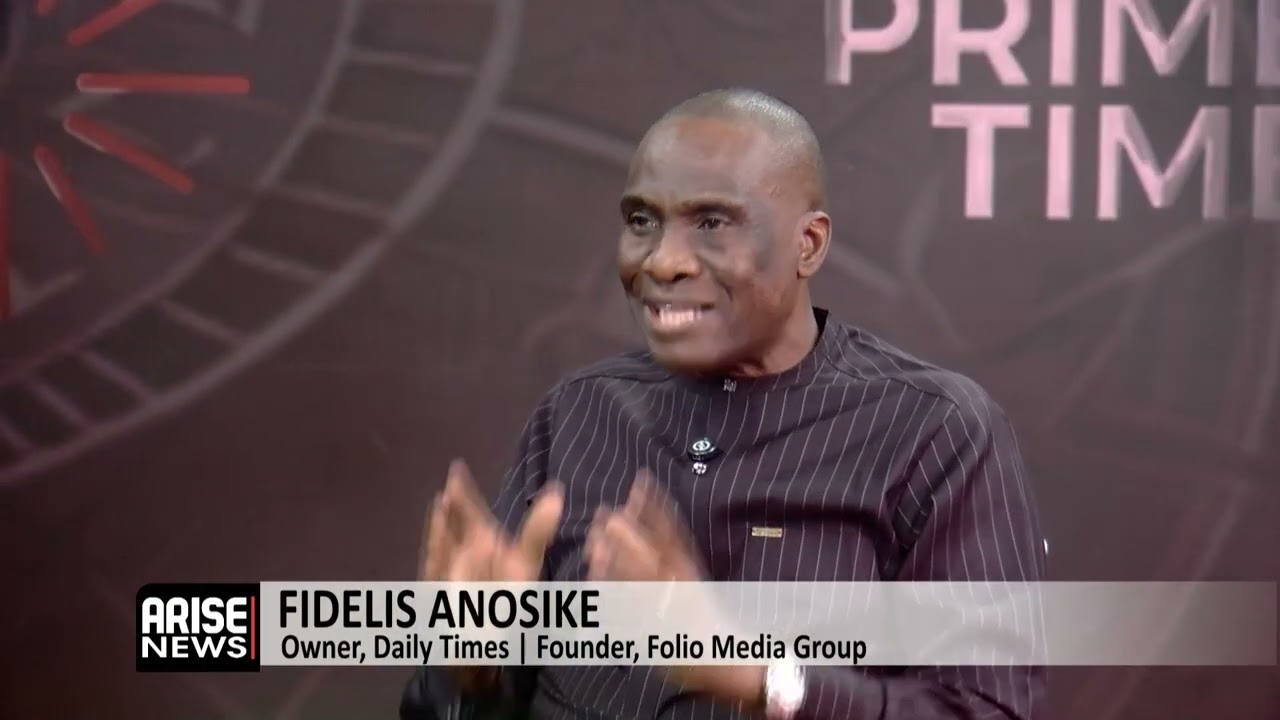
Responding to concerns about social media competition, Anosike said that while traditional print relied heavily on physical production and logistics, modern platforms allow content to reach audiences instantly, shifting the focus to quality storytelling, maintaining that strong content remains the most powerful driver of reach and virality, regardless of platform.
“The point is that content is king. If you build your content, the virality of your content is in the power of the content; it’s not in the distribution. Because people can share it.”
Sharing details of the Nigerian Grand Book project, Anosike said it is a 700-page publication designed to document Nigeria’s history, institutions, achievements, and future ambitions, with both print and digital editions planned. He explained that the initiative, developed over the past decade, is intended as a national reference and cultural souvenir aimed at reshaping global perceptions of Nigeria.
“What we’ve tried to do in the past 10 years is look at what the flagship product is that we should be known for. What is in it is everything about Nigeria, from the documented history of Nigeria—because you have to know where you’re coming from to know where you’re going—to the present and the future ambitions of Nigeria.
“This particular edition is called the Grand Book. The reason why it’s called the Grand Book is just like a grand piano. We want to be able to have this as a national souvenir, that every company that becomes part of the movement to change the Nigerian perception joins this movement that becomes a catalyst to change the global positive perception,” he revealed.
He added that the project also seeks to bring together key stakeholders, including diaspora communities, to contribute to a unified national narrative.
“We’ve done partnerships with everybody. This project has been in the making for the past 10 years. We took it from our archives, we got the President to sign the foreword, we have—we partnered with the Nigerians in the Diaspora Commission because we believe that the major ambassadors of Nigeria in a globalized world are Nigerians in the diaspora. This is 700 pages.
“We’re going to then begin to do versions of it: digital version, global version, and so on and so forth. But the idea is that if you’re not here, it means that you’re not part of the Nigerian story—past, present, and future. Because the idea is to be able to galvanize 100 proudly Nigerian entities that can be here and be able to be proudly Nigerian, so that we can begin to push Nigeria the way it’s supposed to be. That is what I think the Daily Times of today can take ownership of,” he explained.
Anosike also said the Daily Times is being transformed into a wider cultural platform, rebuilding legacy institutions like Miss Nigeria to extend its impact beyond traditional journalism.
“Legacy is legacy. We want to be able to rebuild those platforms one at a time. Miss Nigeria was founded in 1957. So, the idea is to recreate that as a young female empowerment platform so it can cater to an audience.”
Highlighting future plans for the Daily Times, the owner said the organisation is developing an AI-driven “Daily Times 2.0” built on its extensive archives to modernise news delivery and accessibility.
“What I’m trying to do in Daily Times 1.0 is to uphold their legacy. So, whatever we are doing is based on the things or the traditions that they put down. We are not trying to create fanfare. We are not trying to make a quick buck.
“Daily Times 2.0 is going to be dimensioned around the way news content is consumed. We’re going to build DTN AI as part of the 2.0. We’re investing heavily on that. We’ve done our archives into a monstrous machine learning system. We’re going to be able to launch DTN AI, through the archives. Our archives remain one of the best or most kept archives today. This is Daily Times of 1926. This is the first ever Daily Times,” Anosike concluded.
Favour Odima