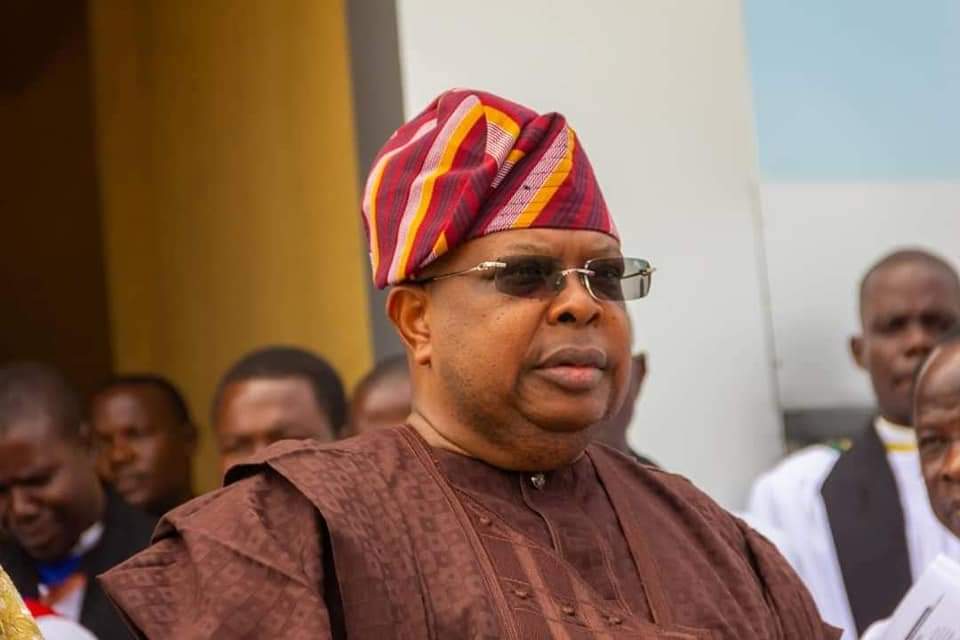
Power Minister Joseph Tegbe says communities, schools, healthcare centres and businesses gaining access to electricity will become a key measure of Nigeria’s power sector performance….
The Federal Government is moving away from measuring Nigeria’s electricity progress primarily by the number of megawatts generated, with greater emphasis now being placed on how many Nigerians and communities actually gain access to power.
Minister of Power Joseph Tegbe disclosed this on Friday in Abuja while inaugurating the governing board of the Rural Electrification Agency (REA).
Tegbe said the new approach reflects a broader understanding of what electricity means to Nigerians, particularly those living in communities that remain underserved despite improvements in power generation.
“We are moving from just counting kilowatts and megawatts to how many communities and people were powered in the country,” the minister said.
According to him, the REA’s responsibilities go beyond simply extending electricity connections. The agency, he said, is an important instrument for creating economic opportunities and improving living conditions across the country.
Tegbe said every mini-grid commissioned, solar home system installed or public facility connected to electricity should be viewed as an investment in Nigeria’s human capital and economic development.
He specifically cited markets, schools, primary healthcare centres, farms and productive businesses as facilities whose access to reliable electricity could have a direct impact on livelihoods.
“REA is fundamentally an institution for expanding opportunity,” he said.
“Every mini-grid inaugurated, every solar home system deployed, every market, school, primary healthcare centre, farm or productive enterprise electrified represents an investment in human capital, economic inclusion and national prosperity.”
The minister said the implementation of the Electricity Act and continuing reforms in the Nigerian Electricity Supply Industry had made the agency’s role increasingly important.
He described REA as a critical link between government policy and its impact at the grassroots, particularly in extending electricity access beyond major urban centres.
Tegbe charged the newly inaugurated board with providing strategic direction for the agency while strengthening governance and ensuring that public resources are properly protected.
He also urged the board to expand collaboration with development institutions and private-sector investors to accelerate electrification projects.
The minister asked members to keep the impact of their decisions on ordinary Nigerians at the centre of their work.
“Most importantly, I encourage you to continually ask one fundamental question whenever decisions come before the board: ‘How does this improve the lives and livelihoods of ordinary Nigerians?’” he said.
“If that question remains our compass, I have no doubt that the agency will continue to exceed expectations.”
The seven-member REA board is chaired by former Ekiti State Governor Ayodele Fayose.
Other non-executive members are Ahmadu Abubakar and Ilyasu Makinta, while REA Managing Director Abba Aliyu and the agency’s three executive directors make up the remainder of the board.
Speaking on behalf of the board, Fayose thanked President Bola Tinubu for the appointment and pledged to support efforts to expand electricity access across the country.
He said many of Nigeria’s electricity challenges are concentrated at the grassroots, where communities continue to face limited access to reliable power.
According to Fayose, the board will focus on mobilising the resources required to bring electricity to more communities and ensure that the benefits of electrification are felt directly by citizens.
“Our assignment is beyond providing electricity. It is about ensuring that Nigerians feel the impact of energy,” he said.
Fayose also pledged to pursue adequate funding for the agency’s short- and long-term electrification programmes.
The new direction signals a shift in emphasis from how much electricity Nigeria produces to how effectively that electricity translates into access, economic activity and improved living conditions for citizens, particularly in communities that have historically remained outside the reach of the national grid.