The European soccer season is finally over after reaching its crescendo over the weekend with the Uefa Champions League final in Budapest.
The soccer faithful will now brace themselves for the Fifa World Cup that is kicking off this week in Mexico, USA and Canada. Here, national teams will compete for the world’s biggest soccer prize.
Given the time difference, expect emotions running really high late nights and early mornings. Soccer is the world’s most popular sport with an estimated four billion fans globally.
Stars of the game like Diego Maradona and Pele (now both deceased) are even worshipped in their respective countries (Argentina and Brazil) and in many parts of the world. Current soccer gods, Lionel Messi of Argentina and Christiano Ronaldo of Portugal have hundreds of millions of followers all over the world.
It will be both their last World Cup. Messi won it the last time the tournament was held four years ago. Ronaldo is looking forward to add it on his ever-growing list of achievements.
In the regular season, the English Premier League is the most popular one in Uganda and indeed many parts of the world. English clubs particularly Arsenal, Liverpool and Manchester United have millions of followers in Uganda.
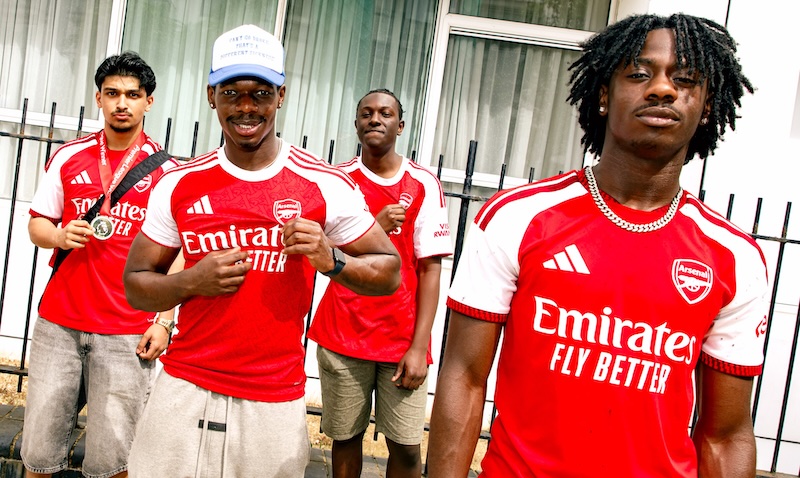
When Arsenal won the premiership title at the end of the season last month, its fans went hysterical. Church events were organised. Concerts were held. People matched several kilometres in mock trophy parades. Rival fans trolled Arsenal.
Arsenal fans shot back. Memes were created. The banter has been in high gear. Some of the people trying to be different after watching huge crowds of Arsenal fans in several African capitals wondered why the people were celebrating a foreign team.
They called it colonialism. Some of the loudest voices were journalists including those working for media houses that push for western hegemony. Such people argued that Africans must develop their own games or stop worshiping colonizers.

Anyway, the globalization of the media (including social media) and the marketing capabilities of European leagues have made European soccer a must watch for many. It is easier to find a TV showing an English soccer match than a Ugandan one.
The money involved also means that the development in terms of infrastructure and talent is many centuries ahead of countries like Uganda. Sometimes, a live match involving humans resembles a computer game in execution.
The aesthetics of the English Premier League is hard to ignore. But after watching these huge crowds, one wonders what could be done? How can entrepreneurs in countries like Uganda tap in?
There are millions of fans, who are so committed to their clubs and they remain faithful even when the titles are elusive for decades. Looking at the sheer numbers of Arsenal fans in Uganda and Kenya, one could tell that they were wearing counterfeit replica shirts.
Indeed, very few fans in East Africa can afford a Pound Sterling 140 (approximately Shs711,000) shirt before even shipment and taxes. And many small shops sell these counterfeits for as little as Shs 30,000.
What if someone negotiated a deal with these clubs to make replica shirts that are affordable for countries like Uganda? The shirts would probably be Ugandan or African themed to make them a bit different from what they sell in Europe and elsewhere.
Most fans would love to buy them because they would know that these are original shirts meant for the continent. The franchise owner would of course work with law enforcement to ensure cheap counterfeits aren’t shipped in.
And then for those who can afford the European ones, could order from the franchise owner. Other merchandise items could be also be shipped in using the same concept. Soccer is best watched among peers and fans.
At home, to the chagrin of most spouses especially the female ones, it can be boring. Rival fans can also be good to troll as the match goes on—those brave enough to go to a bar where they aren’t in the majority.
Imagine an Arsenal, Liverpool or Manchester United themed bar? Fans of the particular club would be sure to catch the game on large screens in a friendly atmosphere. One of the challenges of Ugandan bars that show matches is inconsistence.
You sometimes find them flipping channels trying to make everyone happy especially when several matches are being played at the same time. Some fans end up leaving to find a place where their team’s match is being shown.
A themed bar will dedicate the club’s matches regardless of the opposition. They would also not be playing loud music when 95% of the people are watching soccer instead of commentary. Menus such as cocktails could be club themed as well. Betting company could sponsor some matches and parties. A loyal clientele could be easily established thereby guaranteeing good returns for the investor.
djjuuko@gmail.com
The writer is a communication and visibility consultant.