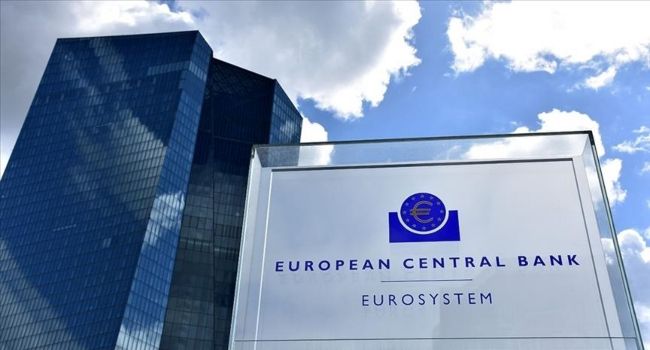
Eurozone faces difficult balancing act as rising energy costs push inflation higher while economic growth weakens….
The European Central Bank (ECB) has raised interest rates for the first time since 2023, responding to mounting inflationary pressures triggered by the ongoing conflict in the Middle East despite growing concerns about the fragile state of the eurozone economy.
The Frankfurt-based central bank announced on Thursday that it had increased its key deposit rate by 25 basis points to 2.25 per cent, marking a significant shift in monetary policy after nearly three years without a rate hike.
The decision comes as surging energy prices, driven largely by disruptions linked to the conflict involving Iran, Israel and the United States, continue to push consumer prices higher across Europe.
In its policy statement, the ECB warned that the war has intensified inflation risks and created fresh uncertainty for policymakers attempting to balance price stability with economic growth.
“The conflict in the Middle East is contributing to inflationary pressures,” the central bank said, noting that both the duration of the crisis and the extent of energy market disruptions would determine the longer-term impact on Europe’s economy.
Inflation across the eurozone accelerated to 3.2 per cent in May, significantly above the ECB’s target of 2 per cent, prompting officials to take action despite signs of economic weakness.
Reflecting the changing outlook, the central bank revised its inflation forecast upward, projecting average inflation of 3 per cent for 2026, compared with the 2.6 per cent estimate released earlier this year.
At the same time, policymakers lowered their economic growth forecast for the eurozone, cutting expectations from 0.9 per cent to 0.8 per cent as businesses and consumers grapple with rising costs and heightened uncertainty.
The latest developments have been heavily influenced by turmoil in global energy markets.
The Strait of Hormuz, one of the world’s most strategically important oil and gas shipping routes, remains severely disrupted amid ongoing hostilities, raising fears of prolonged supply shortages and higher energy prices worldwide.
The ECB’s move makes it the first major central bank to tighten monetary policy in direct response to the latest energy shock.
While several smaller economies have already raised rates, larger institutions such as the US Federal Reserve and the Bank of England have so far opted to hold borrowing costs steady while assessing the economic consequences of the conflict.
Both central banks are expected to provide further guidance when they meet next week.
The rate increase also marks a notable departure from the ECB’s recent policy direction. Following a series of aggressive hikes aimed at combating inflation after Russia’s invasion of Ukraine, the bank shifted toward easing monetary conditions as price pressures moderated.
Since mid-2025, policymakers had largely maintained a wait-and-see approach, keeping rates unchanged while monitoring economic developments.
However, Thursday’s decision suggests officials are becoming increasingly concerned that rising energy costs could reignite broader inflationary pressures throughout the economy.
Not everyone agrees with the move.
Several economists have argued that higher interest rates may have limited impact on inflation caused primarily by energy supply disruptions rather than excessive consumer demand.
Critics warn that increasing borrowing costs could further strain households and businesses already facing elevated energy bills and slowing economic activity.
The concerns are particularly significant given that the eurozone economy contracted during the first quarter of the year, highlighting the challenges facing policymakers as they attempt to contain inflation without pushing the region into a deeper slowdown.
Analysts believe ECB officials may also be mindful of criticism they faced during previous inflation crises, when some observers argued the bank reacted too slowly to rapidly rising prices.
Nevertheless, most economists do not expect the latest move to signal the beginning of an aggressive tightening cycle.
Investors are expected to closely scrutinise comments from ECB President Christine Lagarde for clues about the bank’s next steps, although market watchers anticipate she will avoid making firm commitments while uncertainty surrounding the conflict and energy markets remains high.
For now, the ECB appears focused on a delicate objective: containing inflation without inflicting further damage on an economy already struggling to regain momentum.