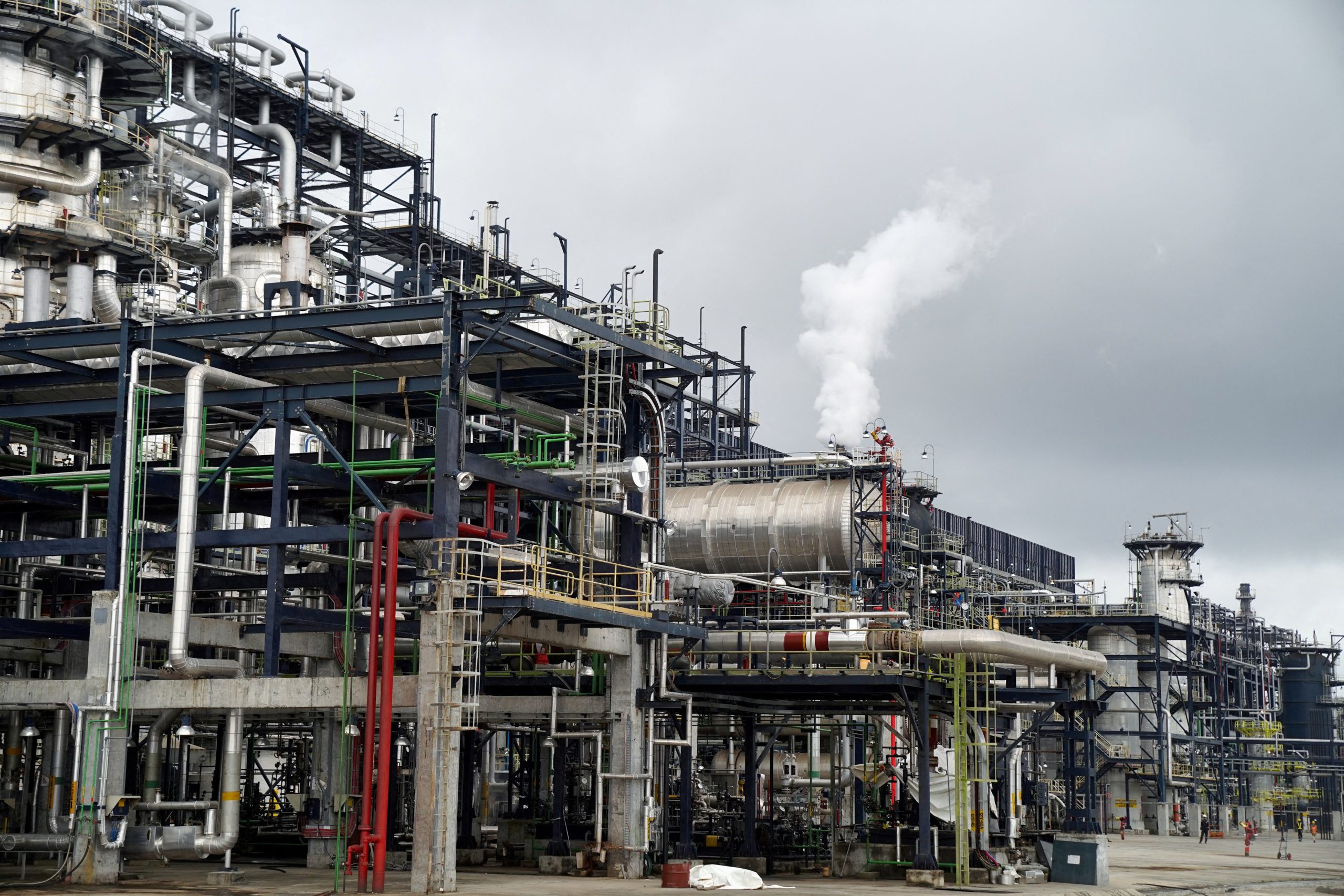
The Dangote Petroleum Refinery says it is working to expand its crude processing capacity to as many as 130 different crude oil grades as part of its long-term growth strategy.
The facility, which has recently achieved its 650,000 barrels-per-day nameplate capacity, is also preparing for a major expansion that will double output while broadening its crude sourcing beyond Nigeria.
Chief Executive Officer David Bird, in an interview with S&P Global Energy, described the plant as a merchant-type refinery designed to operate competitively within global oil trading systems rather than rely on a single crude stream.
“This is not a traditional refinery in an oil-producing country that just sits at the end of a crude pipeline and processes one crude. This is a fully merchant refining model that you could see in Europe or Asia,” Bird was quoted as saying.
He noted that the refinery currently processes about 40 crude varieties but aims to significantly expand that portfolio as operations scale, targeting up to 130 grades—similar to highly complex global refining hubs such as Singapore’s Pulau Bukom.
Bird added that the expansion would enable greater crude blending flexibility and access to supply sources from regions including the Middle East, the United States, and heavier crude markets.
“We will be in the crude blending game. So you can easily imagine at 1.4 million bpd, we could process 30 per cent Middle Eastern grades on each train,” he said.
He further stated that operating costs are expected to decline as the refinery benefits from economies of scale, with projections linked to the $10 billion expansion suggesting costs could drop below $2 per barrel, strengthening its global competitiveness.