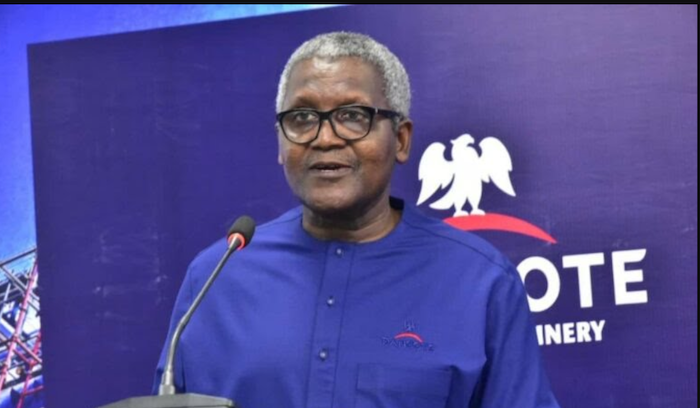
Africa’s richest man, Aliko Dangote, has said he is considering Kenya as the preferred location for a proposed 650,000-barrel-per-day oil refinery in East Africa, with the billionaire businessman indicating that the project would depend largely on the support of Kenyan President William Ruto.
According to a report published Sunday by the Financial Times, Dangote said he was leaning towards the Kenyan coastal city of Mombasa rather than Tanzania’s Tanga port because of its economic and logistical advantages.
“I’m leaning more towards Mombasa because Mombasa has a much larger, deeper port,” Dangote said in the interview.
The development comes weeks after President Ruto disclosed that East African countries were discussing plans for a joint regional refinery at Tanzania’s Tanga port, modelled after Nigeria’s Dangote Refinery.
But Dangote, while comparing both locations, appeared to favour Kenya, citing the country’s larger economy and stronger fuel consumption levels.
“Kenyans consume more. It’s a bigger economy,” he said.
Dangote also stressed that the fate of the multi-billion-dollar investment would rest with the Kenyan government.
“The ball is in the hands of President Ruto,” he said. “Whatever President Ruto says is what I’ll do.”
The Financial Times reported that Dangote estimated the refinery would cost between $15 billion and $17 billion to build.
If completed, the refinery would significantly reshape East Africa’s energy landscape, as countries in the region currently depend entirely on imported refined petroleum products, mostly sourced from the Middle East.
The region has remained vulnerable to supply disruptions and rising fuel prices triggered by geopolitical tensions, including the recent U.S.-Israeli war on Iran.
Dangote had earlier hinted at plans to replicate his Nigerian refinery model in East Africa while speaking at an infrastructure summit in Nairobi last month.
At the summit, the Nigerian billionaire said he could build a refinery similar to his 650,000-barrel-per-day Lagos-based facility in East Africa, provided governments in the region were willing to support the initiative.
Boluwatife Enome