Billionaire industrialist pledges to replicate Nigeria’s flagship refinery abroad, pushes for African self-sufficiency in energy and manufacturing…..
Africa’s richest industrialist, Aliko Dangote, has unveiled ambitious plans to take his refining empire beyond Nigeria, signaling a potential mega investment in East Africa that could reshape the region’s energy landscape.
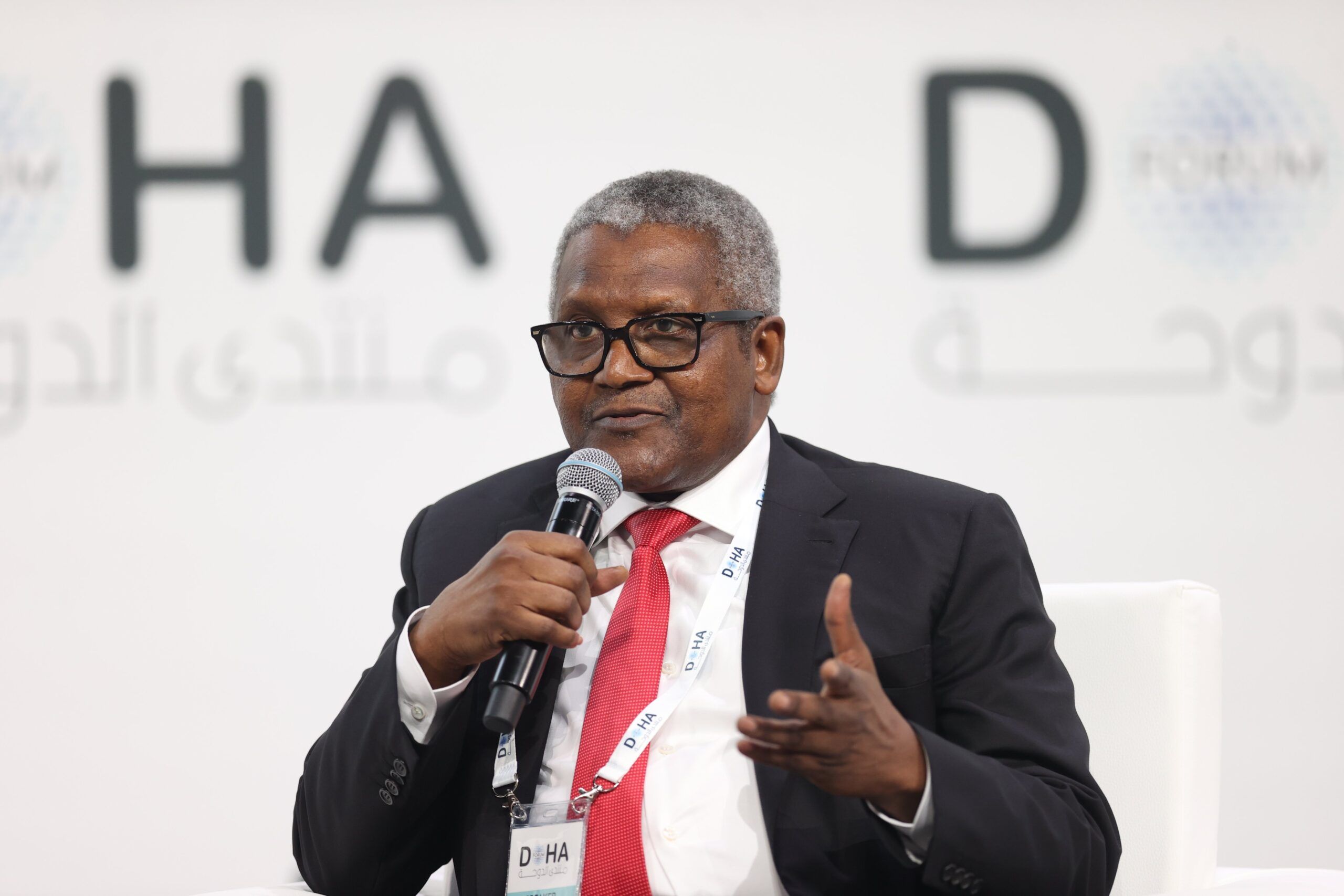
Speaking at the 2026 Africa We Build Summit in Nairobi, Dangote pledged to replicate his 650,000 barrels-per-day refinery in Nigeria widely regarded as one of the continent’s most significant industrial projects if East African governments provide the necessary backing.
“I can give my commitment… if there is support, we will build an identical refinery,” he said, addressing regional leaders at the high-level infrastructure financing conference.
Dangote used the platform to champion a broader vision of African economic independence, urging countries across the continent to prioritise self-sufficiency and reduce reliance on imported refined products.
He also revealed that expansion efforts are already underway in Nigeria, where the capacity of the existing facility is being scaled up to 1.4 million barrels per day. Once completed, the refinery is expected to rank among the largest globally and account for a significant share of refining capacity comparable to major international markets.
According to him, the upgraded plant will not only refine crude oil but also integrate petrochemical production, creating a value chain capable of supporting industries ranging from plastics to manufacturing.
The push into East Africa aligns with growing regional ambitions. William Ruto, who also spoke at the summit, confirmed that discussions are ongoing among East African nations to establish a joint refinery at Tanzania’s port city of Tanga.
The proposed facility is expected to process crude sourced from multiple countries, including the Democratic Republic of the Congo, Kenya, South Sudan, and Uganda marking a collaborative approach to energy security in the region.
Dangote argued that Africa’s long-term economic resilience depends on building strong local industries. He warned that heavy dependence on imported finished goods leaves economies vulnerable to global supply shocks and volatile pricing.
“It is possible, Africans can do it,” he said, pointing to Nigeria’s progress in domestic manufacturing, including petrochemicals like polypropylene, which support sectors such as cement, flour, and grain processing.
The East Africa refinery proposal represents just one piece of Dangote Group’s broader continental strategy. The conglomerate is also expanding fertiliser production across several African markets and preparing for a pan-African initial public offering that could see at least 10 percent of its refining business sold to investors.
The planned IPO is part of a sweeping $40 billion growth vision aimed at deepening industrial capacity and positioning Africa as a global player in energy and manufacturing.
If realised, the East African refinery project would not only extend Dangote’s industrial footprint but also mark a significant step toward a more self-reliant and integrated African energy market.