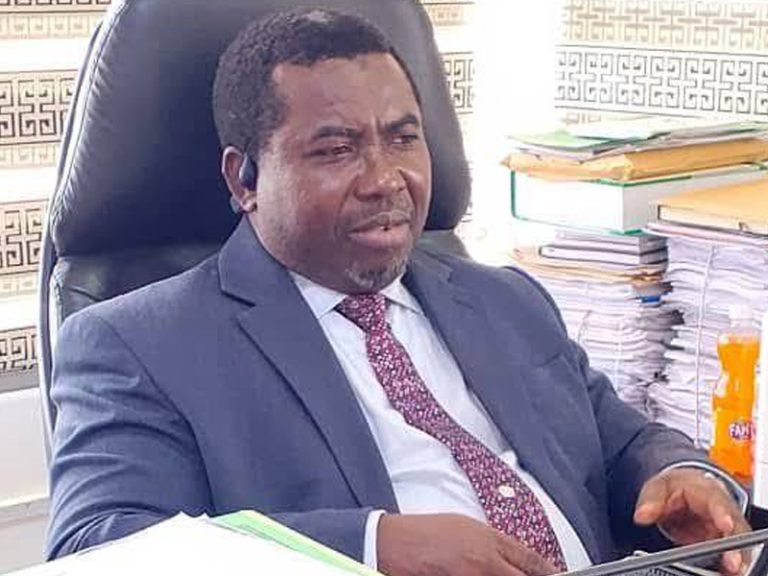
The state has pushed to keep Captain Laurance Makgotloe behind bars, alleging he could repeat his conduct if released on bail, having been accused of manipulating ballistic evidence in a high-profile murder investigation.
The forensic officer returned to the dock before the Pretoria Magistrate’s Court on Thursday, 4 June 2026, where his bail application was heard.
Captain Laurance Makgotloe charges
Makgotloe, a senior ballistics expert at the forensic science laboratory of the South African Police Service (Saps) in Silverton, Pretoria, is accused of interfering with key evidence linked to the murder of Vereeniging engineer Armand Swart.
He faces charges of possession of unlicensed ammunition, as well as two counts of being an accessory after the fact to murder (alternative charges of defeating the ends of justice).
According to the state, the allegations stem from claims that Makgotloe produced misleading ballistic findings that undermined the investigation into Swart’s killing.
Swart, formerly employed by Q Tech Engineering, was fatally shot outside his workplace on 17 April 2024 in an incident investigators believe to be a case of mistaken identity.
The charges also extend to an earlier case dating back to 2018, in which a woman’s husband allegedly orchestrated a contract killing.
The hitman allegedly used the husband’s licensed firearm to carry out the murder, with Makgotloe later assigned to examine cartridge evidence intended to link the weapon to the crime.
Prosecutors allege that instead of following proper forensic procedures, he produced two “unreliable” reports, failed to correctly analyse ballistic material, altered dates in documentation, and interfered with automated biometric identification system (Abis) database checks that could have linked the firearm to other crimes.
State argues risk of repeat offending
During bail proceedings, prosecutor Velile Makasana called investigating officer Xolani Sokanyile to oppose Makgotloe’s release.
Sokanyile told the court that allowing the accused back into his working environment would create an ongoing risk.
“The accused was never suspended. He is still within Saps.
“Having him to go back to the same office, there is nothing that can stop him from committing the offences that he has committed,” he testified.
The warrant officer stressed that Makgotloe’s senior rank and authority within the police increased the potential danger.
“He is not just like me, a non-commissioned officer. He is a commissioned officer. He has the authority to instruct and command, and those instructions must follow,” the warrant officer told the court.
Concerns over access to systems and witness influence
The court also heard arguments that Makgotloe’s position could allow him to go to any police station with his work passwords and be able to access any information that he wants to retrieve.
“The chances of him evading [trial] or influencing the witnesses in the matter are so high, actually,” the investigating officer remarked, adding that Makgotloe’s colleagues are witnesses in the case.
Sokanyile further testified that Makgotloe allegedly bypassed established forensic review protocols by submitting his reports directly to investigators, despite being instructed to revise what were identified at the time as “mistakes”.
“The applicant knows what the procedure that he was supposed to follow is.”
He also added, “I don’t see any bail conditions that will accommodate what the applicant has done. That will bring more questions to the justice system.”
Defence pushes back on state’s interpretation
During cross-examination, defence lawyer Emile Viviers disputed Sokanyile’s version, saying there was no factual basis to claim Makgotloe had been informed by one of the three accused that the seized firearms – an AK-47 rifle and three pistols – would be tied to other crimes.
“You were speculating. It’s not based on fact,” the lawyer said.
Sokanyile conceded that the inference was his own interpretation.
Viviers also argued that the documentation provided to Makgotloe did not clearly indicate the broader context of the Swart investigation.
“The merits are not dealt with in that case file. He does not know from what scene it comes from.”
Sokanyile maintained, however, that Makgotloe was present at the crime scene and therefore aware of the scope of the investigation.
The defence told the court that Makgotloe’s first ballistic report, produced in May 2024, contained only five errors, which were later corrected in revised versions.
Viviers argued that a second report linked a bullet recovered from the victim to an AK-47 rifle and included post-mortem findings, while a third report corrected earlier mistakes.
“So you don’t have the second report and don’t have the third report?” the lawyer said.
Sokanyile responded: “I do have the first report. I do have the amended report that came from the prosecutor, but I don’t have the report that came from the post-mortem.”
Madlanga commission testimony in dispute
A further point of contention arose around Makgotloe’s testimony at the Madlanga commission of inquiry.
The defence objected to the state relying on that testimony during the bail hearing.
“The state is not entitled to use the evidence delivered at that commission against an accused in any further criminal proceedings.
“Whatever this witness now wants to testify [about], I object to this because it is inadmissible evidence,” Viviers said.
The magistrate upheld the objection and ordered the material to be excluded from the record.
Sokanyile had earlier pointed out that Makgotloe had given evidence at the commission regarding the flawed reports he had compiled.