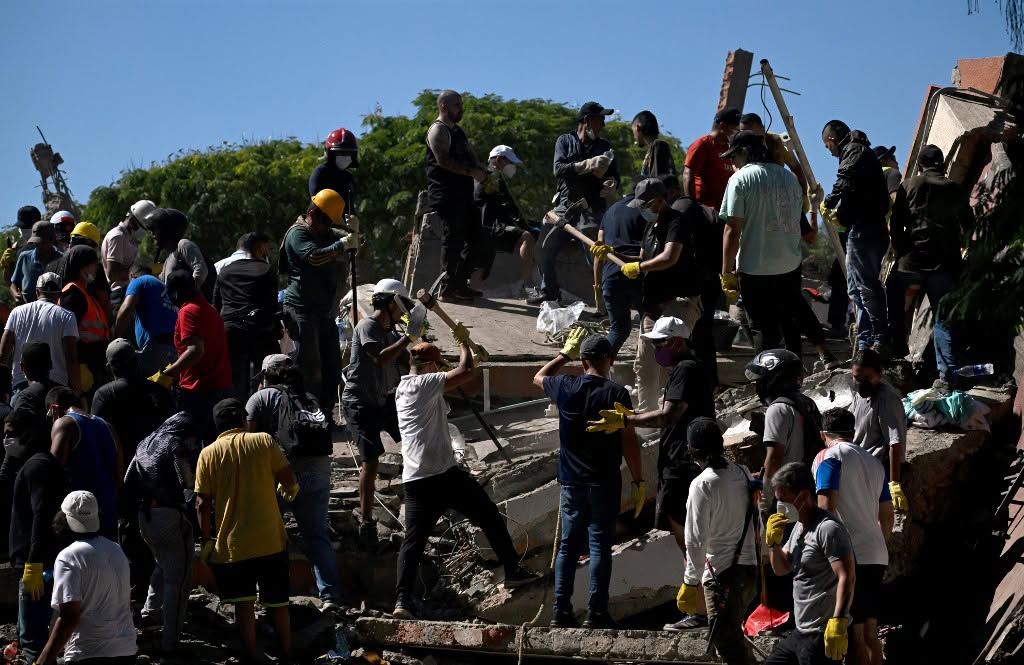
People and rescuers look for survivors amid the rubble of a collapsed building after an earthquake in Cali, Colombia on August 10, 2026. A magnitude 7.4 earthquake struck Colombia on August 10, 2026, and killed at least 111 people, damaged more than 1,500 buildings, and left an unknown number of people buried under rubble. The government declared a state of emergency to attend to the quake that shook several cities across the coffee-producing region, the Pacific coast, and neighboring Latin American countri
The death toll from the powerful earthquake that struck western Colombia has risen to at least 164, as rescue teams continue a desperate search for survivors trapped beneath collapsed buildings and homes.
The 7.4-magnitude earthquake struck Colombia’s coffee-growing region early Monday, causing widespread destruction in several cities, including Cali, Pereira and Manizales.
Emergency responders, backed by police officers, soldiers and civilian volunteers, worked through the night using excavators and, in some locations, their bare hands to sift through mountains of rubble in search of people who may still be alive.
Cali, one of the worst-hit cities, has recorded at least 85 deaths, while Pereira has also suffered significant casualties and extensive structural damage. Authorities fear the number of victims could increase as rescue workers gain access to areas that remain difficult to assess.
The earthquake reduced buildings to rubble and left dozens of other structures severely damaged or dangerously unstable. In Manizales, part of a historic cathedral was damaged, while several buildings across the affected region suffered major structural failures.
One of the most serious incidents occurred at a hospital in Cali, where upper sections of the facility, including areas used for paediatric care, collapsed. The damage forced hundreds of patients to be moved outside as emergency workers dealt with debris and assessed the safety of the remaining structure.
The disaster has also disrupted normal life across the affected areas, with residents forced into the streets amid fears of further collapses and aftershocks. Emergency authorities have intensified search-and-rescue operations while assessing damage to homes, hospitals and other critical infrastructure.
The Colombian government has mobilised security and emergency personnel to support relief efforts and maintain order in the hardest-hit communities as the scale of the disaster becomes clearer.
The earthquake is being described as one of the most powerful to hit Colombia in decades, reviving memories of the devastating 1999 earthquake that struck the country’s coffee-growing region.
With rescue operations continuing into a second day, authorities are focused on locating survivors, treating the injured and providing emergency assistance to thousands of people affected by the disaster.
Officials have warned that the casualty figures remain provisional and could rise further as rescue crews reach more collapsed structures and complete assessments in remote and heavily damaged communities.