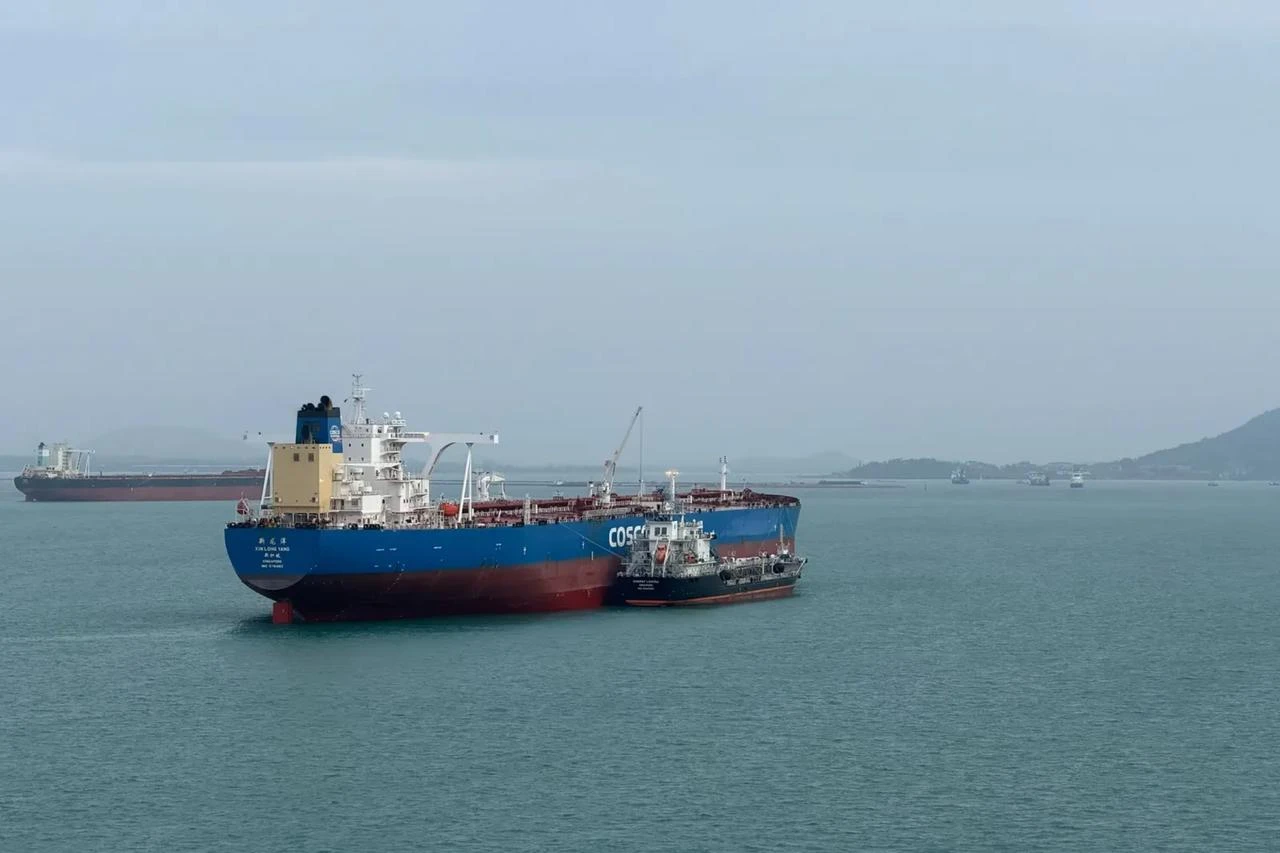
Two Chinese supertankers carrying a combined four million barrels of Saudi Arabian crude oil are heading towards the Bab el-Mandeb Strait, testing the Houthis newly declared naval blockade of Saudi shipping in the Red Sea.
Shipping data on Thursday showed that the two Very Large Crude Carriers (VLCCs) were sailing towards the strategic waterway despite escalating attacks by the Iran-aligned Houthi movement, which claimed earlier in the day that it had targeted two Saudi oil tankers with drones and missiles.
The development comes as renewed fighting between the United States and Iran continues to disrupt maritime trade, with the Red Sea blockade adding further pressure to global energy supplies alongside reduced traffic through the Strait of Hormuz.
According to shipping data from LSEG, the Singapore-flagged Xin Long Yang, which briefly reversed course and paused in the Red Sea on Tuesday, resumed its southbound journey late on Wednesday. The vessel is bound for Qinzhou in southern China.
The Chinese-flagged Cosnew Lake is also heading south and is expected to discharge its cargo at Huizhou in Guangdong Province.
Both tankers, chartered by Unipec, the trading arm of Chinese refining giant Sinopec, loaded Saudi crude at the port of Yanbu earlier this week. Shipping data indicated that both vessels have Chinese crews on board.
Neither Sinopec nor Cosco Shipping, which manages the vessels, immediately responded to requests for comment.
Earlier on Thursday, the Houthis announced they had launched a military operation against two Saudi oil tankers, alleging the vessels had violated the group’s blockade.
Saudi state news agency SPA later confirmed that the Saudi vessel Encelia had come under attack in the Red Sea and caught fire, although all crew members were reported safe.
The worsening security situation has significantly reduced commercial shipping through the region.
LSEG data showed that only 27 vessels transited the Bab el-Mandeb Strait on Wednesday, down from 38 the previous day. Traffic through the Strait of Hormuz also remained subdued, with data from Kpler showing only three vessels passed through the strategic chokepoint on Wednesday, compared with 18 during the same period a week earlier.
As of July 20, LSEG data showed there were 253 laden tankers in the Gulf, including 102 oil tankers, 64 liquefied natural gas carriers and 66 liquefied petroleum gas carriers, highlighting the growing risks facing global energy shipments amid the escalating regional conflict.
Erizia Rubyjeana