Olayemi Cardoso says market reforms have boosted liquidity and reduced interventions, even as reserves dip below $49bn but remain “comfortable” above IMF benchmarks……
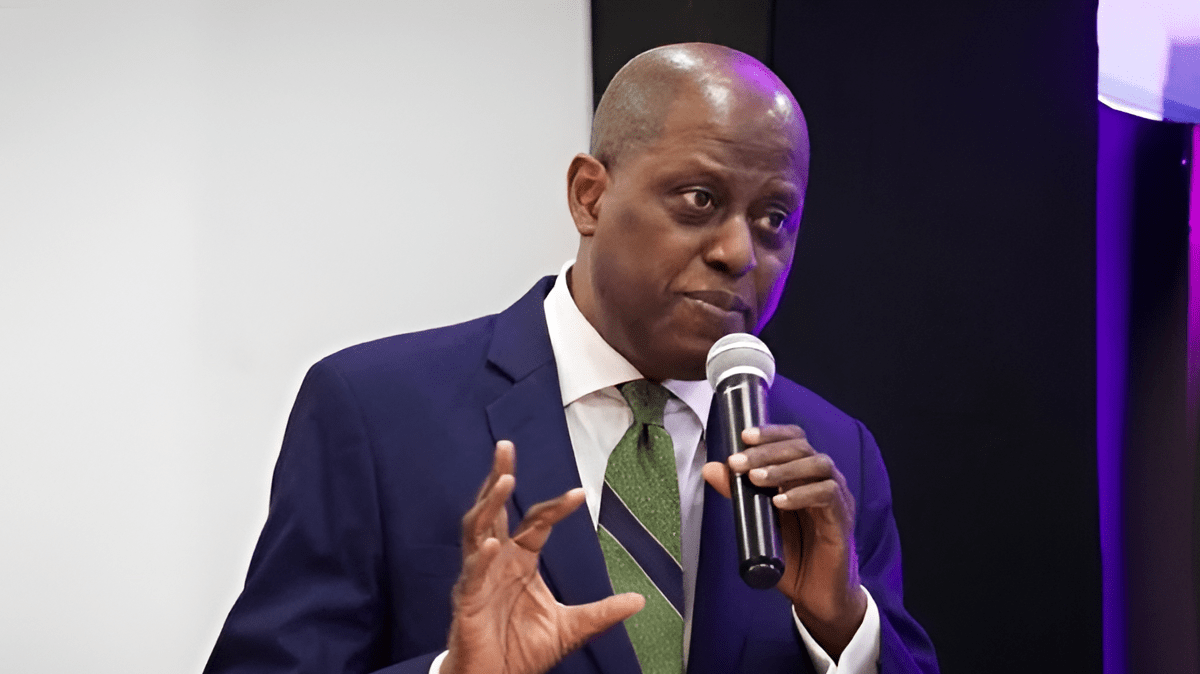
The Governor of the Central Bank of Nigeria (CBN), Olayemi Cardoso, says Nigeria’s foreign exchange market is now experiencing stronger liquidity and improved investor participation, as ongoing reforms continue to shift the system away from heavy central bank control.
Cardoso made the remarks on Friday during a joint press briefing in Washington, D.C., alongside the Minister of Finance, Wale Edun, on the sidelines of the 2026 Spring Meetings of the International Monetary Fund (IMF) and World Bank.
He explained that Nigeria’s FX framework has undergone a major structural change, moving from a system where the central bank largely dictated rates and supply, to a more open, market-driven model.
“The foreign exchange system that used to operate in those days is very different from what it is now,” Cardoso said. “It is market-driven. There is more liquidity in the market. There is confidence. Investors come in and go out as they like.”
According to him, the improved market structure has significantly reduced the need for frequent interventions by the apex bank, as transactions are now largely driven by “willing buyers and willing sellers” operating in a more transparent environment.
Cardoso also noted that Nigeria’s FX market now records an average daily turnover of about $500 million, with many transactions completed without direct central bank involvement.
On concerns surrounding the country’s external reserves, the CBN governor dismissed fears over recent fluctuations, describing them as a normal feature of a functioning market economy.
He maintained that Nigeria’s reserve position remains strong and above internationally recommended safety levels.
“We already have way beyond what the IMF even recommends for you to have as your minimum reserve level,” he said. “We are in a very comfortable position. It’s normal. Honestly, there is nothing to worry about.”
Recent CBN data shows that Nigeria’s external reserves have declined by about $1.37 billion over a six-week period, falling from a 17-year high of $50.02 billion on March 11 to around $48.64 billion by April 16.
Despite the dip, Cardoso insisted that the broader reforms underpinning the FX market are improving long-term stability and investor confidence.
He also revealed that the CBN is targeting a significant rise in diaspora remittances, projecting inflows of up to $1 billion monthly by the end of 2026, compared to current levels of about $600 million per month.
The remarks come as global ratings agency Fitch projects that Nigeria’s external reserves could ease further to around $47 billion by year-end, even as policymakers continue to push reforms aimed at strengthening macroeconomic stability and boosting foreign inflows.