CBN governor says borrowing costs will ease over time, defends end of intervention lending and promises publication of Nigeria’s reform roadmap…..
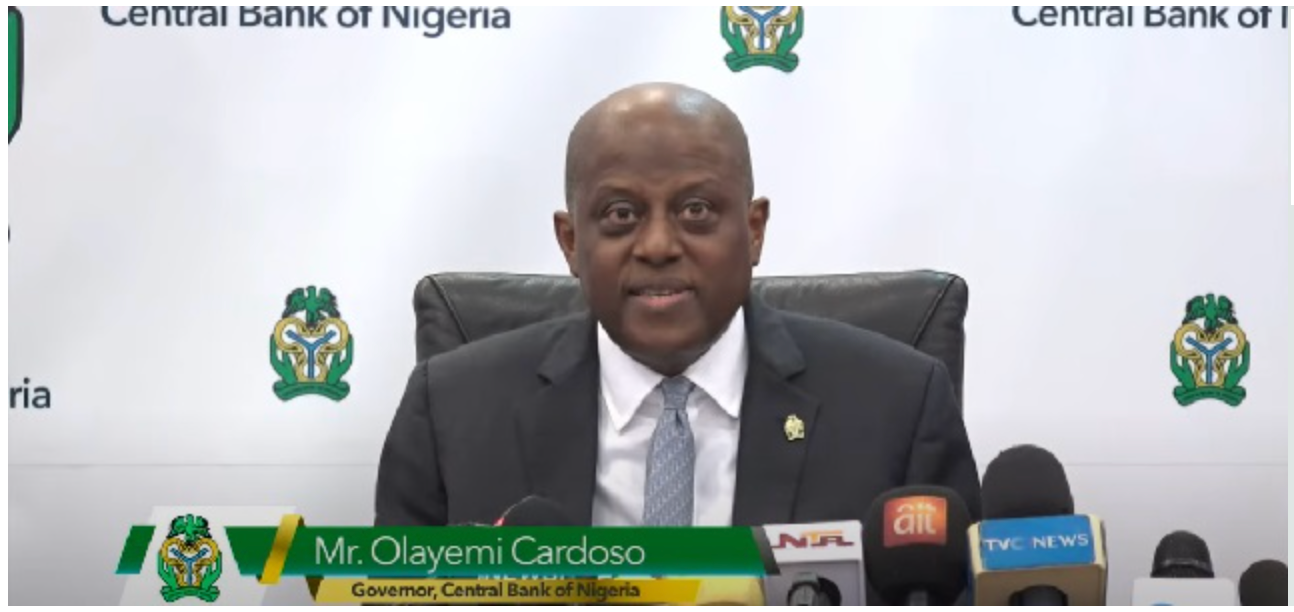
Governor of the Central Bank of Nigeria (CBN), Olayemi Cardoso, has expressed confidence that interest rates will gradually decline as the country’s economic reforms gain traction, paving the way for improved access to credit for small and medium-sized enterprises (SMEs).
Speaking during a fireside chat with World Trade Organisation (WTO) Director-General Ngozi Okonjo-Iweala at the 7th Africa Emerging Markets Forum in Abuja on Wednesday, Cardoso acknowledged that businesses are grappling with high borrowing costs but described the current situation as a temporary consequence of efforts to restore macroeconomic stability.
“Interest rates are high. Exchange rates have moderated and are stable,” Cardoso said.
“My expectation is that, over time, interest rates will begin to moderate. It’s a price, unfortunately, we are having to pay because of these policy flip-flops.”
The CBN governor said reforms in the banking sector, particularly the recently concluded recapitalisation exercise, are expected to strengthen lenders’ capacity to finance productive sectors of the economy.
According to him, better-capitalised banks will increasingly turn their attention to SMEs as lending conditions improve and opportunities for easy profits from market distortions continue to shrink.
“Now that we have finished a banking recapitalisation exercise and the banks have a lot of money at their disposal relative to previously, you’re likely to find that there will be more interest in SMEs as rates begin to drop,” he said.
He noted that commercial banks would be encouraged to review their risk models to support more lending to small businesses while remaining commercially viable.
Cardoso also disclosed that the apex bank is developing additional measures to improve credit access for SMEs, expressing confidence that businesses will benefit from lower borrowing costs as economic conditions stabilise.
“I am confident that these are all temporary issues. We will get to a situation where rates become more moderate and where it will be easier for SMEs to access credit, not only from development finance institutions but also from commercial banks,” he added.
Defending the CBN’s decision to reduce intervention lending, Cardoso argued that development finance should not be a core responsibility of a central bank, saying previous intervention programmes overstretched the institution and blurred the line between monetary and fiscal policy.
He maintained that the return to orthodox monetary policy has helped restore stability to Nigeria’s financial system and created a stronger foundation for long-term economic growth.
Cardoso also revealed that the CBN will soon publish a comprehensive document outlining the reforms implemented under the current administration, describing the changes as a fundamental shift in Nigeria’s economic management.
According to him, the publication will serve as a reference point for policymakers and help prevent a return to policy approaches that undermined economic stability in the past.
“We’ve finished a draft, and in due course we will publish it so people can clearly see the reforms that have brought us to where we are today,” he said, adding that documenting the reforms would help ensure future governments avoid repeating past policy mistakes.