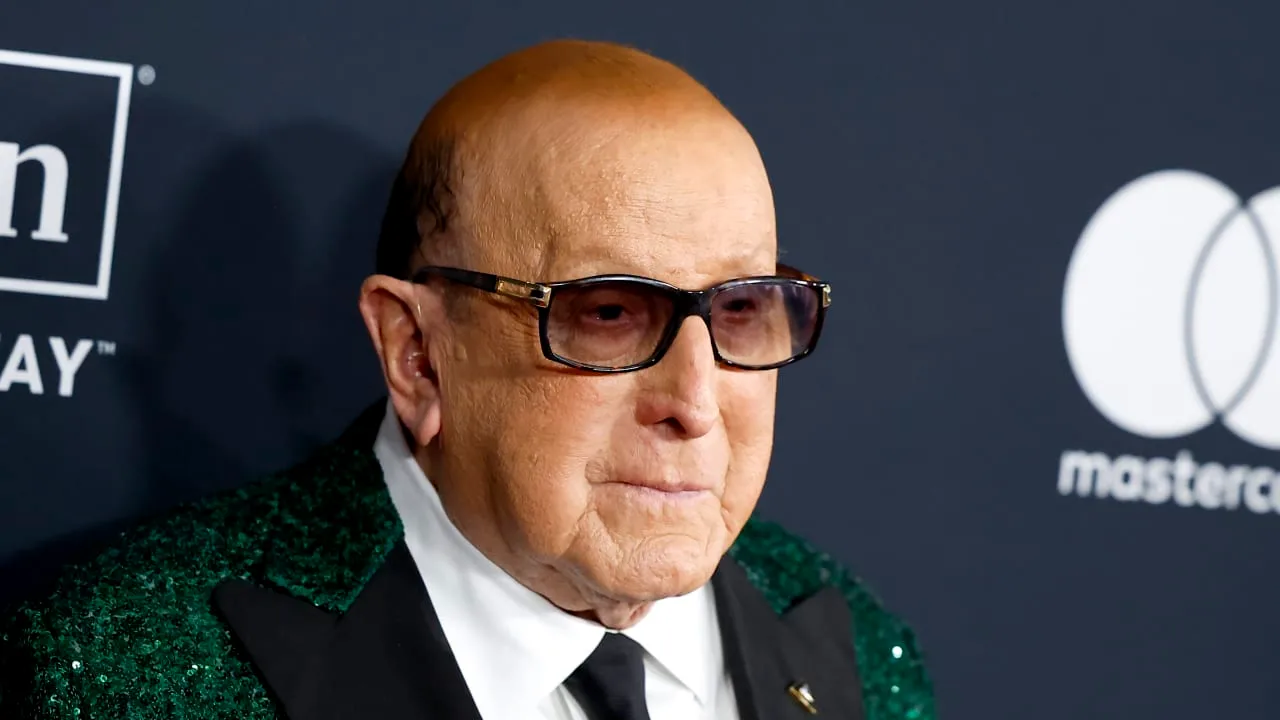
Clive Davis, the legendary music executive credited with building the careers of Whitney Houston, Sean Combs and some of the biggest names in modern music, has died at the age of 94.
Davis, widely known as “the man with the golden ear” for his remarkable ability to identify talent and hit records, died at his Manhattan home after recently being hospitalised with respiratory problems, according to reports. His family announced his death on Monday.
Over a career that spanned more than six decades, Davis helped shape the sound of American music by discovering, mentoring and promoting artists who would become global superstars. His influence extended across rock, pop, soul, hip hop and R&B, making him one of the most powerful figures in the entertainment industry.
Among the artists whose careers flourished under his guidance were Whitney Houston, who became one of the best selling singers of all time, and Sean “P. Diddy” Combs, whom Davis helped mentor during the rise of hip hop in the 1990s. He also played a pivotal role in the success of Bob Dylan, Bruce Springsteen, Janis Joplin, Kelly Clarkson, Carlos Santana, Jennifer Hudson and many others.
His family paid tribute to both his professional achievements and his role within the family.
“To the world, our father was the iconic music legend whose vision, instincts, and relentless pursuit of excellence shaped the soundtrack of countless lives,” the family said in a statement posted on Facebook.
“To his family, Clive was Dad and Granddaddy, the steady presence at the center of our lives, the source of wisdom, strength, encouragement, and unconditional love.”
Davis’s reputation for recognising talent earned him widespread admiration throughout the music industry. He successfully adapted to changing musical trends across generations, helping launch rock acts in the 1960s, supporting R&B and soul artists in later decades, and embracing hip hop and pop stars as the industry evolved.
His achievements earned him five Grammy Awards, including four for producing projects involving Kelly Clarkson, Carlos Santana and Jennifer Hudson, and another recognising his broader contributions to music.
He was also known for reviving established careers. Under his guidance, Santana returned to prominence with an album that won nine Grammy Awards in 2000. Davis similarly helped engineer successful comebacks for Rod Stewart, Aretha Franklin and Dionne Warwick.
Born in Brooklyn, New York, on April 4, 1932, Davis did not initially set out to work in music. After graduating from New York University and Harvard Law School, he worked as a lawyer before joining Columbia Records in the early 1960s.
His rise within the company was swift. In 1966, he became head of Columbia Records and helped transform the label into a dominant force in popular music. Following a visit to the Monterey Pop Festival in 1967, he signed Janis Joplin after being captivated by her performance, a decision that became one of many defining moments in his career.
Davis later assembled a roster of artists that included Chicago, Aerosmith, Pink Floyd, Bruce Springsteen, Santana, Billy Joel and Sly and the Family Stone, all of whom went on to achieve major commercial success.
Reflecting on his approach to artist development, Davis once told Newsweek:
“Talent comes to me because they believe I’ve established a creative haven in which they can flourish.”
“And talent attracts talent.”
Although his career faced setbacks, including his dismissal from CBS in 1973 amid controversy over company expenses, Davis rebuilt his standing and remained one of the industry’s most influential executives for decades.
Faridah Abdulkadiri