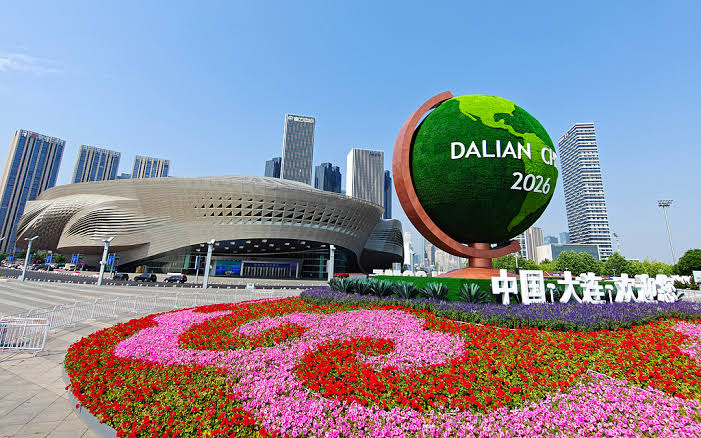
As global leaders, business executives and innovators gather in Dalian, China, for the 2026 World Economic Forum (WEF) Annual Meeting of the New Champions, Africa has a unique opportunity to shape conversations that could influence its economic future.
Known as the “Summer Davos,” the meeting focuses on innovation, emerging industries and the role of fast-growing economies in driving global growth. This year’s discussions on artificial intelligence, green finance, resilient supply chains and entrepreneurship closely align with Africa’s development priorities.
The significance of the forum goes beyond dialogue. Previous WEF meetings have led to tangible outcomes for the continent. The Grow Africa initiative, launched at a WEF on Africa meeting in 2011, mobilized billions of dollars in private-sector commitments to support agriculture and food security across several African countries. WEF platforms have also facilitated partnerships in digital infrastructure, governance and investment, helping strengthen business ecosystems across the continent.
For Africa, the discussions in Dalian come at a critical moment. As companies diversify global supply chains, the continent’s youthful workforce and the African Continental Free Trade Area (AfCFTA) make it an increasingly attractive destination for manufacturing and technology investment. Conversations around artificial intelligence and clean energy also present opportunities to accelerate digital transformation and sustainable industrialization.
China’s role adds another layer of significance. As Africa’s largest bilateral trading partner and a major investor in infrastructure, manufacturing and renewable energy, China’s economic direction has a direct impact on the continent. The Dalian meeting provides a platform for African governments and businesses to deepen partnerships while promoting local value addition, technology transfer and job creation.
Ultimately, the 2026 WEF Annual Meeting of the New Champions is more than a gathering of global elites. It is an opportunity for Africa to attract investment, influence policy discussions and position itself as a key driver of the next phase of global economic growth. The challenge is to turn conversations in Dalian into partnerships and investments that deliver lasting benefits for the continent.
Lummie Edevbie