Wike Credits Tinubu’s Leadership for Accelerating Nigeria’s Infrastructure Development
Minister of the Federal Capital Territory (FCT), Nyesom Wike, has said President Bola Tinubu’s leadership style and political will are driving efforts to close Nigeria’s long-standing infrastructure and development gaps. Wike made the remarks on Saturday during the 36th Convocation Ceremony of the University of Port Harcourt, where he delivered a lecture titled “Leadership and …
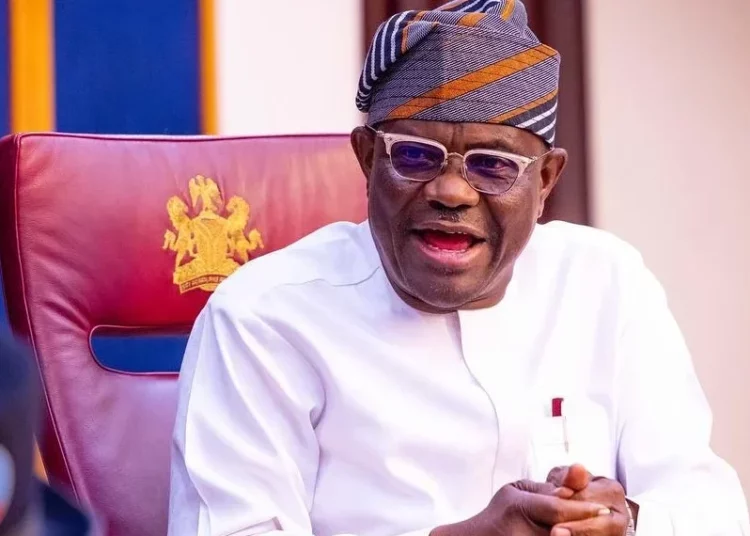
Minister of the Federal Capital Territory (FCT), Nyesom Wike, has said President Bola Tinubu’s leadership style and political will are driving efforts to close Nigeria’s long-standing infrastructure and development gaps.
Wike made the remarks on Saturday during the 36th Convocation Ceremony of the University of Port Harcourt, where he delivered a lecture titled “Leadership and Infrastructure Development in Nigeria: Lessons for Future Leaders.”
He described ongoing infrastructure projects under the Tinubu administration as evidence of what he called purposeful leadership aimed at national transformation.
According to him, the President has demonstrated the courage to make difficult decisions and mobilise resources toward addressing Nigeria’s infrastructure deficit.
“What the present moment offers is a rare and defining possibility,” Wike said, adding that the administration has shown the capacity and political will needed to bridge Nigeria’s development gaps.
He argued that infrastructure remains the most reliable measure of effective leadership, noting that roads, railways, housing, power, and digital systems form the backbone of economic and social progress.
Wike said some projects currently being executed were inherited from previous administrations but have since been given renewed direction and urgency under the present government.
He listed major projects such as the Lagos–Calabar Coastal Highway, Sokoto–Badagry Super Highway, Abuja–Kaduna–Zaria–Kano Road, the East–West Road, and access roads to the Second Niger Bridge as key examples of ongoing national infrastructure efforts.
The minister also highlighted investments in rail development, including rehabilitation work on the Port Harcourt–Maiduguri corridor and expansion of standard gauge rail networks across the country.
On power, he referenced the Presidential Power Initiative in partnership with Siemens, alongside rural electrification and metering programmes aimed at improving electricity supply and consumer access.
Wike further pointed to initiatives in aviation, housing, broadband expansion, security infrastructure, and education, including the Nigeria Education Loan Fund (NELFUND), as part of broader reforms aimed at strengthening national development.
He described the removal of fuel subsidy as a difficult but necessary decision, arguing that it has created additional fiscal space for infrastructure investment at both federal and state levels.
“Transformative leadership often requires the courage to choose long-term stability over short-term comfort,” he said.
Wike maintained that Nigeria’s progress should be measured not by the number of projects announced, but by their completion and real impact on citizens.
He also warned that sustainable development would remain difficult without continued investment in key sectors such as transportation, power, healthcare, and education.