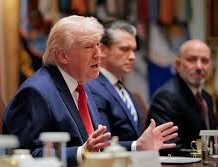
U.S. President Donald Trump says the Strait of Hormuz is open, while demanding that Iran compensate the United States for people killed and wounded in conflicts and attacks that Washington attributes to Tehran.
The competing demands have added a new complication to already fragile efforts to end the five-month US-Iran conflict and restore normal shipping through one of the world’s most strategically important waterways.
Trump’s position came after Iran demanded compensation from the United States and Israel for damage caused during the conflict. Tehran has also linked the full reopening of the Strait to broader conditions, including relief from US sanctions and an end to military pressure.
The disagreement over compensation has further widened the gap between Washington and Tehran at a time when negotiators are attempting to establish arrangements for maritime traffic through the Strait.
Iran and Oman have been working on a possible framework for new shipping lanes, but the United States remains opposed to any arrangement that would give Tehran effective control over international commercial passage.
Although Trump has presented the waterway as open, shipping activity remains far below normal levels. Reuters reported that only six vessels passed through the Strait on Monday, compared with a pre-war average of roughly 130 to 140 ships a day.
The sharp decline highlights the uncertainty still facing commercial operators despite Washington’s claims about access.
The Strait of Hormuz is a critical artery for the global economy, serving as a major route for oil and other energy shipments from the Persian Gulf. Continued disruption has already contributed to higher energy prices and growing concerns about the wider impact on global markets. Oil prices rose sharply as hopes for a US-Iran agreement weakened.
The latest dispute has therefore transformed the Strait into the centrepiece of a much larger confrontation involving military security, sanctions, economic losses, shipping rights and the terms of any eventual peace settlement.
For Washington, compensation has emerged as another demand in its pressure campaign against Tehran. For Iran, reopening the waterway remains tied to its broader demands for an end to sanctions and military pressure.
With the two sides still divided over the terms of a settlement, the future of the Strait of Hormuz could become one of the most decisive tests of whether the United States and Iran can move from confrontation toward a lasting agreement.
For now, Trump’s declaration that the Strait is open contrasts sharply with the reality on the water: shipping remains severely restricted, negotiations remain unsettled, and the economic stakes continue to rise.