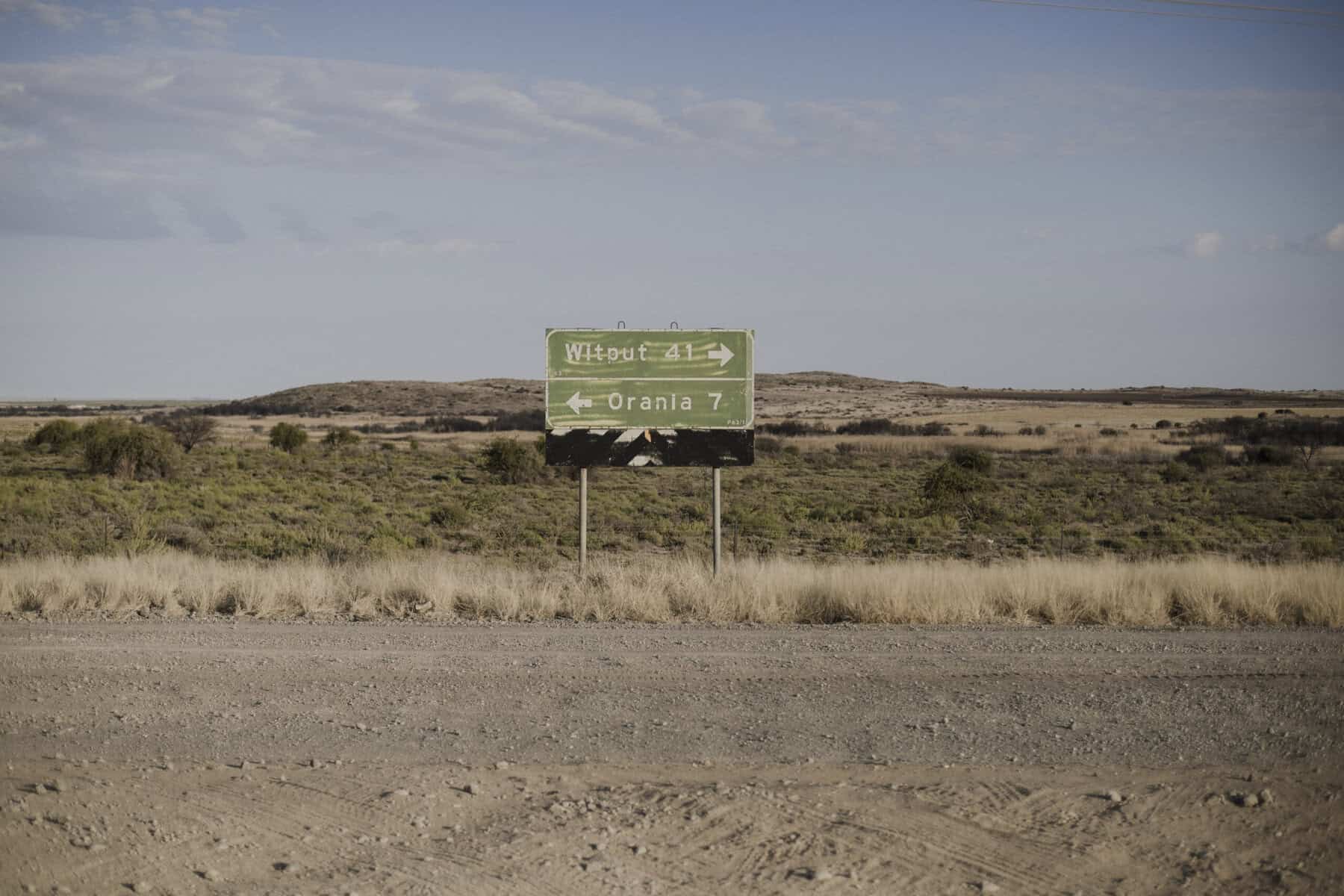
A signpost shows the direction to Orania, on July 26, 2022. Orania is nestled in the vast but sparsely-populated Karoo region, its population of 2,500 has surged almost 10-fold since its creation at the end of apartheid three decades ago. All are white Afrikaners, ethnic descendants of Dutch colonisers that came to the southern tip of the continent during the 17th century. (Photo by MARCO LONGARI / AFP)
While South Africa celebrated its 32nd Freedom Day after its first democratic elections on 27 April, 1994, the Afrikaner-only enclave of Orania also celebrated its 35th year of existence this month.
The white separatist enclave on the Orange River in the Northern Cape was founded by Carel Boshoff, who purchased the farm in 1991.
Orania celebrates milestone with 500 ora bank note
Orania prides itself on being a self-sufficient and independent home for Afrikaners. On 10 April, Orania celebrated its establishment on 6 April, 1991, with a party hosted in front of the town’s office.
The town also launched its 500 ora bank note I-series on 10 April, making Orania the only community in South Africa with a commercial note of this value.
The ora is a coupon system that is linked one-on-one to the rand and used in Orania together with rands as a monetary trading unit.
Orania does not consider the ora as a currency and said it functions much like one, while also strengthening the community.
Being designed, printed and distributed by the Orania chamber of commerce, local artists competed to draw the sketches for the new series.
The icons on the notes include Jan van Riebeeck on the 10 ora, Andries Pretorius on the 20, Piet Joubert on the 50, Marthinus Theunis Steyn on the 100, Totius (Jacob Daniël du Toit) on the 200 and Carel Boshoff on the 500 note.
Morality vs legality
But political analyst Piet Croucamp said people have to question the heart and the soul of people who lived and do what they do in Orania.
“One can ask all sorts of questions about the morality of having a white person enclosed on land that belongs to South Africans, but that’s a completely different question,” said Croucamp.
“One can wish them away and I wish them away, and I wish they weren’t there, but that doesn’t mean because I wished them away and many other millions of South Africans do, [people can] question their existence.”
Croucamp added as long as people in Orania don’t do anything illegal, there is no reason to interfere with them.
They have the support of AfriForum and Solidarity and wouldn’t be able to exist in South Africa without that support, the analyst said.
They will need broader support in South Africa to maintain what they do, Croucamp added.
‘Uncomfortable reality of our democracy’
Another political analyst, René Oosthuizen said the existence of Orania reflects a deeply uncomfortable contradiction in South Africa’s democracy.
“It suggests our democracy has been more successful in accommodating differences than in confronting the structural inequalities and historical divisions. In my view, that is the uncomfortable reality of our democracy,” she added.
Senior political lecturer at North-West University Benjamin Rapanyane said democracy has opened the space for Orania to exist.
“It is democracy that allowed them to exist in that part of their own in our democratic space. And since they have not bothered anyone for such a long time, I guess we should let it stay that way,” Rapanyane said.